



PESHAWAR: A top cleric from a renowned religious seminary, along with five others, was killed in a suspected suicide blast at a mosque during Friday prayers in Pakistan’s northwestern Khyber Pakhtunkhwa (KP) province, confirmed the provincial administration spokesman and a rescue official.
Darul Uloom Haqqania, one of Pakistan’s largest and most influential seminaries, was founded in 1947 and is located in the town of Akora Khattak in KP’s Nowshera district. It has played a key role in shaping religious discourse in the region and has been linked to the Afghan Taliban.
Until a few years ago, the seminary was run by Maulana Samiul Haq, a Pakistani cleric and politician often referred to as the “Father of the Taliban” due to his seminary’s ties with the group. Haq led his own faction of the Jamiat Ulema-e-Islam (JUI-S) party before being assassinated in 2018 in Rawalpindi.
Friday’s blast at the mosque occurred when a large number of worshippers were present for the prayer congregation.
“Today, during Friday prayers, a blast took place inside Darul Uloom Haqqania Akora Khattak, in which Maulana Hamidul Haq Haqqani, the head of Jamiat Ulema-e-Islam-Sami (JUI-S) and a prominent cleric, has embraced martyrdom amid reports of other people martyred with him,” Barrister Muhammad Ali, KP government spokesperson, said in a video statement.
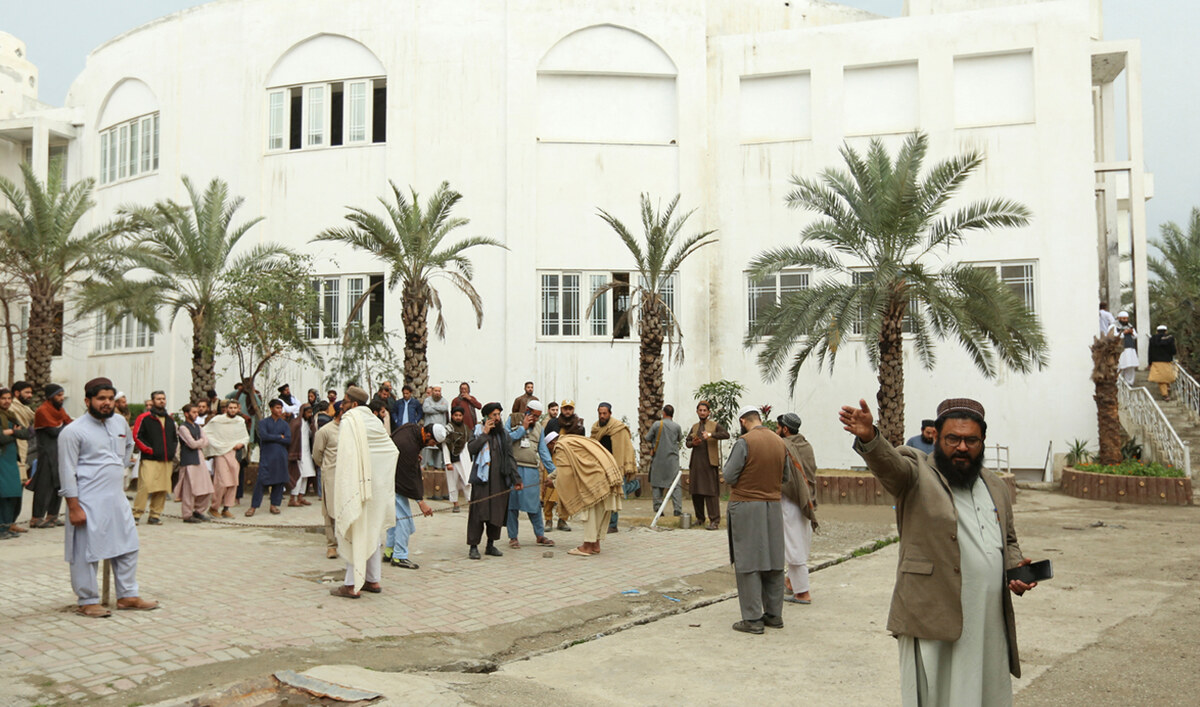
People gather near the site of a suicide bomber attack, on the day of Friday prayers, at an Islamic seminary in Akora Khattak, Pakistan on February 28, 2025. (REUTERS)
“A number of people were also wounded,” he continued. “This tragic incident apparently seems to be a suicide attack, but details of the nature of the blast are still coming.”
Speaking to Arab News, Bilal Faizi, spokesperson for Rescue 1122 in KP, said a total of six people had died in the blast.
“Hamid-ul-Haq is among the dead,” he informed. “Twelve other people are also wounded.”
KP’s provincial cabinet expressed condolences for those who died in the explosion while praying for the swift recovery of the injured.
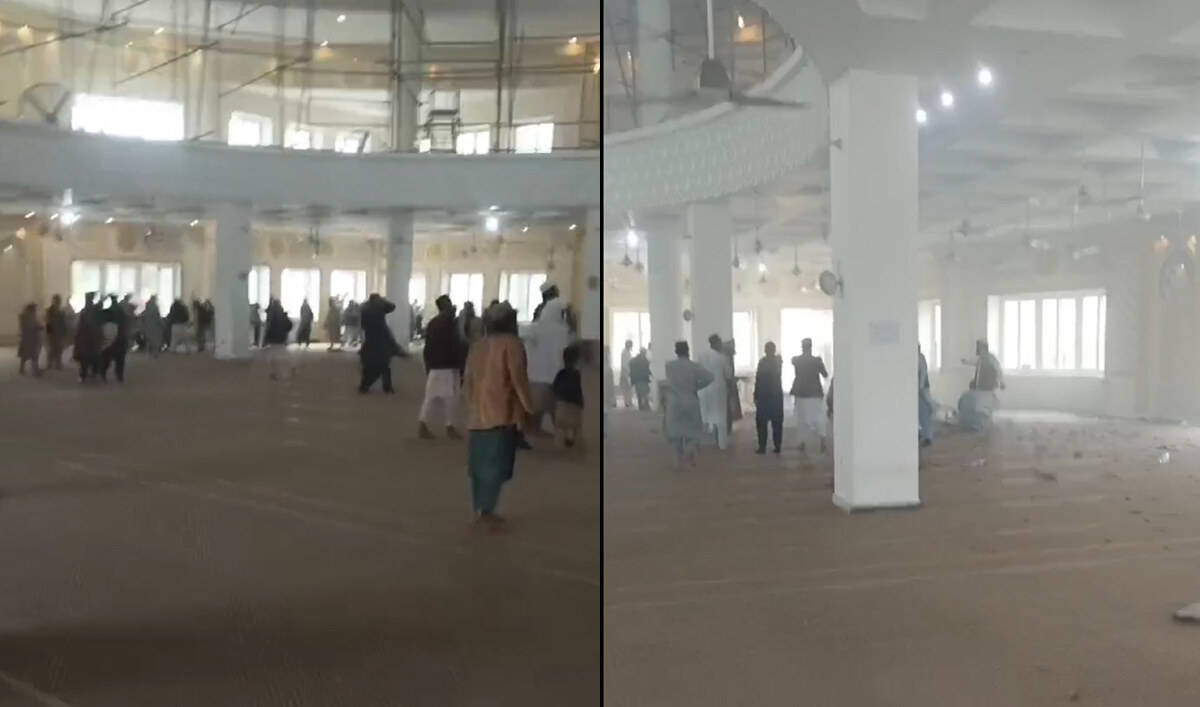
In this combination of photo people gather inside the mosque, targeted during the day of Friday prayers, at an Islamic seminary in Akora Khattak, Pakistan on February 28, 2025. (Screengrab/Viral Video)
Earlier, as the blast took place, Maulana Yousuf Shah, the seminary’s spokesperson who is currently in Saudi Arabia, told Arab News that Hamid-ul-Haq Haqqani was the apparent target of the attacker.
“It was a suicide blast targeting Maulana Hamid-ul-Haq Haqqani, who suffered serious injuries among others in the attack,” he said. “Haqqani has been rushed to the Combined Military Hospital in Nowshera and is struggling for life.”
Darul Uloom Haqqania is widely believed to have been a launching pad for the Taliban movement in the 1990s and is still often described as an incubator for militants, though the seminary denies the claims.
Mullah Muhammad Omar, who founded the Taliban movement following the Soviet withdrawal from Afghanistan in 1989, was a student of the seminary.
The Afghan Taliban administration expressed shock at the development in a statement.
“We strongly condemn the attack, we know them [the perpetrators] as the enemies of the religion, we have tried our best to eliminate them successfully,” said the Taliban interior ministry spokesperson Abdul Mateen Qani, blaming the suicide bombing on Daesh militants.
The Afghan embassy also described the attack as “a cowardly act,” extending condolences to the families of the victims and the seminary management.
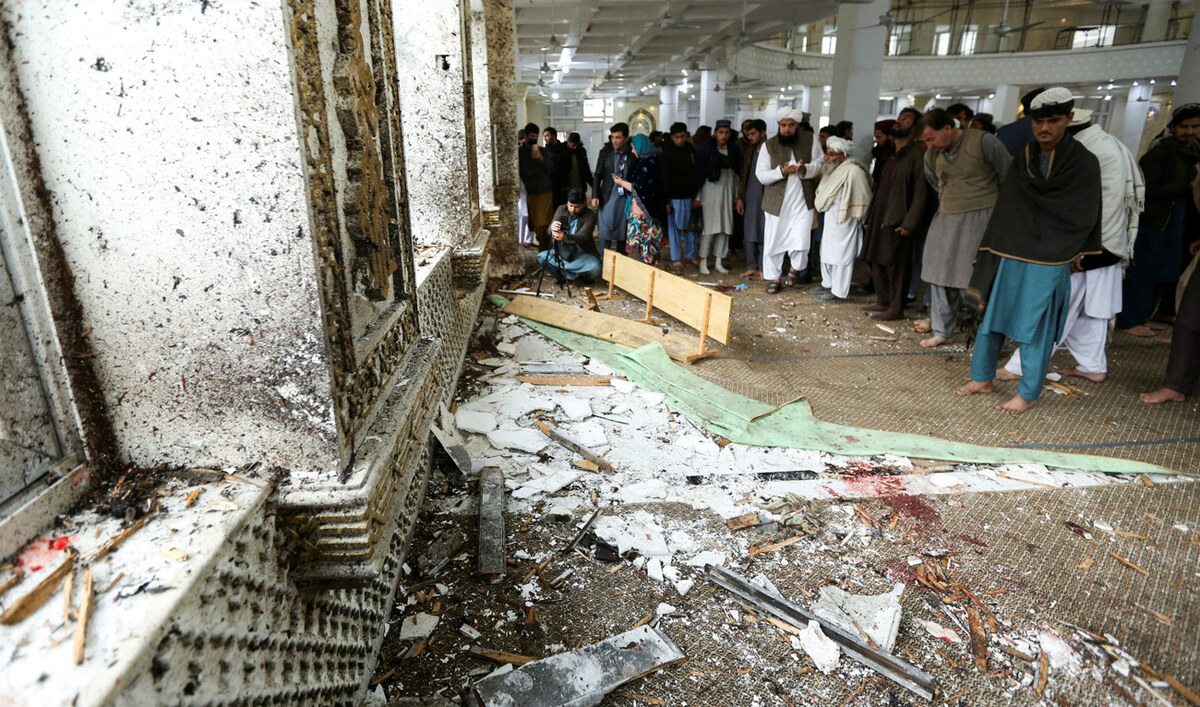
People inspect damage, at the site of a suicide bomber attack, on the day of Friday prayers, at an Islamic seminary in Akora Khattak, Pakistan on February 28, 2025. (REUTERS)
IED BLAST IN QUETTA
In a separate incident, nine people, including a paramilitary solider of the Frontier Corps, were injured in a remotely controlled explosive device in Quetta, Balochistan’s provincial capital, on Friday.
Abid Mengal, Station House Officer at the Industrial Police Station, told Arab News the blast took place when an improvised explosive device mounted on a motorbike went off at Jan Muhammad Road.
“The IED exploded with a remotely controlled device when a convoy of paramilitary Frontier Corps was passing through the area,” he said.
“Nine people, including one soldier of FC Balochistan, were injured in the attack on security forces,” he added.
The responsibility for both attacks has yet to be claimed by any militant group, but Pakistan has been battling twin insurgencies — one mounted by religiously motivated groups like the Tehreek-e-Taliban Pakistan and the other by ethnic separatists in Balochistan.
With inputs from Saadullah Akhter in Quetta


