Islamabad says will engage with prominent Baloch rights movement provided no ‘ulterior motive’

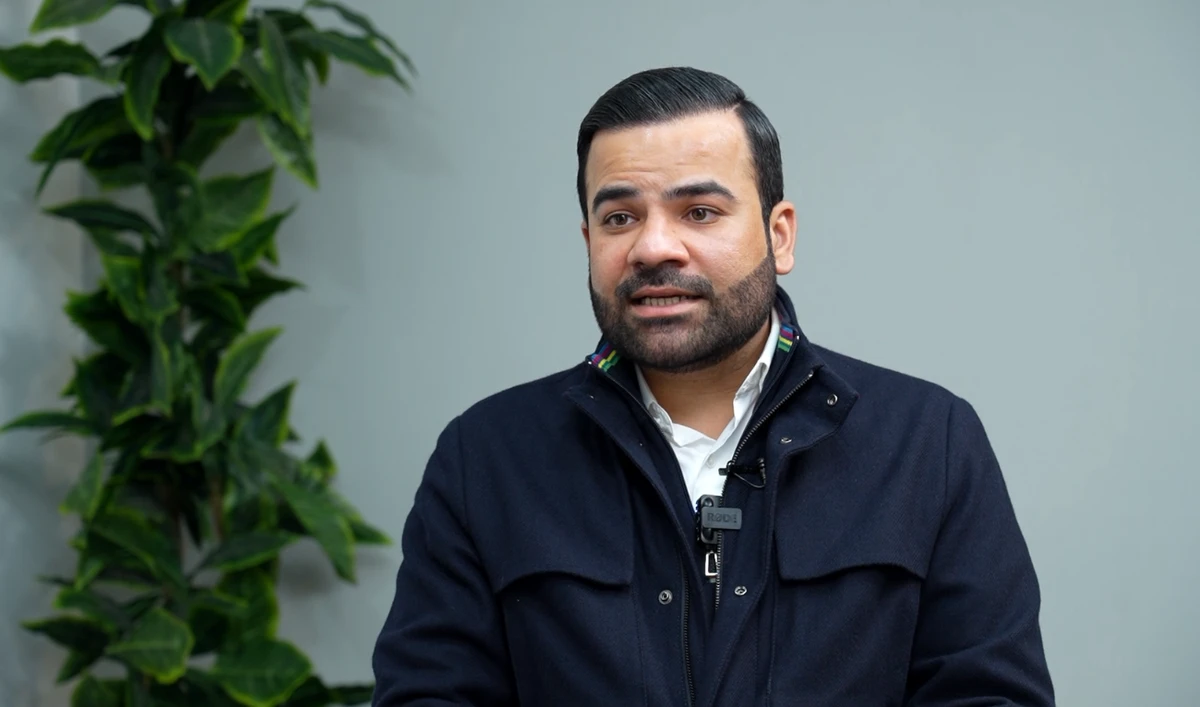
Pakistan government’s spokesperson on legal affairs Aqeel Malik speaks during an interview with Independent Urdu in Islamabad, Pakistan, on February 26, 2025. (Photo courtesy: Independent Urdu)
Short Url
Updated 28 February 2025
Follow

Islamabad says will engage with prominent Baloch rights movement provided no ‘ulterior motive’

  • Baloch Yakjehti Committee has held multiple protests, marches to capital to highlight enforced disappearances in Balochistan
  • Military variously accuses rights movements like BYC of being “terrorist proxies,” says “disappeared” are linked to separatists

ISLAMABAD: The Pakistan government will engage with prominent Baloch rights activist Dr. Mahrang Baloch and her Baloch Yakjehti Committee (BYC) movement provided it does not have an “ulterior motive,” the government’s spokesperson on legal affairs Aqeel Malik said this week. 

Baloch has been a fierce critic of Pakistan’s powerful military, whom rights activists, politicians and families blame for enforced disappearances and extrajudicial killings in the impoverished, southwestern Balochistan province. Security forces deny this. 

The BYC, founded by Baloch in 2020, has organized several large protests in Balochistan and led marches to, and sit-ins in, the Pakistani federal capital, Islamabad, mainly against “enforced disappearances and extrajudicial killings” which officials deny. 

The military has a huge presence in Balochistan bordering Afghanistan and Iran, where insurgent groups have been fighting for a separate homeland for decades to win a larger share of benefits for the resource-rich province. The army has long run intelligence-based operations against insurgent groups, who have escalated attacks in recent months on the military and nationals from longtime ally China, which is building key projects in the region, including a port at Gwadar.

International rights bodies like Amnesty International and Human Rights Watch as well as opposition political parties have also long highlighted enforced disappearances targeting students, activists, journalists and human rights defenders in Balochistan. The army says many of Balochistan’s so-called disappeared have links to separatists. Military spokespersons have also variously accused rights movements like the BYC of being “terrorist proxies.”

Speaking to Independent Urdu on Wednesday, Malik said there were “a few unanswered questions” related to Dr. Mahrang Baloch and the BYC. 

“The reason is that she leads a big movement but no one knows who is backing or supporting it,” Malik said.

“This is a very important question. If her movement is truly for the rights of Balochistan, and there is no ulterior motive to it, then the government will definitely engage.”

The government’s spokesperson said the state should engage with all Pakistanis regardless of which Pakistani province they belong to. 

“If there are any such factions, we will engage with them and are doing it already,” he said. 

Malik’s comments come days after BYC’s prominent leader Sammi Deen Baloch said her group was open to engaging in direct talks with “those who have the power” to end human rights violations in Balochistan, when asked if the group would hold talks with the military. 

“Those who have the authority to resolve our issues, whose voices are heard, they can be any person, any institution or any representative … we say that that empowered person should come forward,” she told Arab News in an interview when asked if her group was open to talks with the army. 

Pakistan has seen a surge in militant attacks by separatist groups in Balochistan in recent months. More than 50 people, including security forces, were killed in August last year in a string of assaults in Balochistan that were claimed by the Baloch Liberation Army, the province’s most prominent separatist outfit.
IMF board to approve Pakistan reviews today ‘if all goes well,’ say officials

Updated 4 sec ago
Follow

IMF board to approve Pakistan reviews today ‘if all goes well,’ say officials

  • IMF’s executive board is scheduled to meet today to discuss the disbursement of $1.2 billion
  • Economists say the money will boost Pakistan’s forex reserves, send positive signals to investors

KARACHI: The International Monetary Fund’s (IMF) executive board is scheduled to meet today, Monday, to approve the release of about $1.2 billion for Pakistan under the lender’s two loan facilities, said IMF officials who requested not to be named.

The IMF officials confirmed the executive board was going to decide on the Fund’s second review under the $7 billion Extended Fund Facility (EFF) and first review under the $1.4 billion Resilience and Sustainability Facility (RSF), a financing tool that provides long-term, low-cost loans to help countries address climate risks.

“The board meeting will be taking place as planned,” an IMF official told Arab News.

“The board is on today yes as per the calendar,” said another.

A well-placed official at Pakistan’s finance ministry also confirmed the board meeting was scheduled today to discuss the next tranche for Pakistan.

The IMF executive board’s meeting comes nearly two months after a staff-level agreement (SLA) was signed between the two sides in October.

Procedurally, the SLAs are subject to approval by the executive board, though it is largely viewed as a formality.

“If all goes well, the reviews should pass,” said the second IMF official.

On approval, Pakistan will have access to about $1 billion under the EFF and about $200 million under the RSF, the IMF said in a statement in October after the SLA.

The fresh transfer will bring total disbursements under the two arrangements to about $3.3 billion, it added.

Experts see smooth sailing for Pakistan in terms of the passing of the two reviews, saying the IMF disbursements will help the cash-strapped nation to strengthen its balance of payments position.

Samiullah Tariq, group head of research at Pakistan Kuwait Investment Company Limited, said the IMF board’s approval will show that Pakistan’s economy is on the right path.

“It obviously will help strengthen [the country’s] external sector, the balance of payments,” he told Arab News.

Until recently, Pakistan grappled with a macroeconomic crisis that drained its financial resources and triggered a balance of payments crisis.

Pakistan has reported financial gains since 2022, recording current account surpluses and taming inflation that touched unprecedented levels in mid-2023.

Economists also viewed the IMF’s bailout packages as crucial for cash-strapped Pakistan, which has relied heavily on financing from bilateral partners such as Saudi Arabia, China and the United Arab Emirates, as well as multilateral lenders.

Saudi Arabia, through the Saudi Fund for Development, last week extended the term of its $3 billion deposit for another year to help Pakistan boost its foreign exchange reserves, which stood at $14.5 billion as of November 28, according to State Bank of Pakistan statements.

“In our view this [IMF tranche] will be approved,” said Shankar Talreja, head of research at Karachi-based brokerage Topline Securities Limited.

“This will help strengthen reserves and will eventually help a rating upgrade going forward,” he said.

The IMF board’s nod, Talreja said, would also send a signal to the international and local investors regarding the continuation of the reform agenda by Pakistan’s government.