

Pakistan PM to take notice of cricket team’s dismal state of affairs— aide 

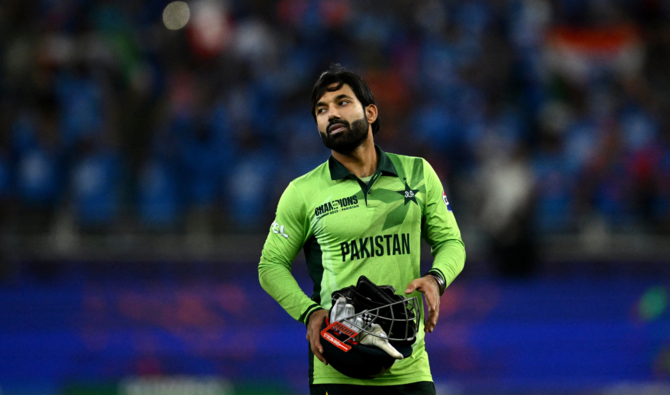
Pakistan's captain Mohammad Rizwan gestures at the end of the ICC Champions Trophy one-day international (ODI) cricket match between Pakistan and India at the Dubai International Stadium in Dubai on February 23, 2025. (AFP/File)
Short Url
Updated 27 February 2025
Follow

Pakistan PM to take notice of cricket team’s dismal state of affairs— aide 

  • Hosts Pakistan crashed out of ICC Champions Trophy tournament after losses to New Zealand, India last week 
  • Rana Sanaullah laments poor standard of cricket at basic levels, exorbitant salaries of cricket board officials 

ISLAMABAD: Pakistan’s Prime Minister Shehbaz Sharif will take notice of the dismal state of affairs of cricket in the country, his adviser on political affairs Rana Sanaullah said on Thursday, after the national cricket team’s early round exit from the ICC Champions Trophy tournament this week. 

Hosts and defending champions Pakistan crashed out of the group stage of the Champions Trophy tournament after successive losses to New Zealand and India in their first two matches last week. 

Angry cricket fans have raised questions on Pakistan’s embarrassing elimination, pointing to selection flaws, lack of cricketing talent and intent to play modern cricket.

“So the prime minister will definitely take notice of all these things and we will also tell him that this should be discussed in parliament and cabinet,” Sanaullah told Geo News. 

The prime minister’s aide highlighted the dismal conditions of cricket at club, university and district levels, saying that the board should take drastic measures to improve basic cricket. 

He criticized the PCB’s decision to appoint mentors last year on a Rs5 million [$17,885] salary per month without explaining to them their job responsibilities. 

“They [mentors[ have been heard admitting to the media that they are unaware of their responsibilities, so they’ve been taking Rs5m monthly for not working,” Sanaullah said. 

He lamented that the same was the situation in other sports associations of Pakistan. 

“They are retired people who take up these positions there to enjoy the perks and privileges and facilities,” he said. 

“I think all these things need to be looked at and we need to bring basic changes there.”


World Bank approves $700 million for Pakistan’s economic stability

Updated 6 sec ago
Follow

World Bank approves $700 million for Pakistan’s economic stability

  • Of this, $600 million will go for federal programs and $100 million will ⁠support a provincial program in Sindh
  • The results-based design ensures that resources are only disbursed once program objectives are achieved

ISLAMABAD: The World Bank has approved $700 million in ​financing for Pakistan under a multi-year initiative aimed at supporting the country’s macroeconomic stability and service delivery, the bank said on Friday.

The funds will be released under the bank’s Public ‌Resources for Inclusive ‌Development — Multiphase ‌Programmatic ⁠Approach (PRID-MPA) that ‌could provide up to $1.35 billion in total financing, according to the lender.

Of this amount, $600 million will go for federal programs and $100 million will ⁠support a provincial program in ‌the southern Sindh province. The results-based design ensures that resources are only disbursed once program objectives are achieved.

“Pakistan’s path to inclusive, sustainable growth requires mobilizing more domestic resources and ensuring they are used efficiently and transparently to deliver results for people,” World Bank country director Bolormaa Amgaabazar said in a statement.

“Through this MPA, we are working with the Federal and Sindh governments to deliver tangible impacts— more predictable funding for schools and clinics, fairer tax systems, and stronger data for decision‑making— while safeguarding priority social and climate investments and strengthening public trust.”

The approval ‍follows a $47.9 ‍million World Bank grant ‍in August to improve primary education in Pakistan’s most populous Punjab province.

In November, an IMF-World Bank ​report, uploaded by Pakistan’s finance ministry, said Pakistan’s fragmented ⁠regulation, opaque budgeting and political capture are curbing investment and weakening revenue.

Regional tensions may surface over international financing for Pakistan. In May, Reuters reported that India would oppose World Bank funding for Pakistan, citing a senior government ‌source in New Delhi.

“Strengthening Pakistan’s fiscal foundations is essential to restoring macroeconomic stability, delivering results and strengthening institutions,” said Tobias Akhtar Haque, Lead Country Economist for the World Bank in Pakistan.

“Through the PRID‑MPA, we are launching a coherent nationwide approach to support reforms that expand fiscal space, bolster investments in human capital and climate resilience, and strengthen revenue administration, budget execution, and statistical systems. These reforms will ensure that resources reach the frontline and deliver better outcomes for people across Pakistan with greater efficiency and accountability.”

In Sindh, the program is expected to increase provincial revenues, enhance the speed and transparency of payments, and broaden the use of data to guide provincial decision making. The program will directly support the increase of public resources for inclusive development, including more equitable and responsive financing for primary health care facilities and more funding for schools.