

Hotels in holy cities get ready for Ramadan

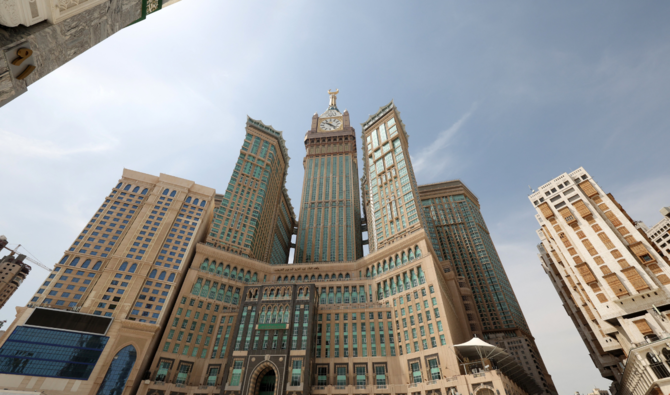
This picture shows the Abraj Al-Bait Towers, also known as the Mecca Royal Hotel Clock Tower, in the Saudi holy city of Mecca during the annual Hajj pilgrimage, on July 17, 2021. (AFP/file)
Short Url
Updated 27 February 2025
Follow

Hotels in holy cities get ready for Ramadan

  • Hotels say will arrange special tours, Ramadan bazaars during holy month
  • Thousands of Muslims spend Ramadan every year in Makkah and Madinah

Jeddah: Hotels in Makkah and Madinah are being adorned with decorations as they prepare to welcome millions of pilgrims, offering guests the chance to experience Saudi culture firsthand during Ramadan.

Mohammed Haris, from India, who makes it a point to spend Ramadan every year in Makkah and Madinah, said: “Ramadan in Saudi Arabia is truly unique. The atmosphere and spirit here are unlike anywhere else in the world.

“I always choose to stay in hotels that are close to the holy sites, and over the years I’ve witnessed the improvements (in them).

“Hotels are continuously striving to make guests feel at home, allowing them to focus on their prayers and spirituality.”

Elaf Al Taqwa Hotel’s location in Madinah, near the Prophet’s Mosque, offers easy access to prayer.

The hotel has introduced a range of special services for Ramadan, including dua recitations played throughout the premises, daily azan calls, and a carefully curated menu for iftar and sahoor featuring traditional Saudi and international cuisine.

Hussain Rauff, the general manager of the hotel, said: “Our goal is to create a spiritually uplifting environment in which guests feel at home while experiencing the essence of Ramadan in the heart of Madinah.

“We have also introduced exclusive Ramadan offerings, such as a Ramadan bazaar, where pilgrims can purchase Islamic books, prayer mats, dates, perfumes, handcrafted souvenirs and other local products, allowing them to take a meaningful piece of their journey home.

“A traditional seating area has also been set up, offering a space for reflection and connection over Saudi coffee and local delicacies like balilah and chai adani after Taraweeh prayers.”

In addition, Rauff added: “To ensure a balanced routine, we’ve kept our gym open throughout Ramadan, allowing guests to maintain their well-being while observing the spiritual practices of the month.”

The hotel also offers tours on the history of Madinah, including visits to Quba Mosque.

The Elaf group of hotels in Makkah, close to the Grand Mosque, is preparing to welcome an influx of guests during the holy month.

Hassan Khaleel, operation regional director for the Makkah region, said the hotels’ “goal is to provide an enriching stay and allow pilgrims to focus on their spiritual journey.”

The Address Jabal Omar Makkah has recently opened a walkway directly leading to the Grand Mosque.

The hotel’s interiors celebrate Saudi culture and heritage, with a large iftar buffet and a Ramadan tent with traditional Saudi coffee, dates and holy Zamzam water.

Frontel Al Harithia Hotel in Madinah focuses on sahoor, which is especially important during Ramadan fasting.

For those seeking a deeper connection to the historic and spiritual significance of Ramadan, Ahmed Zahrani has partnered with several hotels in Makkah to offer tours that explore sacred sites in the region. Iconic locations such as Jabal Al-Rahmah, Namira Mosque, Zubayda Spring, and Muzdalifah can be visited.

Zahrani said that the tours offered “insight into the sacred landmarks of Islamic history.”

Zeyad Labban, the managing director of Maad International Hajj and Umrah Services Company, spoke about how the business is “committed to enhancing the comfort of pilgrims and visitors by providing all necessary services,” including accommodation, transport, dining, and historic tours.

Hotels in the holy cities are working to provide an environment in which pilgrims can focus on their faith and make the most of their time, with a warm welcome and respectful hospitality throughout the month.


Rebuilding lives: Saudi initiative gives fresh hope to amputees

Updated 08 December 2025
Follow

Rebuilding lives: Saudi initiative gives fresh hope to amputees

  • Baitureh Health Association has provided life-changing support to more than 1,000 people
  • Prosthetic limbs can cost up to $76,000

MAKKAH: The Baitureh Health Association for the Care of Amputees has quickly become one of Saudi Arabia’s most impactful humanitarian initiatives, transforming support for people with lost limbs.

Established in 2020, the association deals with people’s physical, psychological and social needs and fills a long-standing gap in the national health system.

CEO Badr bin Alyan told Arab News that the initiative was created in response to a growing need, driven by amputations linked to accidents, blood disorders, occupational injuries and other causes.

Its operations were “based on service integration rather than fragmentation, enabling beneficiaries to return to their lives with confidence, ability and independence,” he said.

This holistic process covers everything from initial evaluations to psychological and physical rehabilitation, family support, prosthetic fitting and ongoing maintenance.

Its psychological support programs include group sessions led by certified mentors who have undergone similar experiences, as well as field visits to support patients before and after amputation.

More than 1,000 people across the Kingdom have so far benefitted from the association’s work, about 10 percent of them children, whom Alyan said were “the most sensitive and the most in need of intensive psychological and family support.”

Its specialist programs for children — My First Step and Therapeutic Entertainment — help young people adapt to prosthetics, overcome trauma and build confidence in a safe and supportive setting.

The association has completed more than 300 prosthetic fittings, including silicone cosmetic limbs, mechanical, hydraulic, electronic and 3D-printed models. 

Alyan said the type of prosthetic selected depended on a number of factors, such as age, lifestyle, type of amputation, activity level and psychological readiness.

Children also have to undergo frequent adjustments to their new limbs to account for their growth.

Each prosthetic cost between SR20,000 ($5,300) and SR285,000, Alyan said.

The association funds its work through sponsorships, community contributions and strategic partnerships.

Despite its success, Alyan said there were still challenges to be faced, including the lack of a consolidated base for the provision of psychological support and therapy services and prosthetics development and maintenance.

There was also a shortage of local experts, he said.

In response, the association set up a rehabilitation center, which Alyan said would help to localize prosthetics manufacturing, reduce costs and accelerate fitting processes and create opportunities for local experts to develop their knowledge and experience.

But providing prosthetics was only part of the association’s work, he said.

“Rebuilding a human life is the deeper goal.”