ISLAMABAD: Adviser to the Prime Minister on Political and Public Affairs Rana Sanaullah on Wednesday rejected opposition parties’ claims the government had pressured a local hotel in Islamabad against holding a two-day conference of an opposition alliance, urging its leaders to name the official who may have reached out to the hotel management.
The conference followed opposition parties forming a grand alliance under the banner of Tehreek-i-Tahaffuz-i-Ayeen-i-Pakistan (TTAP) — or the Movement for the Protection of the Constitution of Pakistan — after jailed former premier Imran Khan’s Pakistan Tehreek-e-Insaf (PTI) party’s failed negotiations with the government. The talks were meant to secure the release of political prisoners along with the formation of judicial commissions to probe two major anti-government protests by PTI that turned violent.
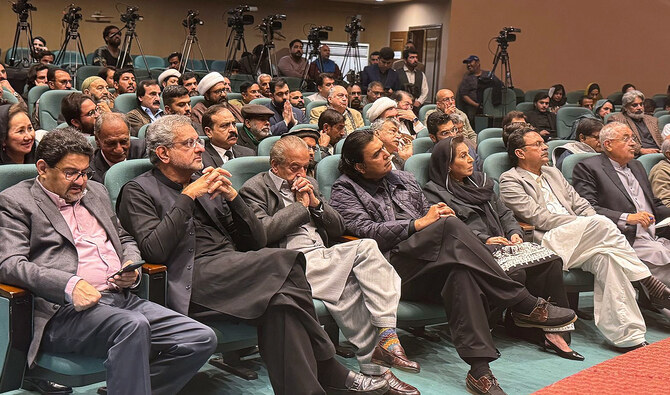
Earlier, during a press conference outside a local hotel in the capital, opposition leaders from the PTI, including Omar Ayub Khan, Asad Qaiser, and Salman Akram Raja, along with former PM Shahid Khaqan Abbasi and Pashtunkhwa Milli Awami Party chief Mahmood Khan Achakzai, alleged that the government was pressuring the hotel administration to cancel their booking.
“Which hotel person said the government told them not to allow the conference to take place?” Sanaullah asked during a talk show on Geo TV.
“Tell me who was it who did not allow [the hotel to host the conference]. Which person from the government? Which minister? Which officer said no?“
Sanaullah urged the opposition leaders to tell the truth instead of hurling allegations at the government.
“If anyone called and told the hotel to not to allow the conference to take place, tell us, we will contact that person,” he said, highlighting that the opposition leaders knew the government had not issued any such directive.
Meanwhile, on the same TV show, Abbasi said the government was afraid of the conference since it had not been properly elected in the last general elections.
He vowed that the opposition alliance would continue with the second day of the conference today, Thursday, from 10am onwards.


![]()

Pakistan government denies ‘pressuring’ Islamabad hotel from holding opposition moot
Short Url
https://arab.news/j34zs
Pakistan government denies ‘pressuring’ Islamabad hotel from holding opposition moot
- Pakistan PM’s political adviser urges opposition leaders to name the official behind alleged incident
- Opposition leaders vow to hold the second day of their conference despite any political pressure
Latest updates



© 2026 SAUDI RESEARCH & PUBLISHING COMPANY, All Rights Reserved And subject to Terms of Use Agreement.