

Saudi real estate transactions jump 47% to $75.7bn amid GCC housing boom

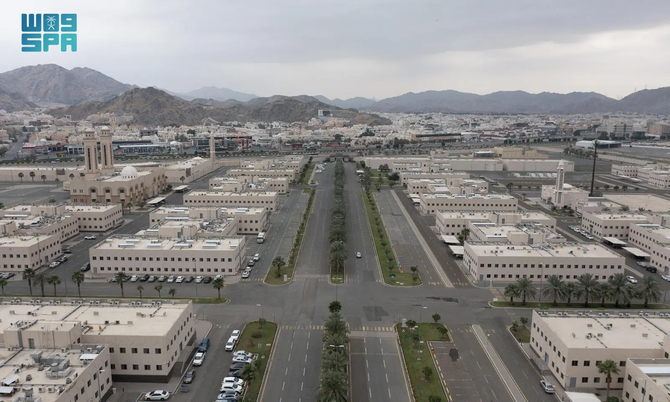
The Saudi market is benefiting from the influx of foreign professionals seeking long-term residence. SPA
Short Url
Updated 24 February 2025
Follow

Saudi real estate transactions jump 47% to $75.7bn amid GCC housing boom

  • Total real estate transactions across the GCC reached $383 billion
  • Kingdom’s housing demand is set to climb further, with more than 800,000 new units needed across Saudi Arabia, Kuwait, and Oman by 2030

RIYADH: Saudi Arabia’s real estate market continued its rapid expansion in 2024, with transactions surging 47 percent year on year to $75.7 billion, according to property consultancy Sakan. 

The growth underscores the rising demand for housing and large-scale urban development as the Kingdom pushes ahead with its economic diversification plans. 

Total real estate transactions across the Gulf Cooperation Council reached $383 billion, with Dubai accounting for 54 percent of the total at $207 billion, Sakan data showed. 

The sector’s expansion is being driven by population growth and government-backed infrastructure projects aimed at transforming the region’s urban landscape. 

The figures align with projections that the GCC’s real estate market will reach $4.67 trillion by 2025, according to data provider Statista. 

This comes as Gulf economies, traditionally reliant on oil revenues, increasingly invest in property development to diversify income streams and ensure long-term economic stability. 

“With more than $383 billion in transactions, the GCC real estate market is on an unprecedented growth trajectory. PropTech is no longer an option; it is a necessity,” said Abdullah Al-Saleh, the CEO of Sakan. 

The report said the Kingdom’s housing demand is set to climb further, with more than 800,000 new units needed across Saudi Arabia, Kuwait, and Oman by 2030. 

Riyadh, at the heart of this expansion, is expected to see its population hit 9.6 million by the end of the decade, fueled by an influx of expatriates and Vision 2030 initiatives to boost homeownership. 

The report warned that affordability remains a challenge, with house rents rising 10.6 percent in 2024, reflecting growing pressure on supply. 

Expat investments 

The findings indicate that a major factor driving the Gulf’s property boom is the growing trend of expatriates shifting from renting to homeownership. 

In Saudi Arabia, remittance outflows climbed from $31.2 billion in 2019 to $38.4 billion in 2023, signaling a stronger financial commitment from foreign professionals. Dubai is also capitalizing on this trend, recently approving 457 plots for freehold conversion to attract expat buyers. 

The Saudi market is benefiting from the influx of foreign professionals seeking long-term residence, coupled with rising investor confidence, Sakan said. 

Expatriates now make up 52 percent of the Gulf’s population, and as governments introduce residency incentives and mortgage-friendly policies, their role in real estate is becoming more pronounced. 

Luxury market 

Dubai continued to dominate the high-end property segment, recording 388 transactions above $10 million in the 12 months leading to the third quarter of 2024 — the highest globally. 

Saudi Arabia is also expanding its luxury real estate footprint, with The Red Sea Project attracting high-net-worth investors, while Qatar’s Qetaifan Island North is emerging as a prime destination for ultra-luxury developments, the report said. 

Sakan added that branded residences — luxury homes affiliated with hotel chains — are gaining traction across the region. The Middle East now accounts for 12 percent of global supply, with Dubai leading the market, boasting 121 branded residence projects in development. 

With 84.3 percent of the GCC’s population expected to live in cities by 2030, the report projects strong demand for residential and commercial real estate. While affordability concerns persist, it said government-backed initiatives, rising foreign investor interest, and shifting expat trends are driving a market poised for continued growth. 

As Saudi Arabia and the UAE push forward with their ambitious giga-projects, the Gulf’s real estate sector is cementing its position as a critical driver of economic diversification. 


GCC countries’ merchandise foreign trade volume reaches $1.6tn: GCC Stat

Updated 19 sec ago
Follow

GCC countries’ merchandise foreign trade volume reaches $1.6tn: GCC Stat

RIYADH: Gulf Cooperation Council countries’ merchandise foreign trade volume, excluding trade among themselves, increased by 7.4 percent in 2024 to reach $1.6 trillion, according to the GCC Statistical Center.

This compares to $1.5 trillion in 2023 and marks the highest level recorded in its history during the period from 2017 to 2024.

The data, which the Center compiles regularly in cooperation with national statistical centers and agencies in the member states, showed that the total value of merchandise exports reached about $850 billion in 2024, compared to roughly $821 billion in 2023, an increase of about 3.4 percent. 

The Center indicated that this growth is attributed to a 22.5 percent rise in non-oil exports and a 1.4 percent increase in re-exports, while exports of oil and natural gas declined by 1.8 percent.

Conversely, merchandise imports recorded a notable increase, reaching approximately $740 billion in 2024, compared to about $659 billion the previous year, a growth of 12.3 percent. 

As a result, the merchandise trade balance achieved a surplus estimated at about $110 billion in 2024, compared to a surplus of about $162 billion in 2023, recording a decline of 32.4 percent. This decrease was due to imports growing at a faster pace than exports.

China leads

According to 2024 data, China, India, and Japan topped the list of the GCC’s main trading partners. These are the same three countries that maintained their order from the previous year, 2023. 

Collectively, they accounted for about 36 percent of the GCC’s total merchandise trade exchange with the world, confirming the pivotal position of the Asian continent in the structure of Gulf global trade. 

China ranked first with an exchange volume of about $299 billion, or 18.8 percent. India followed with a volume of about $158 billion, or 9.9 percent, a difference of roughly $141 billion. 

Japan came third with about $114 billion, or 7.2 percent. The US placed fourth with an exchange volume of nearly $89 billion, or 5.6 percent, followed by South Korea with about $88 billion, or 5.5 percent, recording noticeable growth compared to the previous year. 

Notably, the top five countries together accounted for about 47 percent of the GCC’s total merchandise trade exchange in 2024, highlighting the depth of strategic trade links between the GCC and these major Asian and American economies.

The data also showed that China maintained its position as the largest trading partner for GCC exports, with a value of about $137 billion, representing 16.2 percent of total exports. 

It was followed by India with about $103 billion, or 12.1 percent, then Japan with $83 billion, or 9.8 percent, and South Korea with $74 billion, or 8.7 percent. Iraq came in fifth place with about $36 billion, or 4.2 percent. 

These top five destinations for exports accounted for about 51 percent of the GCC’s total exports in 2024, with a total value estimated at $433 billion, confirming the importance of Asian markets as key destinations for Gulf exports.

For merchandise imports, China continued to lead the list of trading partners, with import values reaching about $161 billion, or 21.8 percent. It was followed by the US with $57 billion, or 7.8 percent, then India with $55 billion, or 7.4 percent.

The top five sources for imports accounted for about 45 percent of the GCC’s total imports in 2024, valued at roughly $331 billion. This indicates the GCC’s reliance on its key partners in Asia and the US to meet its needs for industrial and technological goods, while it continues its role as a major supplier of energy and raw materials to global markets. 

These indicators reinforce Asia’s position as a primary hub for Gulf trade, both in terms of export flows and import diversity, cementing the ongoing shift toward strengthening economic partnerships between GCC countries and major Asian markets.

GCC showing its trading power

The 2024 data confirmed that the GCC maintained its position among the world’s largest trading economies, ranking fifth globally in terms of merchandise trade exchange volume.

This distinguished performance elevated the GCC from sixth place in 2023 to fifth in 2024, affirming its growing stature in the international trade system and its pivotal role in global supply and energy chains. 

The data showed that the Council maintained fifth place globally for total merchandise exports, with a value of about $850 billion, equivalent to 3.5 percent of the global total, reinforcing its position as a major exporter in international merchandise trade. 

Conversely, the GCC advanced to eighth place globally for total merchandise imports, up from ninth place the previous year, as the value of imports rose to about $740 billion, a growth of 12.3 percent, the highest growth rate among the world’s top ten economies. 

Regarding the merchandise trade balance surplus, it reached about $110 billion in 2024, placing the GCC fifth globally, despite a 32.4 percent decline compared to the previous year due to a slight decrease in exports alongside faster import growth. 

Despite this relative decline, the GCC retained its position among the top five economies with a global trade surplus, confirming its continued status as one of the most prominent players in international merchandise trade.

GCC foreign trade statistics indicated that the volume of trade among member states, measured by total intra-GCC merchandise exports, reached about $146 billion in 2024, recording growth of 9.8 percent compared to about $133 billion in 2023. 

This growth was attributed to a 3.7 percent increase in the value of national non-oil intra-GCC merchandise exports, reaching about $45 billion in 2024 compared to $43 billion the previous year, in addition to a 1.5 percent rise in intra-GCC oil and gas exports to $33 billion compared to $32.7 billion in 2023. 

Re-exported goods witnessed strong growth of 19.1 percent, rising from $57 billion in 2023 to about $68 billion in 2024, which contributed significantly to boosting the volume of intra-GCC merchandise trade. 

Data showed the development of intra-GCC merchandise trade during the period 2017–2024, ranging from $78 billion in 2017 and peaking at $146 billion in 2024— the highest level ever recorded. 

A sharp decline of 12.7 percent is noted for 2020 due to the impacts of the COVID-19 pandemic, before returning to a consistent upward trajectory in subsequent years.

Regarding the contribution of member states to the volume of intra-GCC merchandise trade in 2024, the UAE ranked first with a contribution of about $69.9 billion, or 47.9 percent of the total, compared to $66.5 billion in 2023, recording growth of 5.1 percent. 

Saudi Arabia came second with a value of $40.7 billion, or 27.9 percent of the total, compared to $34.7 billion the previous year, achieving growth of 17.2 percent. 

Kuwait and Qatar tied for third place, each contributing $10.2 billion, or 7.0 percent of the total each, compared to $6.2 billion for Kuwait and $7.4 billion for Qatar in 2023. This represented strong growth of 64.5 percent for Kuwait and 37.8 percent for Qatar. 

Oman ranked fifth with a value of about $7.9 billion, or 5.4 percent of the total, compared to $8.3 billion in 2023, recording a slight decline of 4.2 percent. Bahrain came sixth with a value of $7.1 billion, or 4.9 percent of the total, compared to $9.9 billion the previous year, a decrease of 28.1 percent. 

The data showed that the UAE and Saudi Arabia together accounted for about 75.8 percent of the GCC’s total intra-GCC trade in 2024, reflecting a clear concentration of intra-GCC trade activity in these two countries, which represent the main engine for regional trade movement.