WASHINGTON: The Trump administration released $5.3 billion in previously frozen foreign aid, mostly for security and counternarcotics programs, according to a list of exemptions reviewed by Reuters that included only limited humanitarian relief.
President Donald Trump ordered a 90-day pause on foreign aid shortly after taking office on January 20, halting funding for everything from programs that fight starvation and deadly diseases to providing shelters for millions of displaced people across the globe.
The freeze sparked a scramble by US officials and humanitarian organizations for exemptions to keep programs going. Secretary of State Marco Rubio, who has said all foreign assistance must align with Trump’s “America First” priorities, issued waivers in late January on military aid to Israel and Egypt, the top US allies in the Middle East, and for life-saving humanitarian aid, including food. The waivers meant those funds should have been allowed to be spent.
Current and former US officials and aid organizations, however, say few humanitarian aid waivers have been approved.
Reuters obtained a list of 243 further exceptions approved as of February 13 totaling $5.3 billion. The list provides the most comprehensive accounting of exempted funds since Trump ordered the aid freeze and reflects the White House’s desire to cut aid for programs it doesn’t consider vital to US national security.
The list identifies programs that will be funded and the US government office managing them.
The vast majority of released funds — more than $4.1 billion — were for programs administered by the US State Department’s Bureau of Political-Military affairs, which oversees arms sales and military assistance to other countries and groups. Other exemptions were in line with Trump’s immigration crackdown and efforts to halt the flow of illicit narcotics into the US, including the deadly opioid fentanyl.
More than half of the programs that will be allowed to go forward are run by the State Department’s Bureau of International Narcotics and Law Enforcement Affairs, or INL, and are aimed at helping fight drug trafficking and illicit migration to the US, according to the list.
Those exemptions were worth $293 million and included funds for databases to track migrants, identify possible terrorists and share biometric information.
A State Department spokesperson did not respond to a request for comment.
Reuters could not determine if some exemptions had been granted but were not on the list.
Trump has long railed against foreign aid, which has averaged less than 2 percent of total federal spending for the past 20 years, according to the nonpartisan Committee for a Responsible Federal Budget. Trump has described the US “foreign aid industry” as “in many cases antithetical to American values.”
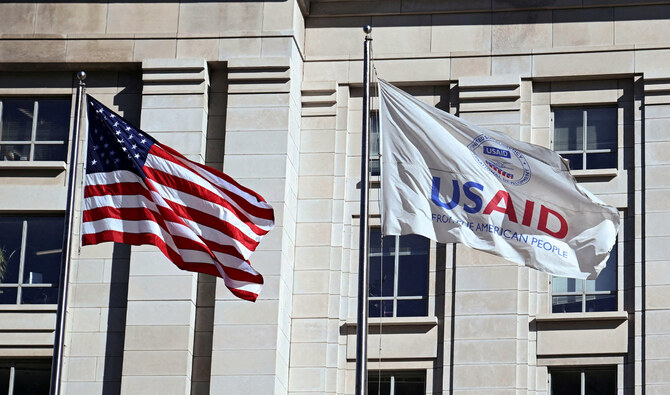
Billionaire Elon Musk’s Department of Government Efficiency has led an effort to gut the United States Agency for International Development, the main delivery mechanism for American foreign assistance and a critical tool of US “soft power” for winning influence abroad.
In contrast to security-related programs, USAID programs received less than $100 million in exemptions, according to the list. That compares to roughly $40 billion in USAID programs administered annually before the freeze.
Exempted USAID programs included $78 million for non-food humanitarian assistance in Gaza, which has been devastated by war. A separate $56 million was released for the International Committee of the Red Cross related to the ceasefire deal between Israel and Hamas, the list showed.
The list did not include specific exemptions for some of the world’s worst humanitarian crises, including Sudan, Syria, Ukraine, Myanmar and Afghanistan, which means funds for those places appeared to remain stopped.
Security exemptions included $870 million for programs in Taiwan, $336 million for modernizing Philippine security forces and more than $21.5 million for body armor and armored vehicles for Ukraine’s national police and border guards, the list showed.
The biggest non-security exemption was $500 million in funding for PEPFAR, the flagship US program fighting HIV/AIDS, which mainly funds health care services in Africa and is credited with saving millions of lives. That compares with PEPFAR’s annual budget in 2024 of $6.5 billion. PEPFAR is administered by the State Department’s global health bureau.
‘DYSFUNCTIONAL’
A current USAID employee, speaking on condition of anonymity, described the process for requesting exemptions as “very dysfunctional” and said the agency’s remaining staff have sought clarity on what criteria are being used. Rubio has said the Trump administration reached out to USAID missions overseas to identify and designate programs that will be exempted.
J. Brian Atwood, USAID’s administrator from 1993 to 1999, said reducing foreign aid to a narrow set of exemptions was shortsighted. “When people are starving or feeling desperate, they are going to become a security problem eventually,” he said. “They’ll migrate or become an immigration problem, or they will be more inclined to move to terrorism.”
The foreign aid that was paused by Trump had previously been approved by Congress, which controls the federal budget under the US Constitution. As a candidate and as president, Trump has said he opposes foreign aid for “countries that hate us” and would prefer to instead spend the money at home. The exemptions in the list were granted before a federal judge last week ordered the Trump administration to restore funding for foreign aid contracts and awards that were in place before January 20. Reuters was unable to establish what exemptions, if any, had been granted since February 13.
Many of the unfrozen programs reflect Trump’s focus on drug trafficking, including funds supporting fentanyl interdiction operations by Mexican security units and efforts to combat transnational criminal organizations. Trump’s aid freeze has thrown a wrench into those efforts, however.
Reuters reported last week that the pause halted anti-narcotics programs funded by the INL Bureau in Mexico that for years had been working to curb the flow of the synthetic opioid into the United States. More than $64 million was released to support Haitian police and a UN-approved international security force that is helping Haiti’s government fight escalating gang violence that has displaced more than one million people.
The money covers supplies of small arms, ammunition, drones, night vision goggles, vehicles and other support for the force, according to the list. The force is led by Kenya and includes personnel from Jamaica, Belize, the Bahamas, Guatemala and El Salvador.
The Bureau of International Security and Nonproliferation, focused on preventing the spread of nuclear weapons and other weapons of mass destruction, received 17 exemptions worth more than $30.4 million, the list showed.
Also released was $397 million for a US-backed program in nuclear-armed Pakistan that a congressional aide said monitored Islamabad’s use of US-made F-16 fighter jets to ensure they are employed for counterterrorism operations and not against rival India.
Some of the released funds were for small expenditures — including $604 for Musk’s Starlink satellite Internet system to run biometrics registration programs in the Darien Gap, a treacherous 60-mile route linking South and Central America used by US-bound illegal migrants.


![]()

US exempts security funds from aid freeze but little for humanitarian programs
Short Url
https://arab.news/yuxmc
US exempts security funds from aid freeze but little for humanitarian programs
- The Bureau of International Security and Nonproliferation, preventing the spread of weapons of mass destruction, received 17 exemptions worth more than $30.4 million
- Also released was $397 million for US-backed program in nuclear-armed Pakistan that a congressional aide said monitored Islamabad’s use of US-made F-16 fighter jets
Latest updates


© 2026 SAUDI RESEARCH & PUBLISHING COMPANY, All Rights Reserved And subject to Terms of Use Agreement.