ISLAMABAD: Six-year-old Soha Noon darts across the lush green field, her hair swaying with each determined stride. Amid the lively cheers at Islamabad’s Spanish Football Academy, her enthusiasm mirrors a growing trend: an increasing number of Pakistani children, including young girls, embracing football with passion and dedication.
This surge in interest is the result of efforts by individuals like José Alonso, a FIFA-certified coach and founder of the training camp in Islamabad. Alonso, who first visited Pakistan in 2005, recalls that physical education was not taken seriously in local schools, leading to a sedentary lifestyle with long-term consequences for people’s physical and mental well-being.
Football camps, he noted, provide an essential outlet for physical activity and social engagement, ensuring that children develop critical life skills.
“This is the tablet generation,” he said in a conversation with Arab News. “They were born into technology. Children hardly spend any time playing outdoors, which impacts their physical development and emotional well-being. Increased screen time and changes in diet can have lasting effects.”
“We want to teach children essential life skills through play, helping them develop psychomotor skills, teamwork, camaraderie, resilience and decision-making abilities,” he added.
Alonso’s academy offers professional training facilities and expert coaching for children aged five and above, incorporating fitness, diet awareness and character-building sessions into their programs.
“Football, basketball and handball require strategic thinking and transitions between defense and offense,” he said. “These games help children develop both physically and mentally. Parents can also encourage outdoor activities like trekking and walking to complement these efforts.”
Alonso believes structured training programs like his academy’s are pivotal in channeling this enthusiasm into real opportunities for young players.
“We work with the vision of nurturing young talent and instilling strong morals and values,” he added.
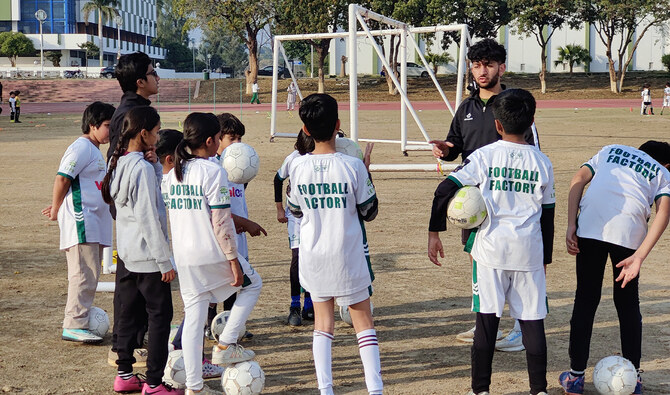
Faizan Sameer, founder of Football Factory in the capital, said training facilities such as the one he manages offer children the chance to pursue their dreams and hone their skills.
“When I was growing up, we didn’t have many opportunities, especially when it [came] to the underage [sports] programs,” he said. “Whether [the children] go pro or not, that doesn’t matter. But the platform should be there for [them] to achieve their dreams and pursue what they really love to do.”
He concurred with Alonso that screen time was a “big problem,” taking its toll on children’s attention spans.
“If you talk to [them], you would hardly find a kid who could listen to you for one minute or two minutes,” he said. “I believe there’s a strong sentiment that this is happening because of the screen time that is being given to the kids.”
Football may not yet rival cricket in Pakistan’s sports scene, but its popularity surges whenever the FIFA World Cup comes around. The country’s sports buffs passionately follow international teams, each rooting for their favorites.
Beyond fandom, Pakistan has also seen its own success stories in the game. The country’s street football team has performed remarkably well internationally, with a notable performance at the 2024 Norway Cup, where they reached the quarter-finals, defeating Norway’s Kasterndam Club 3-1.
The football camps in Islamabad say they are trying to inspire children and nurture their talent in the sport by providing them with structured training.
“I love playing football the most because it’s my favorite game,” young Soha said before starting her practice at the Spanish Football Academy. “I’ve been playing with a ball since I was a baby.”
Her father, Taimur Noon, shares her enthusiasm, saying he strongly believes his daughters should have the opportunity to participate in sports.
“I don’t have anything against screens,” he said. “I feel like it’s important for [children’s] development and education as well. But I feel like this is a big component that a lot of parents should focus on to help their children be connected to nature and outdoors for their well-being.”
An entrepreneur, Noon emphasized that playing football at the academy allows children to interact with peers from diverse backgrounds.
“It helps them interact with different kids from different backgrounds, with different sorts of qualities that they can obviously learn from and sort of adapt with and grow into a more diverse personality,” he continued. “When Soha converses with them, when she talks with them … she learns a lot, different cultures, different languages.”


![]()

Game changer: Football camps revive outdoor activities for children in Islamabad
Short Url
https://arab.news/rwh2v
Game changer: Football camps revive outdoor activities for children in Islamabad
- Parents say the camps provide outlets for physical activity, social engagement to the ‘tablet generation’
- Football coaches stress the importance of making it possible for children to participate in sports
Latest updates




© 2026 SAUDI RESEARCH & PUBLISHING COMPANY, All Rights Reserved And subject to Terms of Use Agreement.