BISHKEK, Kyrgyzstan: Kyrgyzstan has called for respect for its “historical and cultural heritage” after a Russian clothing brand used traditional Kyrgyz designs and claimed copyright over them, prompting accusations of “cultural appropriation.”
The Central Asian country is closely allied with Moscow, but has taken steps to reinforce its national identity in recent years after many decades of dependence on former ruler Russia.
“Recently, there has been an alarming trend related to the commercial use of national patterns and symbols, which are an integral part of the historical and cultural heritage of Kyrgyzstan,” its culture ministry said on Facebook Wednesday.
“The culture ministry calls on all organizations, entrepreneurs and individual citizens to respect the historical and cultural heritage of the Kyrgyz Republic.”
The furor began earlier this month after social media users accused Russian fashion label Yaka, founded in 2023, of ripping off traditional Kyrgyz patterns and including a legal warning against “copying” its designs on its website.
Yaka sells a range of clothes and accessories featuring colorful Kyrgyz patterns, describing them as “modern ethno-chic.”
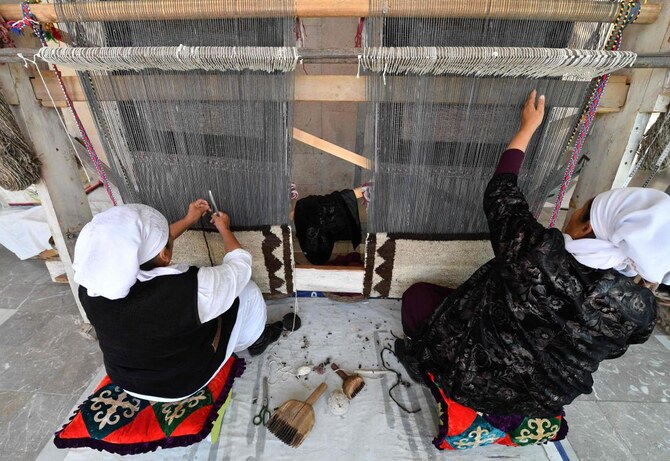
It also sells “shyrdaks,” traditional felt rugs native to Kyrgyzstan that are sometimes used as a dowry at weddings and have been included in UNESCO’s list of intangible cultural heritage.
Some social media users accused the brand of “cultural appropriation” — when a tradition is taken from another culture and used in a way that was not intended.
Kyrgyzstan has a relatively freer media and looser controls on social networks than its authoritarian Central Asian neighbors, but open anger against Russia is rare.
Yaka’s founder Anna Obydenova reacted to the criticism by calling on Kyrgyz people to “learn Russian better” in an Instagram video.
She later deleted the video and apologized.
In an Instagram post Tuesday, she denied accusations of disrespect toward Kyrgyz culture, saying she had worked with local craftswomen.
“I never said I came up with these patterns, nor did I call myself a designer or author of the motifs,” she said.
“I am simply a person who saw incredible beauty and wanted to share it with the world.”
Russian remains an official language in Kyrgyzstan, with a segment of the population expressing pro-Russian attitudes.
But others, especially among the younger generation, have turned away from Moscow, partly due to the invasion of Ukraine and Russian authorities’ often harsh treatment of Kyrgyz migrants.


![]()

Kyrgyzstan urges respect for heritage amid row over Russian ‘appropriation’
Short Url
https://arab.news/ckstb
Kyrgyzstan urges respect for heritage amid row over Russian ‘appropriation’
- “Recently, there has been an alarming trend related to the commercial use of national patterns and symbols,” its culture ministry said
- “The culture ministry calls on all organizations, entrepreneurs and individual citizens to respect the historical and cultural heritage of the Kyrgyz Republic“


Latest updates




© 2026 SAUDI RESEARCH & PUBLISHING COMPANY, All Rights Reserved And subject to Terms of Use Agreement.