



ISLAMABAD: A three-decade wait finally ends for Pakistan on Wednesday when it stages its first major International Cricket Council tournament since co-hosting the 1996 World Cup with Sri Lanka and India.
A 2009 terror attack on the Sri Lanka playing squad at Lahore resulted in international teams avoiding tours to Pakistan for almost a decade because of security concerns. The Sri Lankan test team returned in 2019 as international cricket made slow inroads back.
Since then, there’s been progress on bringing bigger, multinational events to Pakistan, where cricket — by a long margin — is the most popular sport.
But it doesn’t come without complications. Long-standing geo-political tensions mean India won’t send a team to Pakistan. So instead, India, which just about bankrolls the sport globally, will play its matches in the United Arab Emirates.
Why the hybrid hosting model?
India’s top team hasn’t played in Pakistan since 2008, and the two countries have tended to only compete against each other in major tournaments, including World Cups.
Pakistan traveled to India for the 50-over World Cup in 2023. But India’s reluctance to return the favor put this Champions Trophy tournament in doubt before the sport’s international governing body and both countries agreed on a solution. It’s similar to when Pakistan hosted the 2023 Asian Cup but India played its tournament games in Sri Lanka.
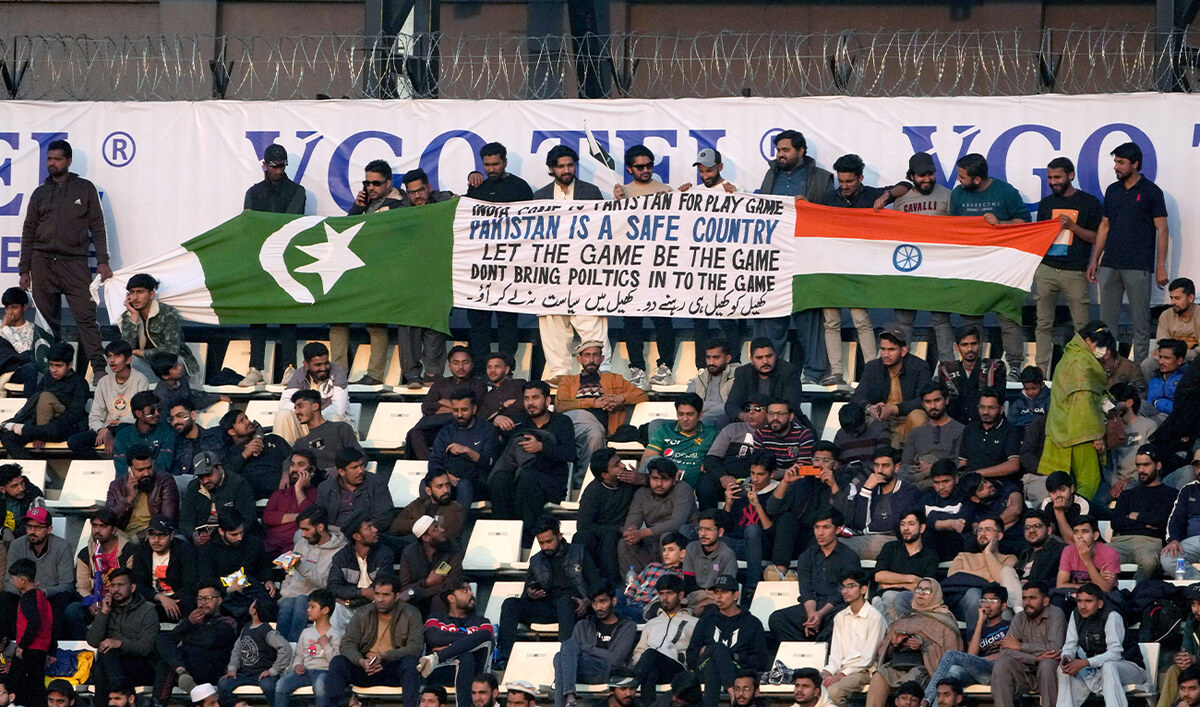
Fans hold Pakistani and Indian flags with a massaging banner as they watch the play of the tri-series ODI cricket match between Pakistan and New Zealand at Gaddafi Stadium in Lahore, Pakistan, on February 8, 2025. (AP)
Pakistan was subsequently awarded the 2028 Women’s T20 World Cup and the International Cricket Council agreed in principle that Pakistan will also play its games at a neutral venue when India hosts ICC tournaments until 2027.
When the archrivals do meet each other in ICC tournaments, it tends to catch the attention of more than a billion cricket-mad fans.
The group game on Feb. 23 in Dubai will certainly fit into that category. Pakistan will host 10 games, including one semifinal. The final will be played at Lahore on March 9 if India doesn’t qualify. Dubai is scheduled to host all three of India’s group matches and a semifinal.
What is the Champions Trophy?
The eight-nation, limited-overs tournament hasn’t been contested since 2017, when Pakistan beat India in the final in England.
The Champions Trophy was launched in 1998 and initially held every two years but later moved to a four-year cycle in between World Cups — the pinnacle in cricket’s one-day format.
International cricket has three main formats: test matches, which can last up to five days; one-dayers (or ODIs), where both teams are allocated 50 overs to bat and matches take up to 8 hours; and Twenty20s (or T20s), where both innings comprise 20 overs and games last just a few hours.
Pakistan was awarded the 2008 Champions Trophy, but due to security concerns the tournament was shifted to South Africa in 2009.
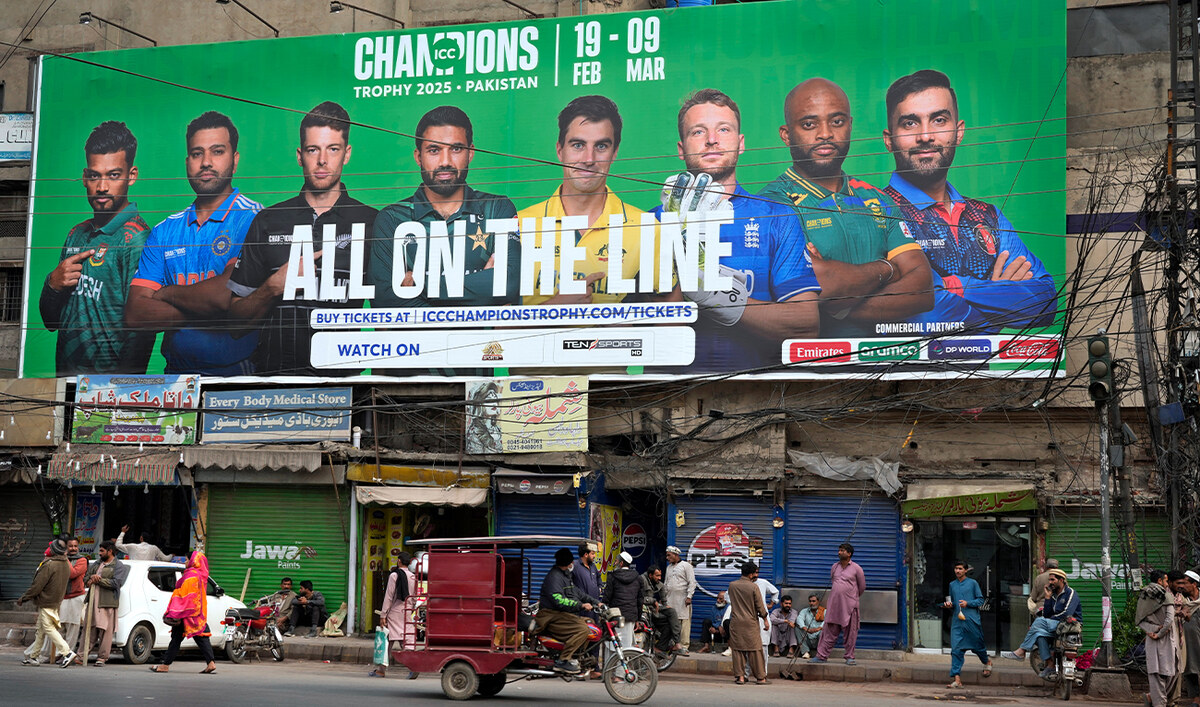
An auto-rickshaw drives past a billboard depicting portraits of the captains of participating cricket teams in ICC Champions Trophy 2025, installed at a roadside, in Lahore, Pakistan, on February 16, 2025. (AP)
India was due to host the Champions Trophy in 2021, but it was replaced with the T20 World Cup and was played in the UAE.
The eight participating teams this time were based on rankings after the 2023 World Cup in India, with Pakistan qualifying automatically as host. India, New Zealand and Bangladesh are in Group A with host Pakistan. England, South Africa, Australia and Afghanistan are in Group B.
Two former Champions Trophy winners — Sri Lanka and the West Indies — didn’t qualify for the ninth edition, which include 15 games across 19 days.
Boycott threat against Afghanistan
Politicians in England and South Africa urged their cricket authorities to boycott Champions Trophy group games against Afghanistan because of the Taliban’s ban on women’s sport and general erosion of women’s rights.
South Africa’s Sports Minister Gayton McKenzie last month said if the ultimate decision was his, then a South Africa vs. Afghanistan match “certainly would not happen.”
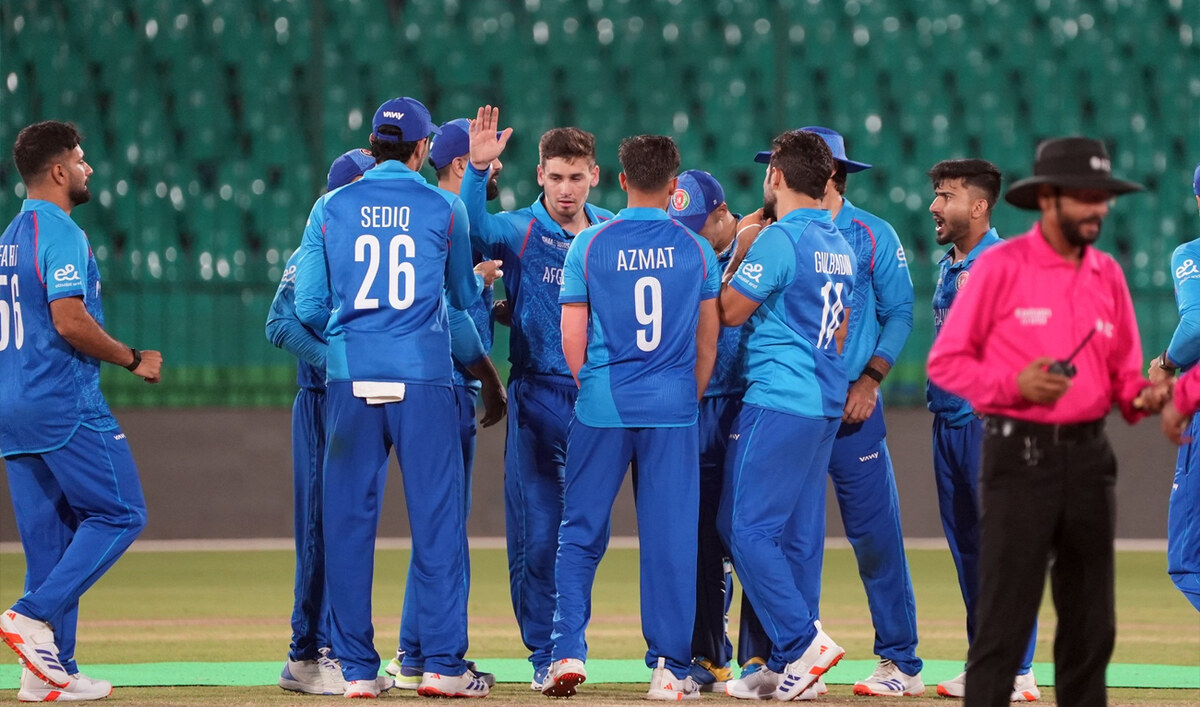
Afghan players celebrate after taking a wicket of New Zealand’s opening batsman Will Young during the practice match ahead of the upcoming ICC Champions Trophy 2025 cricket tournament, in Karachi, Pakistan, on February 16, 2025. (Photo Courtesy: Afghanistan Cricket Board)
In a similar move, more than 160 politicians in Britain urged the England and Wales Cricket Board to take a stand and boycott the Feb. 26 game against Afghanistan at Lahore.
However, despite describing the “appalling oppression” of women in Afghanistan as “gender apartheid,” English cricket administrators confirmed that the game will go ahead.
Stars missing
Australia will be without its World Cup-winning pace trio with Mitchell Starc joining injured Pat Cummins and Josh Hazlewood on the sidelines. With Marcus Stoinis’ surprisingly retired from ODI cricket late last month and allrounder Mitchell Marsh out injured, Australia will look to its bench strength to win the only missing ICC trophy from its cabinet.
Jasprit Bumrah, the key cog in India’s bowling armory, was ruled out of the tournament because of a back problem he sustained during the test series against Australia in January.
Also sidelined with injuries are England’s Jacob Bethell and Afghanistan spinner AM Ghazanfar. New Zealand is still sweating on the fitness of fast bowler Lockie Ferguson, who picked up hamstring injury during a recent T20 league series.
Stadiums upgrades
With work around the clock over the last four months and millions of dollars invested, Pakistan organizers finished upgrading the three stadiums at Karachi, Lahore and Rawalpindi.
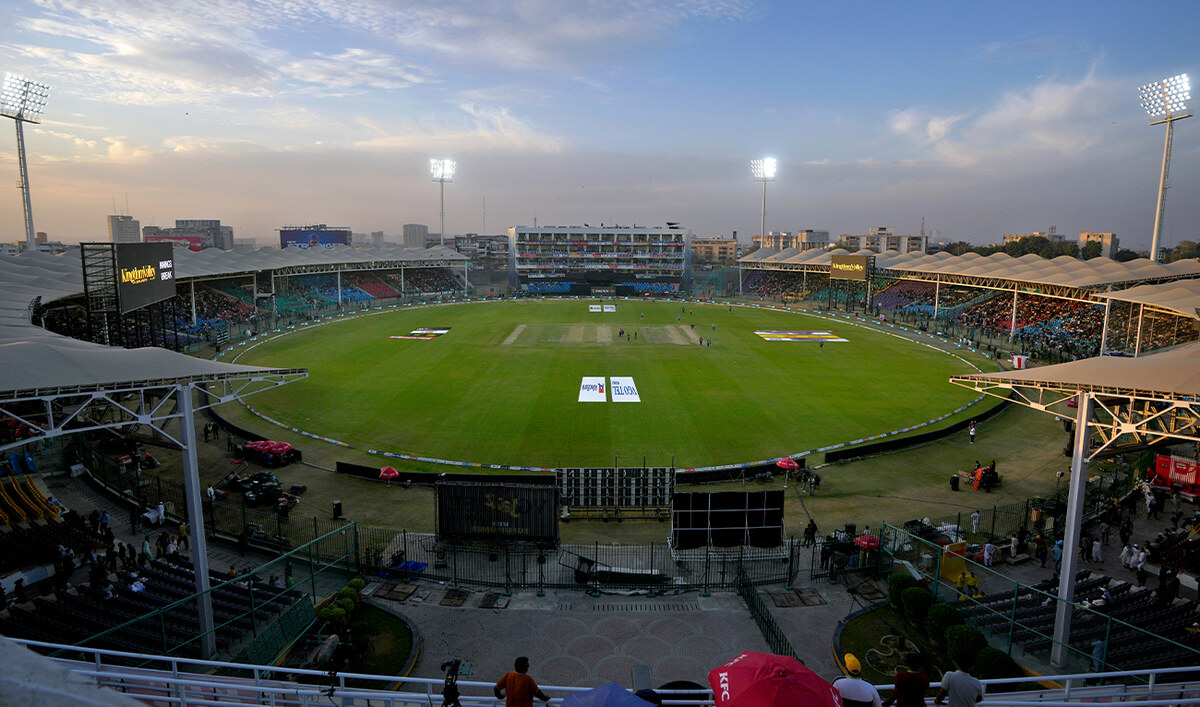
A view of newly renovated National Bank Stadium, where fans watch the tri-series ODI cricket final match between Pakistan and New Zealand, in Karachi, Pakistan, on February 14, 2025. (AP)
Described as “miracle” by Pakistan Cricket Board chairman Mohsin Naqvi, Lahore’s Gaddafi Stadium has gone through a massive overhaul with all the stands being reconstructed in 117 days. Karachi’s National Bank Stadium and Rawalpindi Cricket Stadium in Rawalpindi are the two other venues where major works were carried out. Karachi is hosting the tournament opener Wednesday between Pakistan and New Zealand.


