

Finmin says Pakistan has ‘big potential’ in skilled labor export to support Saudi Vision 2030

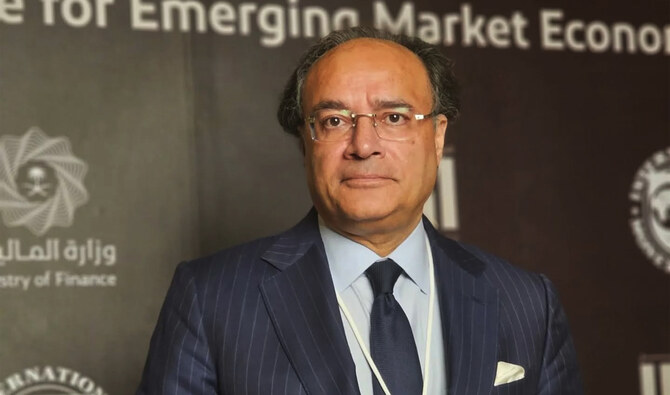
Pakistan Finance Minister Muhammad Aurangzeb, poses for a photo at the Emerging Markets Conference 2025 in AlUla, Saudi Arabia, on February 16, 2025. (PID)
Short Url
Updated 17 February 2025
Follow

Finmin says Pakistan has ‘big potential’ in skilled labor export to support Saudi Vision 2030

  • The statement came on the sidelines of a two-day Emerging Market Economies Conference in Saudi Arabia’s AlUla city
  • The Kingdom has initiated several groundbreaking projects as part of Vision 2030 to shift its economy away from oil

ISLAMABAD: Finance Minister Muhammad Aurangzeb has said that Pakistan has a “big potential” in terms of skilled labor export to Saudi Arabia to support the Kingdom’s Vision 2030 framework.
The statement came on the sidelines of a two-day Emerging Market Economies Conference in Saudi Arabia’s AlUla city, where he will be taking part in discussions around sustainable economic growth amid global uncertainties.
Saudi Arabia is consolidating its economy on modern lines under the Vision 2030, which is a strategic development framework that intends to cut the Kingdom’s reliance on oil.
The program is aimed at developing public service sectors such as health, education, infrastructure, recreation and tourism, and the Kingdom has initiated several groundbreaking projects that are expected to significantly impact the Pakistani labor market.
“We do think there is big potential in terms of exports from Pakistan, especially with respect to skilled labor, in terms of everything that Saudi Arabia requires in terms of executing Vision 2030,” Aurangzeb told Arab News on the sidelines of the AlUla summit.
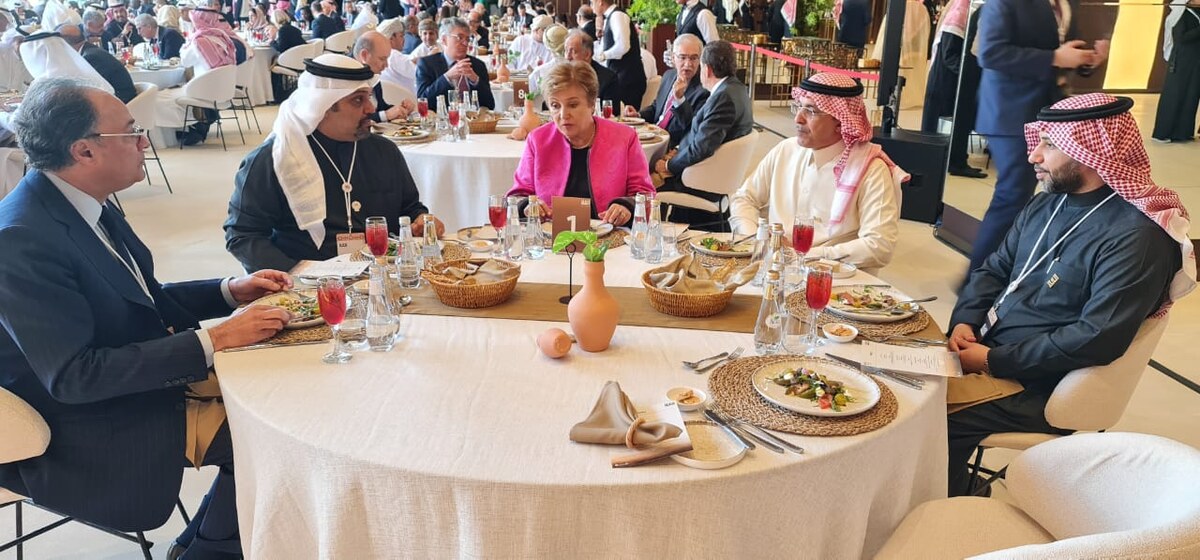


(From left to right) Pakistan Finance Minister Muhammad Aurangzeb joins the head table luncheon with Bahrain Finance and National Economy Minister Shaikh Salman bin Khalifa Al Khalifa, the International Monetary Fund Managing Director Kristalina Georgieva, Saudi Finance Minister Mohammed bin Abdullah Al-Jadaan and Vice Minister Abdulmuhsen Alkhalaf at the Emerging Markets Conference 2025 in Alula, Saudi Arabia on February 16, 2025. (Photo courtesy: Pakistan Finance Ministry)

“So, there are a number of opportunities for the two countries to work together.”
Pakistanis constitute one of the largest migrant communities in Saudi Arabia, with more than 2 million working in the Kingdom and making it the largest source of remittances to Pakistan. While a significant majority of these Pakistanis comprises blue-collar workers, there is still a growing demand for skilled labor in the Kingdom as it seeks to modernize its economy.
Rana Mujtaba, a spokesperson of the Pakistani Education and Professional Training Ministry, told Arab News in April last year that Islamabad was working on a new education policy to impart different technical skills to at least a million youth per annum to export trained human resource to Gulf countries, including Saudi Arabia.
The Saudi Fund for Development (SFD) has also proposed a partnership with the Pakistani government to offer training programs for young Pakistanis and impart “modern and relevant skills” to meet labor market demands in Saudi Arabia, Prime Minister Shehbaz Sharif’s office said this month.


Pakistan, UK discuss regional security, cross-border attacks as senior official visits Islamabad

Updated 20 January 2026
Follow

Pakistan, UK discuss regional security, cross-border attacks as senior official visits Islamabad

  • British envoy for Afghanistan Richard Lindsay’s visit comes at a time of a surge in militancy in Pakistan’s border regions
  • Pakistani diplomat says both sides reviewed broader security challenges, emphasized coordination to address ‘shared concerns’

ISLAMABAD: Pakistani and British officials have discussed regional security challenges and cross-border attacks during talks in Islamabad, a Pakistani diplomat said on Tuesday, during a visit of the United Kingdom’s Afghanistan envoy, Richard Lindsay, to the Pakistani capital.

Pakistan and the UK regularly cooperate on counterterrorism and security, with a focus on intelligence-sharing to combat militant activity. Lindsay’s visit comes at a time of a rise in militancy in Pakistan’s western provinces, which border Afghanistan.

Mohammad Sadiq, Pakistan’s special representative for Afghanistan, said the discussions in Islamabad focused on the regional security situation, particularly the urgent challenge posed by cross-border attacks.

“We also exchanged views on the latest regional security developments and broader security challenges,” he said on X. “We emphasized the importance of continued cooperation and coordination to address shared concerns and promote regional stability.”

Islamabad frequently accuses Afghanistan of allowing its soil and India of backing militant groups, such as the Tehreek-e-Taliban Pakistan (TTP) and the Balochistan Liberation Army (BLA), for attacks against Pakistan. Kabul and New Delhi deny this.

In recent years, Pakistan and the UK have engaged with each other on counterterrorism and cross-border crimes as part of bilateral cooperation.

Both sides held the second round of the Pakistan-UK Counter Terrorism Dialogue in London in February last year, reviewing global and regional threats and exchanging best practices. Over the years, armed forces of both countries have also maintained close cooperation, particularly in counterterrorism efforts and professional military training.