

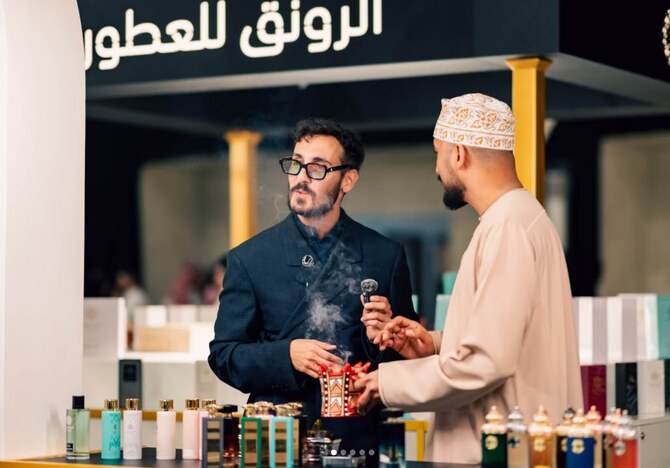
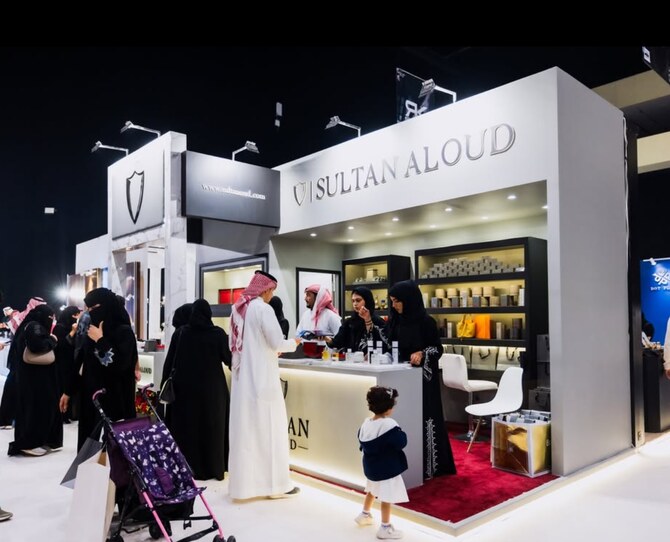


JEDDAH: Perfumes Week, hosted at the Benchmark Theater as part of the Jeddah Events calendar, attracted large crowds eager to explore a curated selection of premium fragrances.
The event, which was held from Feb. 6 to 14, featured both the rich cultural heritage of Arabian perfumes and modern Western fragrances, all crafted from high-quality ingredients.
Unlike other perfume events, Perfumes Week focused exclusively on high-end and niche brands only, offering a unique experience tailored to fragrance connoisseurs with a refined taste.
Omar Al-Ammari, a first-time attendee at Perfumes Week, said: “It was an amazing showcase of niche and luxury fragrances, with special promotions and discounts exclusive to the event, making high-end perfumes more accessible.
“From rare oud blends to stunning floral compositions, I came across scents I had never experienced before. It was also exciting to discover new brands I hadn’t known about.”
Ahmed Ghamdi, another visitor and a passionate perfume collector, said: “I’ve always loved collecting perfumes, particularly the finest Arabic fragrances.
“With Ramadan approaching, I usually focus on finding top scents like amber, cedarwood, and musk, and I was happy to find them here. Sometimes I even experiment with creating my own fragrance. At Perfumes Week I had the chance to mix and customize perfumes, which was an exciting experience.”
The event attracted 10,000 visitors daily and showcased over 20 brands specializing in both traditional Oriental and contemporary Western fragrances.
Yousef Al-Gharbawi, CEO of ALG Exhibitions, emphasized the event’s evolution, saying: “This year at Perfumes Week we were thrilled to introduce several exciting experiences that elevated the visitor experience. We incorporated technology with augmented reality features that allowed guests to engage with the fragrance stories and ingredients in a unique way.
“To keep the event fresh, we regularly seek feedback from past attendees and industry experts, ensuring that we incorporate new trends and ideas each year. Our partnerships with both local artisans and regional brands also helped us showcase a diverse range of fragrances, making the event a must-visit for enthusiasts.”
Beyond being a premier fragrance exhibition, Perfumes Week also plays a significant role in boosting Jeddah’s tourism industry.
Al-Gharbawi said: “Events like Perfumes Week play a pivotal role in elevating the tourism industry in Jeddah by creating a platform for both established and emerging brands.
“They foster networking opportunities, encourage collaboration, and stimulate interest in niche fragrances among consumers. Additionally, by attracting international visitors and media attention, we are helping to position Jeddah as a burgeoning hub for fragrance innovation in the region. This not only boosts local businesses but also contributes to the cultural exchange of ideas and trends in the global perfume industry.”
Suad Al-Shehri, an influencer from Makkah, who visited Perfumes Week with her family, said: “The moment you step into the hall you’re instantly surrounded by these amazing, aesthetic fragrances. I grew up watching my mom burn wood chips, and the scent of that would fill the furniture and stay on our clothes for weeks. She felt the same way about the brands here.”
In addition to the perfume showcase, a panel discussion featuring Kuwaiti perfumer Hassan Al-Sarraf and Saudi Sara Al-Dahlawi was held, with media professional Abdullah Al-Jredan moderating the session.
Titled “The Innovative Vision of Perfumer Hassan Al-Sarraf Through Scent Cinema,” the discussion explored Al-Sarraf’s unique approach to integrating perfumes with the entertainment industry.
Sharing details about his groundbreaking project, Al-Sarraf said: "My philosophy in perfume design revolves around the idea of capturing emotions and memories through fragrance notes.
“Perfume has evolved into an integral part of art and creativity. My project, ‘Perfume Design and Entertainment,’ aims to merge perfume design with the entertainment sector using innovative technologies.
“This unique initiative is already developed as a business plan, design, and concept, and I’m excited to bring it to life soon, with plans to launch it on a global entertainment platform like Riyadh Season or through the Saudi Entertainment Authority.”
Discussing “A Bright Future for the Industry … Designers Must Focus on the Creative Aspect,” Al-Dahlawi said: “Merging business with creative work is never easy, and designers must stay focused on their unique ideas and creative efforts.
“It’s crucial to carefully craft a fragrance identity and implement it according to the highest global standards and best practices.”
She also emphasized the power of fragrance in communication, adding: “Fragrances carry significant messages and meanings, and it’s important to understand how they convey these emotions.”
The event drew participation from famous regional perfume brands, including Thoughts of the Gulf, from Oman.
Amar Majed, sales manager at the Thoughts of the Gulf booth, said: “We came from Oman to showcase our exclusive range of products, including oud, amber, bakhour, incense, and perfumes that vary from strong to light scents.
“To make the experience even more special, we offered a 50 percent discount on most of our products, allowing customers to explore and enjoy the distinctive fragrances we bring to the market.”


