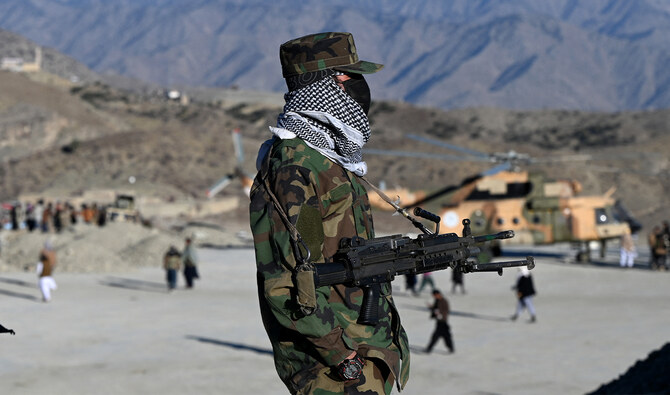
KARACHI: The Pakistani Taliban, or the Tehreek-e-Taliban Pakistan (TTP), which have recently stepped up their attacks in Pakistan, continue to get financial and logistical support from Kabul, a United Nations (UN) report said this month, amid Islamabad’s repeated calls for Afghanistan to rein in the group.
The disclosure was made in the 35th report of the UN’s Analytical Support and Sanctions Monitoring Team, dated Feb. 6, which was submitted to the UN Security Council.
The panel of experts established by the UN Security Council to support sanctions implementation against individuals and entities linked with militant groups submits biannual reports assessing the threat landscape to devise global policy and security strategies.
The report, which covered the period from Jul. 1, 2024 till Dec. 13, 2024, said the “status and strength of TTP in Afghanistan had not changed.” Pakistani officials have in the past said the TTP had around 10,000 fighters in its ranks.
“The ambition and scale of its attacks on Pakistan, though, had significantly increased, with over 600 attacks during the reporting period, including from Afghan territory,” it said.
“The Taliban continued to provide TTP with logistical and operational space and financial support, with one Member State noting that the family of [TTP chief] Noor Wali Masoud received a monthly payment of 3 million Afghanis (roughly $43,000).”
The development comes as Pakistan struggles to contain a surge in militancy in its western regions since a fragile truce between the TTP and Islamabad broke down in November 2022.
The TTP and other militant groups have frequently targeted security forces convoys and check-posts, besides targeted killings and kidnappings of law enforcers and government officials in recent months. Last year, the Pakistani military reported, 383 soldiers and 925 militants were killed in various clashes.
The TTP is a separate group from the Afghan Taliban, but Pakistani officials believe the two to be allies. The Pakistani government says the Taliban takeover of Afghanistan in 2021 has emboldened TTP fighters.
“There was increased collaboration between TTP, the Afghan Taliban and Al-Qaeda in the Indian Subcontinent, conducting attacks under the banner of Tehrik-e Jihad Pakistan,” the UN report said.
“Greater facilitation among these groups and TTP in terms of the provision of suicide bombers and fighters and ideological guidance might transform the latter into an extra-regional threat and an umbrella organization for other terrorist groups operating in the region.”
Islamabad has frequently blamed the surge in militant activities on Afghanistan, accusing it of sheltering and supporting militant groups that launch cross-border attacks. Afghan officials deny involvement and insist that Pakistan’s security issues are an internal matter of Islamabad.
Kabul continues to support Pakistani Taliban, recent UN report says