

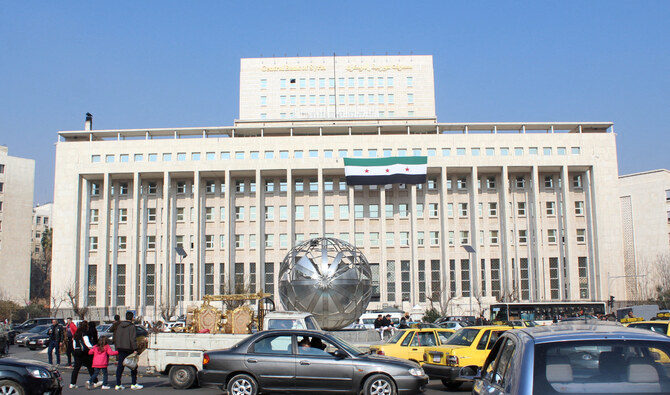

DAMASCUS: Syria’s new rulers are combing through the billion-dollar corporate empires of ousted President Bashar Assad’s allies, and have held talks with some of these tycoons, in what they say is a campaign to root out corruption and illegal activity.
After seizing power in December, the new administration that now runs Syria pledged to reconstruct the country after 13 years of brutal civil war and abandon a highly-centralized and corrupt economic system where Assad’s cronies held sway.
To do so, the executive led by new President Ahmed Al-Sharaa has set up a committee tasked with dissecting the sprawling corporate interests of high-profile Assad-linked tycoons including Samer Foz and Mohammad Hamsho, three sources told Reuters. Days after taking Damascus, the new administration issued orders aimed at freezing companies and bank accounts of Assad-linked businesses and individuals, and later specifically included those on US sanctions lists, according to correspondence between the Syrian Central Bank and commercial banks reviewed by Reuters.
Hamsho and Foz, targeted by US sanctions since 2011 and 2019 respectively, returned to Syria from abroad and met with senior HTS figures in Damascus in January, according to a government official and two Syrians with direct knowledge of the matter, who spoke on condition of anonymity.
The two men, who are reviled by many ordinary Syrians for their close ties to Assad, pledged to cooperate with the new leadership’s fact-finding efforts, the three sources said.
Accused by the US Treasury of getting rich off Syria’s war, Foz’s sprawling Aman Holding conglomerate has interests in pharma, sugar refining, trading and transport.
Hamsho’s interests, grouped under the Hamsho International Group, are similarly wide-ranging, from petrochemicals and metal products to television production.
Hamsho, whom the US Treasury has accused of being a front for Assad and his brother Maher, did not respond to a Reuters request for comment. Foz could not be reached. The establishment of the committee, whose members are not public, and the conversations between Syria’s new government and two of the Assad government’s closest tycoons who control large parts of Syria’s economy have not been previously reported.
The new Syrian government’s approach toward powerful Assad-linked businesses, yet to be fully clarified, will be key in determining the fate of the economy as the administration struggles to convince Washington and its allies to remove sanctions, Syrian analysts and businessmen say.
Trade Minister Maher Khalil Al-Hasan and Syrian investment chief Ayman Hamawiye both confirmed to Reuters the government had been in contact with some Assad-linked businessmen, but did not identify them or provide further details.
Khaldoun Zoubi, a long-term partner of Foz, confirmed his associate had held talks with Syrian authorities but did not confirm if he had been in the country.
“Foz told them he is ready to cooperate with the new administration and provide all the support to the Syrian people and the new state,” Zoubi said from the gilded lobby of the Four Seasons hotel in central Damascus, which Foz’s group majority owns. “He is ready to do anything asked of him.”
The two Syrian sources said Foz, who holds a Turkish citizenship, had left Damascus after the talks. Reuters could not ascertain Hamsho’s whereabouts.
The US has sanctioned Foz, Hamsho and others with a prominent economic role, including Yasser Ibrahim, Assad’s most trusted adviser.
Syrian analysts say around a dozen men make up the close ring of business barons tied to the former regime. HTS-appointed government officials consider all of them to be persons of interest.
Syrian authorities have ordered companies and factories belonging or linked to the tycoons to keep working, under supervision of HTS authorities, while the committee investigates their various businesses.
“Our policy is to allow for their employees to continue working and supplying goods to the market while freezing their money movements now,” Trade Minister Hasan told Reuters in an interview early in January. “It’s a huge file. (Assad’s business allies) have the economy of a state in their hands. You can’t just tell them to leave,” he added, explaining the new government could not avoid engaging with the tycoons.
Hamsho International Group is among those put under HTS supervision, according to the sources with direct knowledge.
A Reuters visit in late January showed little work was being carried out at its modern multi-story headquarters in Damascus, where some offices had been looted in the wake of Assad’s fall.
Staff have been instructed to cooperate fully with the new Syrian administration, members of whom regularly visit the company seeking information, said one employee, who asked not to be identified by name.
Some economists say the country’s dire economic situation required major domestic corporations to continue to operate regardless of who they may be affiliated with.
The UN says 90 percent of Syrians live below the poverty line. While basic goods shortages have eased after strict trade controls dissolved in the aftermath of Assad’s fall, many Syrians still struggle to afford them.
“Syrian authorities need to be wary of a harsh crackdown on former regime cronies because this could create significant shortages (of goods),” said Karam Shaar, director of a Syria-focused economic consultancy bearing his name.
Assad’s rapid fall, culminating with his Dec. 8 escape to Russia, left many Syrian oligarchs with no time to dispose of or move their local assets that have since been frozen, giving Syria’s new rulers strong leverage in dealing with the tycoons, according to two prominent businessmen and the government official.


