

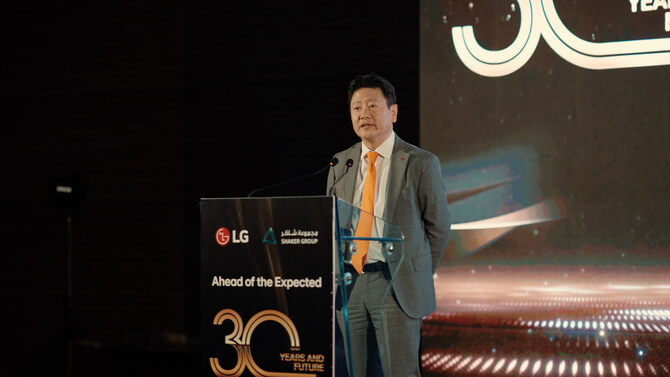
LG Electronics, Shaker Group mark 30 years of sustainable HVAC innovation

1 / 2
Pilwon Jung, MEA regional representative of LG Electronics
2 / 2
Mohammed Ibrahim Abunayyan, CEO of Shaker
Short Url
Updated 10 February 2025
Follow

LG Electronics, Shaker Group mark 30 years of sustainable HVAC innovation

LG Electronics Saudi Arabia and Al-Hassan Ghazi Ibrahim Shaker Co., an importer, manufacturer and distributor of air conditioners and home appliances in the Kingdom, are celebrating their 30-year partnership, a journey marked by innovation and excellence in the heating, ventilation, and air conditioning industry.

This long-term alliance will continue to promote LG’s innovative HVAC solutions, and reinforce LG and Shaker’s position as a leading HVAC solution provider in the Kingdom. These advanced solutions include residential and commercial air conditioning and chiller systems. All are designed to emphasize “Made in Saudi,” sustainability, energy efficiency, and alignment with Saudi Vision 2030’s development goals.

The HVAC sector has undergone profound change in recent times, with artificial intelligence and Internet of Things boosting innovation in the field. Today, customers expect solutions to be more sustainable, efficient, and optimized for operations than ever before. 

LG and Shaker Group have been at the forefront of this evolution with advanced products like the LG Multi V I, which is expected to launch in the Kingdom later this year. LG Multi V I uses integrated AI algorithms to analyze real-time data and thereby optimize energy usage. This enables the product to be flexible enough to adjust cooling during peak hours as well as monitor room occupancy to ensure temperature levels are ideally set with minimal manual input. This makes it the premier option for consultants in charge of complex projects.

Pilwon Jung, MEA regional representative of LG Electronics, said: “Over the past three decades, LG has collaborated with Shaker to deliver the most advanced HVAC solutions to meet the evolving needs of our customers. Our commitment to driving growth, enhancing customer satisfaction, and contributing to the Kingdom’s sustainability goals remains stronger than ever.”

The partnership was launched in 2008 with the establishment of a joint venture factory in Riyadh that initially produced up to 750,000 units annually. This was a critical step in localizing production while addressing the Kingdom’s pressing need for HVAC solutions.

In recognition of the remarkable milestones achieved, LG and Shaker Group will be honoring key stakeholders who have played significant roles in realizing the partnership’s objectives. This move underscores their shared commitment to fostering a culture of excellence and acknowledging the invaluable contributions of their partners.

Mohammed Ibrahim Abunayyan, CEO of Shaker, said: “Our 30-year collaboration with LG Electronics Saudi Arabia is a testament to our shared commitment to innovation and contributing to the Kingdom’s prosperity. This enduring partnership reflects our joint dedication to delivering leading, cutting-edge, energy-efficient HVAC solutions that align with Saudi Arabia’s strategic vision while meeting the evolving needs of our valued consumers. Together, we continue to drive excellence, shaping a future of progress and sustainable development.”

As they celebrate this milestone, LG and Shaker Group reaffirm their commitment to promoting sustainable and energy-efficient HVAC solutions that align with Saudi Vision 2030 and contribute to a diversified economy.


Jameel Observatory-CREWSnet advances climate resilience in Bangladesh

Updated 20 January 2026
Follow

Jameel Observatory-CREWSnet advances climate resilience in Bangladesh

The Jameel Observatory Climate Resilience Early Warning System Network, an initiative co-founded by the Massachusetts Institute of Technology and Community Jameel to reinvent climate change adaptation in vulnerable communities into a proactive, integrated and evidence-based process, announced the launch of its Adaptation Fortress initiative, transforming existing cyclone shelters and providing protection from heat waves in Bangladesh for the first time.
The first Adaptation Fortress is under construction in Satkhira district, southwest Bangladesh. If this pilot is successful, the initiative will open a pathway, with additional funding, to scaling up to 1,250 Adaptation Fortresses providing heatwave relief to half a million of the region’s most vulnerable residents.
More than 30 million people live in southwestern Bangladesh. Between 2019 and 2021, including in the midst of the COVID-19 pandemic, multiple cyclones hit the region, devastating land, homes and entire communities. The threats posed by climate change — rising sea levels and more extreme weather — mean that people living in this region are likely to face similar crises in the years ahead. In addition to cyclones, extreme heat is a growing threat, putting people at risk of dehydration and heatstroke. In 2024, the UN found that heat waves caused nationwide school closures for two weeks, with some schools closing for six to eight weeks due to the combined impact of heat waves and flooding.
In Bangladesh, the Jameel Observatory-CREWSnet has used its mid-century climate projections and analysis of local human systems to design a pilot for a multi-purpose, multi-objective structure called an Adaptation Fortress.
By engaging extensively with local communities, the Jameel Observatory-CREWSnet, which includes among its partners BRAC, a global nongovernmental organization established in Bangladesh, is demonstrating a new model of climate adaptation that repurposes schools that are also cyclone shelters to serve as sanctuaries during extreme heat events.
The climate resilient shelter model is the first of its kind in Bangladesh and serves as a blueprint for infrastructure development across South Asia. Designed to protect the most vulnerable community members during government-declared heat emergencies, Adaptation Fortresses feature solar power generation and battery backup systems to ensure the shelter is resilient to outages during extreme heat conditions. The site also includes rainwater harvesting capacity and is designed so that excess energy generated when air conditioning is not in use is made available for community use.
Mohammed Abdul Latif Jameel KBE, founder and chairman of Community Jameel, said: “The Jameel Observatory-CREWSnet’s construction of this first pilot Adaptation Fortress marks a milestone for Bangladesh and the region. It lays the foundation for a proactive response to cyclones and heat stress — emergencies that the team has projected will become frequent events, threatening the lives of millions in Bangladesh. By adapting infrastructure today, we are building the resilience needed for tomorrow.”
Professor Elfatih Eltahir, lead principal investigator of the Jameel Observatory-CREWSnet, said: “Bangladesh built a vast network of cyclone shelters that have been effective in protecting vulnerable populations. For the first time the Jameel Observatory-CREWSnet is introducing the concept of shelter from heat waves as well as cyclones in southwest Bangladesh. This integrated and proactive initiative will significantly improve climate resilience in a region with some of the highest risks from climate change.”
Dr. Deborah Campbell, executive director of the Jameel Observatory-CREWSnet, said: “Bangladesh is getting hotter and will experience more frequent and severe heat waves, leaving many people very vulnerable to heat stress and lacking the resources to adapt. The Adaptation Fortress initiative will provide shelter for the most vulnerable community members in southwest Bangladesh and has the potential to serve as a model for similar proactive climate resilience infrastructure development across Bangladesh and South Asia.”
Dr. Md Liakath Ali, principal investigator of the Jameel Observatory-CREWSnet at BRAC, said: “BRAC is proud to partner with the Jameel Observatory-CREWSnet in pioneering the Adaptation Fortress initiative, an important step toward protecting vulnerable communities from the growing risks of extreme heat in coastal Bangladesh. By transforming existing cyclone shelters into multi-purpose, climate-resilient infrastructure, we are demonstrating how locally grounded solutions can address emerging climate hazards while strengthening community well-being. Alongside the pilot, we are committed to engaging policy makers so that future heat and climate risks are integrated into national planning processes. The lessons from this initiative will not only support communities in the southwest, but also inform long-term, scalable strategies for resilience across the country.”