

PIF’s SIRC, Germany’s Concord Blue to launch first phase of sewage to renewable hydrogen station

1 / 2
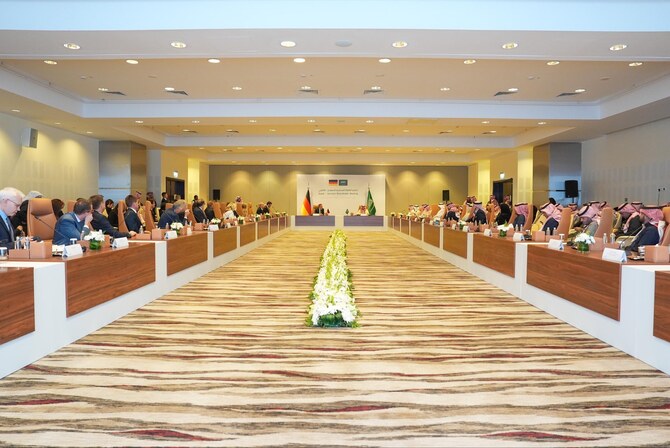
SIRC inked the memorandum of understanding with Concord Blue for the first phase of the development. X/@MAAljadaan
2 / 2
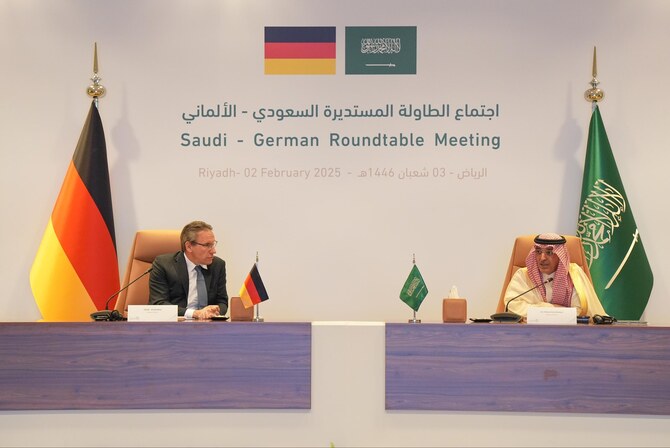
SIRC inked the memorandum of understanding with Concord Blue for the first phase of the development. X/@MAAljadaan
Short Url
Updated 07 February 2025
Follow

PIF’s SIRC, Germany’s Concord Blue to launch first phase of sewage to renewable hydrogen station

  • Both parties will offer innovative solutions that contribute to environmental sustainability and promote the circular carbon economy
  • Plan will see around 100 million tonnes of waste recycled annually

RIYADH: A new agreement between the Saudi Investment Recycling Co. and the German company Concord Blue will lead to the construction of a station in the Kingdom that converts sewage into renewable hydrogen.

The Public Investment Fund firm inked the memorandum of understanding with the engineering company for the first phase of the development, whereby the plant will use Concord Blue Reformer technology to develop sludge treatment projects resulting from sewage and other organic waste, according to a statement.

Concord Blue Reformer’s non-combustion reforming process uses the principles of staged reforming to efficiently and cleanly recycle waste into energy.

This falls in line with SIRC’s goal of actively leading the charge in implementing impactful waste reduction strategies, accelerating the widespread adoption of renewable energy solutions, and championing the principles of environmental justice.

It also aligns with the comprehensive plan announced by the Kingdom’s Ministry of Environment in January 2024, which targets recycling a significant portion — up to 95 percent — of the country’s waste.

“Under this memorandum, SIRC will provide sewage and agricultural waste as raw materials, while Concord Blue will convert this waste into renewable hydrogen, in addition to transferring knowledge in this field and training national cadres to build, operate and maintain facilities for converting waste into hydrogen,” said Faisal Al-Solami, executive vice president of finance and strategic planning at SIRC.

When fully implemented, the plan will see around 100 million tonnes of waste recycled annually, showcasing the nation’s commitment to sustainability.

Under the terms of the newly signed MoU, both parties will offer innovative solutions that contribute to environmental sustainability and promote the circular carbon economy by producing high-quality green hydrogen and manufacturing biochar and industrial-activated coal. 

Al-Solami said signing the agreement is a key step toward achieving Vision 2030’s recycling and sustainability goals, as it promotes environmentally friendly energy solutions from waste, reduces emissions, and supports an eco-conscious economy.

This comes as the first phase of the project will achieve several goals, including reducing the volume of waste sent to landfills, enhancing hydrogen production on a large scale, and developing innovative solutions to reduce carbon emissions.

It will also support local manufacturing projects and contribute to achieving a zero-carbon future by producing clean fuel that supports the transition to a hydrogen economy in the industrial and transportation sectors.


Saudi POS spending jumps 28% in final week of Jan: SAMA

Updated 06 February 2026
Follow

Saudi POS spending jumps 28% in final week of Jan: SAMA

RIYADH: Saudi Arabia’s point-of-sale spending climbed sharply in the final week of January, rising nearly 28 percent from the previous week as consumer outlays increased across almost all sectors. 

POS transactions reached SR16 billion ($4.27 billion) in the week ending Jan. 31, up 27.8 percent week on week, according to the Saudi Central Bank. Transaction volumes rose 16.5 percent to 248.8 million, reflecting stronger retail and service activity. 

Spending on jewelry saw the biggest uptick at 55.5 percent to SR613.69 million, followed by laundry services which saw a 44.4 percent increase to SR62.83 million. 

Expenditure on personal care rose 29.1 percent, while outlays on books and stationery increased 5.1 percent. Hotel spending climbed 7.4 percent to SR377.1 million. 

Further gains were recorded across other categories. Spending in pharmacies and medical supplies rose 33.4 percent to SR259.19 million, while medical services increased 13.7 percent to SR515.44 million. 

Food and beverage spending surged 38.6 percent to SR2.6 billion, accounting for the largest share of total POS value. Restaurants and cafes followed with a 20.4 percent increase to SR1.81 billion. Apparel and clothing spending rose 35.4 percent to SR1.33 billion, representing the third-largest share during the week. 

The Kingdom’s key urban centers mirrored the national surge. Riyadh, which accounted for the largest share of total POS spending, saw a 22 percent rise to SR5.44 billion from SR4.46 billion the previous week. The number of transactions in the capital reached 78.6 million, up 13.8 percent week on week. 

In Jeddah, transaction values increased 23.7 percent to SR2.16 billion, while Dammam reported a 22.2 percent rise to SR783.06 million. 

POS data, tracked weekly by SAMA, provides an indicator of consumer spending trends and the ongoing growth of digital payments in Saudi Arabia.  

The data also highlights the expanding reach of POS infrastructure, extending beyond major retail hubs to smaller cities and service sectors, supporting broader digital inclusion initiatives.  

The growth of digital payment technologies aligns with Saudi Arabia’s Vision 2030 objectives, promoting electronic transactions and contributing to the Kingdom’s broader digital economy.