ISLAMABAD: Pakistan contacted top United Nations officials on Wednesday to raise concern over alleged rights violations in Indian-administered Kashmir, as the 57-member Organization of Islamic Cooperation (OIC) reiterated its demand that New Delhi rescind its 2019 decision to revoke the disputed region’s special constitutional status.
Kashmir has remained a flashpoint between India and Pakistan since their independence in 1947, with both nuclear-armed neighbors claiming it in full but controlling only parts of it. They have fought wars over the region and continue to engage in diplomatic efforts to assert their respective positions.
Pakistan accuses India of committing human rights violations in the region while denying Kashmiris the right to self-determination. India, in turn, accuses Pakistan of supporting militancy in the territory. Both countries reject each other’s allegations.
On Aug. 5, 2019, India unilaterally revoked the special status of Jammu and Kashmir, stripping it of the limited autonomy it had previously enjoyed. The move led Pakistan to downgrade diplomatic ties with New Delhi.
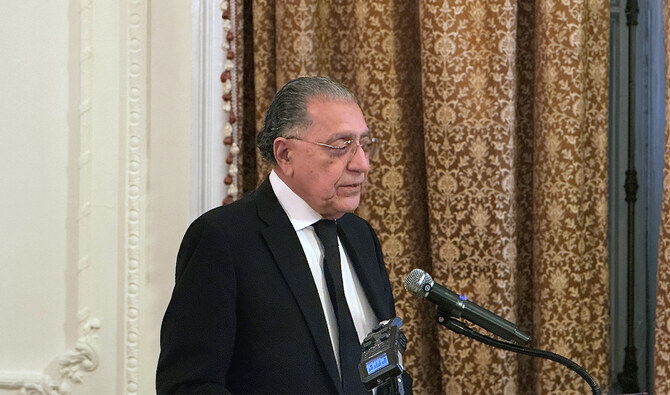
“Ambassador Munir Akram, Pakistan’s Permanent Representative to the UN, met with Ambassador Fu Cong, Permanent Representative of China, who is also President of the UN Security Council, to hand over the letter written by Senator Mohammad Ishaq Dar, Deputy Prime Minister and the Foreign Minister of Pakistan,” the Pakistani mission at the UN said in a social media post.
It added that the letter “drew the Security Council’s attention to the grave human rights violations in IIOJK [Indian Illegally Occupied Jammu and Kashmir] at the hands of the Indian occupation forces and urged the Council members to take decisive steps, without any further delay, to secure the implementation of its own resolutions and end India’s egregious violations of the human rights of the Kashmiri people, in particular the right to self-determination.”
The letter was also copied to the President of the UN General Assembly and the UN Secretary-General.
Separately, the OIC, a bloc of Muslim-majority nations, also reiterated its position on the Kashmir dispute.
“The General Secretariat reiterates the OIC’s call to revoke all illegal measures initiated on August 5, 2019, which aimed to change the demographic structure of the disputed territory,” the organization said in a statement.
The developments came as Pakistan marked its annual Kashmir Solidarity Day on Feb. 5 to express support for Kashmiris in Indian-administered territory.
Prime Minister Shehbaz Sharif visited Muzaffarabad, the capital of Pakistani Kashmir, calling on India to engage in “meaningful and result-oriented” dialogue over the dispute. He asserted that New Delhi’s unilateral measures had failed due to resistance from the local population.
Pakistan’s army chief, General Asim Munir, also traveled to the region, expressing optimism that Kashmir would eventually become part of Pakistan as he vowed to defend the country’s territorial integrity.


![]()

Pakistan urges UN action on Kashmir as OIC reiterates call to revoke India’s 2019 move
Short Url
https://arab.news/4t688
Pakistan urges UN action on Kashmir as OIC reiterates call to revoke India’s 2019 move
- The developments came as Pakistan marked its annual Kashmir Solidarity Day on February 5
- Pakistan’s letter to the UN officials mentioned alleged human rights violations by Indian forces
Latest updates


© 2026 SAUDI RESEARCH & PUBLISHING COMPANY, All Rights Reserved And subject to Terms of Use Agreement.