



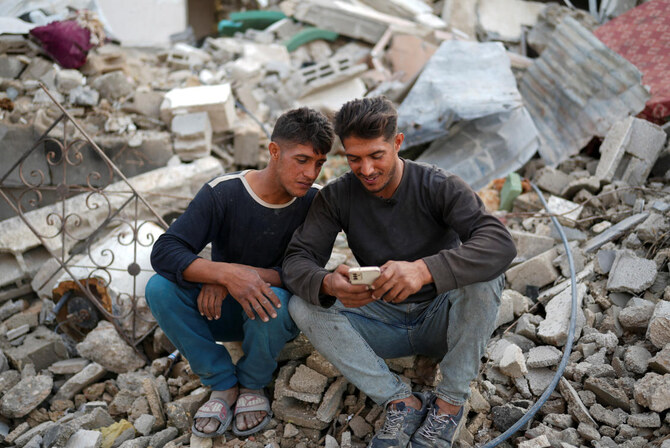
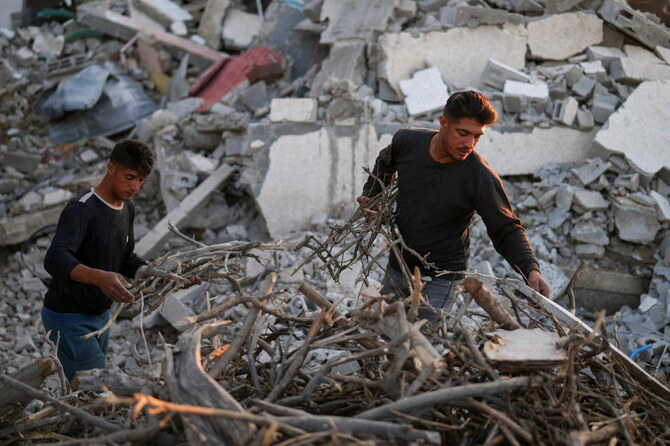

GAZA: The emotional reunion of twin brothers in Gaza after Israel allowed movement within the enclave as part of a ceasefire deal provided a visceral image of Palestinian survival after 15 gruelling months of death, separation and destruction.
Video of the twins’ ecstatic, tearful embrace amid the crowds of people trekking home a week ago from displacement camps was widely viewed around the world. But Ibrahim and Mahmoud Al-Atout had both endured loss and hardship that tinged the joy of their reunion.
“I didn’t want to let go of him. It’s like the soul returned to the chest, the soul returned to the heart,” said one of the 30-year-old twins, Mahmoud, speaking about their experience days later in a video obtained by Reuters.
Opinion
This section contains relevant reference points, placed in (Opinion field)
The two men, from the Jabalia area of northern Gaza, were split up early in the conflict that began when Hamas militants attacked Israel on Oct. 7, 2023, killing around 1,200 people and seizing about 250 hostages according to Israeli tallies.
The Israeli military campaign in Gaza killed more than 47,000 people, according to Palestinian health authorities, and levelled much of the enclave.
Early on, Israel ordered civilians to leave the north, where its military operations were most intense, but not everybody did so. Those who did travel south were barred from returning until last week as part of the deal for a ceasefire and hostage release.
Ibrahim had ended up in the south, while Mahmoud stayed in the north.
When news came late one night that he could go back to Jabalia, Ibrahim phoned Mahmoud, who quickly dressed and rushed to a meeting point on a main road into northern Gaza.
“Imagine: I stood on my feet for six hours, standing around looking like this (and wondering) ‘where is Ibrahim? Where is Ibrahim?,’” said Mahmoud in the video obtained by Reuters.
People coming up from the south kept mistaking him for his brother, Mahmoud said, surprised he had come north so quickly. They then would tell him to wait longer because Ibrahim was traveling with his six young daughters and had to go slowly.
“He called out to me ‘Mahmoud’, and I couldn’t comprehend. I ran quickly and we hugged each other,” he said, describing their moment of reunion.
Together again
Now reunited, the two men and their families say they spend time picking through the ruins of their family home, destroyed in an Israeli airstrike in November 2023 that killed one of Ibrahim’s daughters and injured another in her head and legs.
Palestinians accuse Israel of indiscriminate bombardment. Israel says Hamas hides among the civilian population and it tries to hit the group while minimizing harm to civilians.
Ibrahim had not wanted to go south. But Israeli forces had moved toward north Gaza’s Indonesian Hospital while he was there with his family and the Red Crescent moved them all to a bigger hospital in the south where better treatment was available.
As each man spoke in the video obtained by Reuters, using big arm movements to illustrate their points, the other sat still and quiet, taking it in.
Things were hard for Ibrahim and his family in the south without home or possessions, and communications were cut off for about four months.
“I was devastated to the point where I lost weight,” said Mahmoud of that time.
Together again, they sat in the evening with a fire by the rubble of their home, cooking bread on a metal shelf, their small children gazing at them with delight.


