

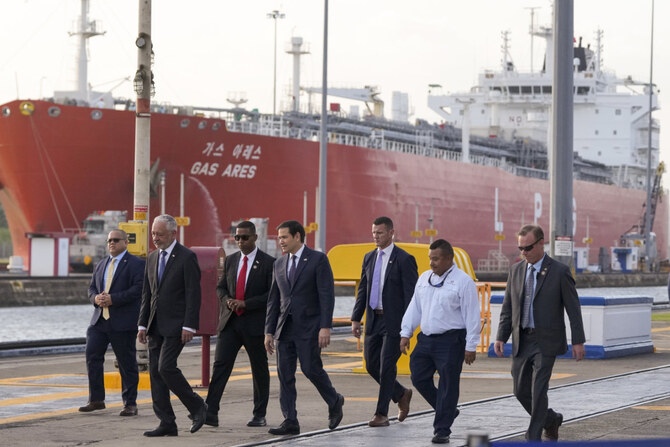

PANAMA CITY: US Secretary of State Marco Rubio brought a warning to Panamanian leader José Raúl Mulino on Sunday: Immediately reduce what President Donald Trump says is Chinese influence over the Panama Canal area or face potential retaliation from the United States.
Rubio, traveling to the Central American country and touring the Panama Canal on his first foreign trip as top US diplomat, held face-to-face talks with Mulino, who has resisted pressure from the new US government over management of a waterway that is vital to global trade.
Mulino told reporters after the meeting that Rubio made “no real threat of retaking the canal or the use of force.”
Speaking on behalf of Trump, who has demanded that the canal be returned to US control, Rubio told Mulino that Trump believed that China’s presence in the canal area may violate a treaty that led the United States to turn the waterway over to Panama in 1999. That treaty calls for the permanent neutrality of the American-built canal.
“Secretary Rubio made clear that this status quo is unacceptable and that absent immediate changes, it would require the United States to take measures necessary to protect its rights under the treaty,” the State Department said in a summary of the meeting.
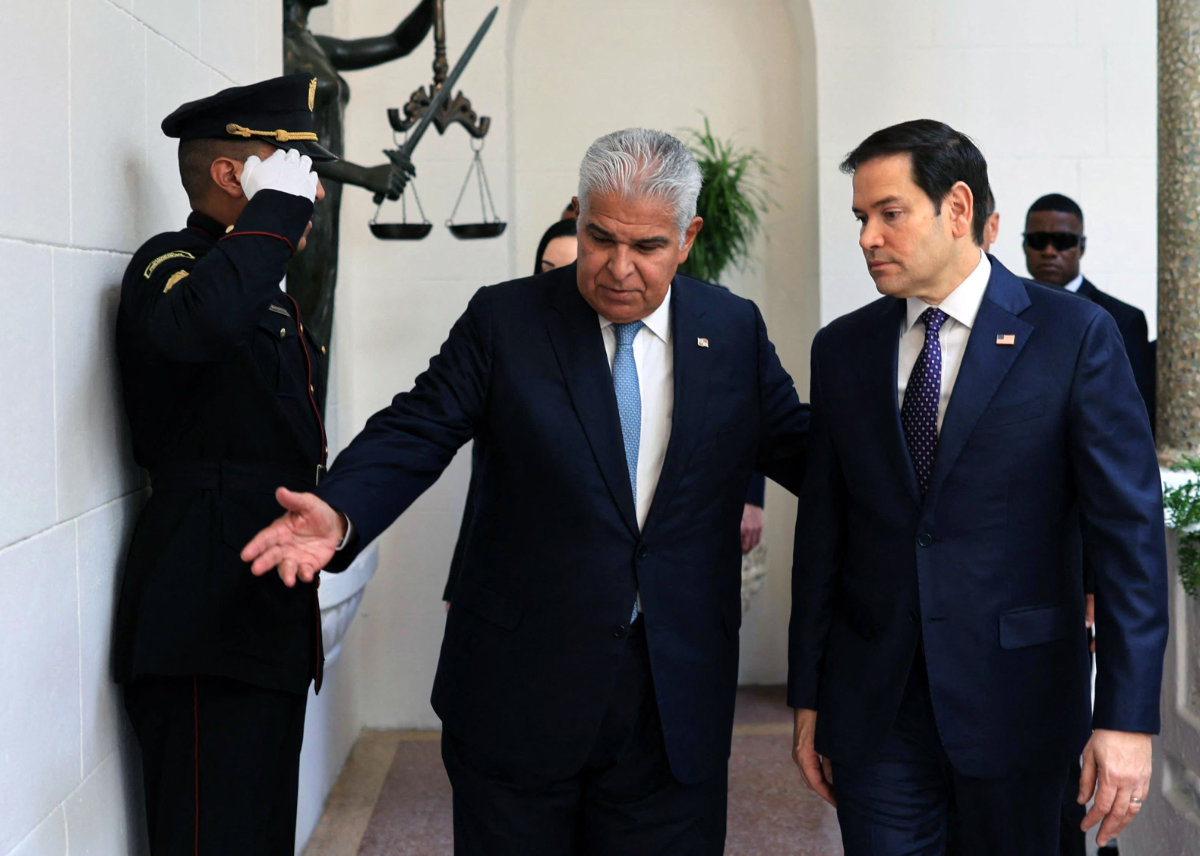
Panama's President Jose Raul Mulino (L) greeting US Secretary of State Marco Rubio on arrival at the presidential palace in Panama City on February 2, 2025. (AFP)
The statement was unusually blunt in diplomatic terms, but in keeping with the tenor and tone Trump has set for foreign policy. Trump has been increasing pressure on Washington’s neighbors and allies, including the canal demand and announcing Saturday that he was imposing major tariffs on Canada and Mexico. That launched a trade war by prompting retaliation from those close allies.
Mulino, meanwhile, called his talks with Rubio “respectful” and “positive” and said he did not “feel like there’s a real threat against the treaty and its validity.”
The president did say Panama would not be renewing its agreement with China’s Belt and Road Initiative when it expires. Panama joined the initiative, which promotes and funds infrastructure and development projects that critics say leave poor member countries heavily indebted to China, after dropping diplomatic recognition of Taiwan and recognizing Beijing.
Rubio later toured the canal at sunset with its administrator, Ricaurte Vásquez, who has said the waterway will remain in Panama’s hands and open to all countries. Rubio crossed the lock and visited the control tower, looking down over the water below, where a red tanker was passing through.
Earlier, about 200 people marched in the capital, carrying Panamanian flags and shouting “Marco Rubio out of Panama,” “Long live national sovereignty” and “One territory, one flag” while the meeting was going on. Some burned a banner with images of Trump and Rubio after being stopped short of the presidential palace by riot police.
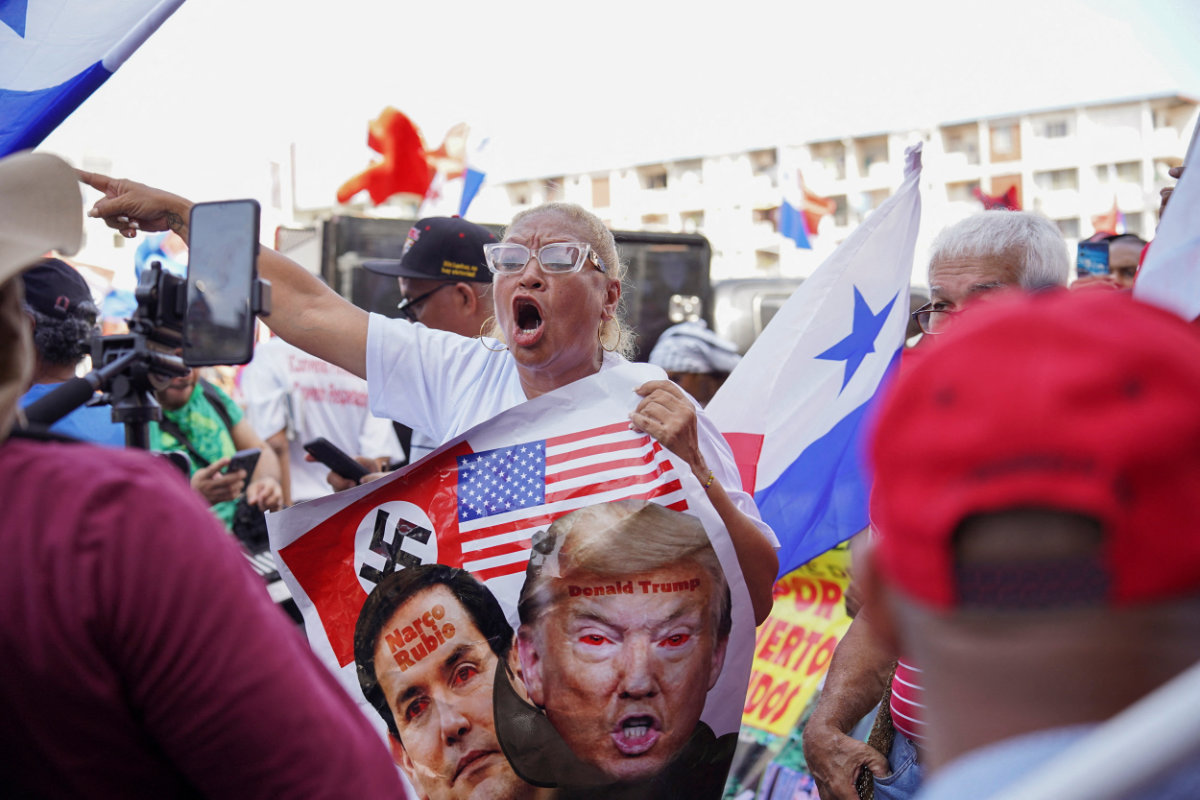
Panama activists take to the streets in Panama City to protest US Secretary of State Marco Rubio's diplomatic visit to discuss the Panama Canal and immigration with President Jose Raul Mulino on February 2, 2025. (REUTERS)
Rubio also pressed Trump’s top focus — curbing illegal immigration — telling Panama’s president that it was important to collaborate on the work and thanked him for taking back migrants. Rubio’s trip, however, comes as a US foreign aid funding freeze and stop-work orders have shut down US-funded programs targeting illegal migration and crime in Central American countries.
In a Wall Street Journal opinion piece on Friday, Rubio said mass migration, drugs and hostile policies pursued by Cuba, Nicaragua and Venezuela have wreaked havoc, and port facilities at either end of the canal are run by a China-based company, leaving the waterway vulnerable to pressure from the Beijing government.
“The president’s been pretty clear he wants to administer the canal again,” Rubio said Thursday. “Obviously, the Panamanians are not big fans of that idea. That message has been brought very clear.”
Despite Mulino’s rejection of any negotiation over ownership, some believe Panama may be open to a compromise under which canal operations on both sides are taken away from the Hong Kong-based Hutchison Ports company, which was given a 25-year no-bid extension to run them. An audit into the suitability of that extension is already underway and could lead to a rebidding process.
What is unclear is whether Trump would accept the transfer of the concession to an American or European company as meeting his demands, which appear to cover more than just operations.
Rubio’s trip, which will also take him to El Salvador, Costa Rica, Guatemala and the Dominican Republic, comes amid a freeze in US foreign assistance. The State Department said Sunday that Rubio had approved waivers for certain critical programs in countries he is visiting but details of those were not immediately available.


