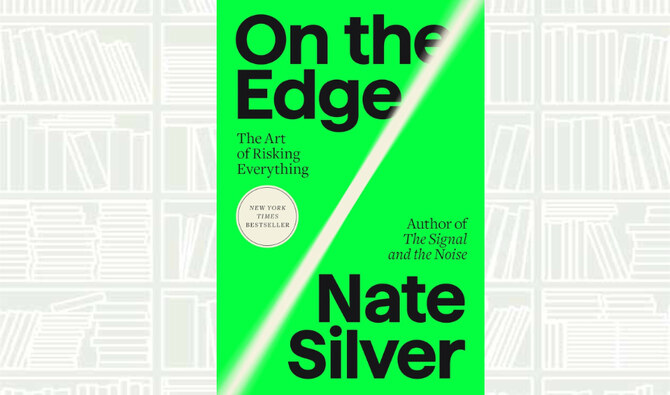

“On the Edge: The Art of Risking Everything” is a 2024 nonfiction book by Nate Silver.
It is a bold attempt to dissect the nature of risk-taking, blending personal experiences, analytical thinking, and societal commentary.
Known for his expertise in data analysis, Silver ventures into a more narrative-driven exploration of the psychology and consequences of making bold decisions.
Silver’s ability to simplify complex ideas is one of the book’s standout features.
His writing is engaging and approachable, with real-world examples — such as poker games, sports betting, and entrepreneurial ventures — bringing his points to life.
The concept of dividing people into two groups, “The River” (risk-takers) and “The Village” (risk-averse), provides an interesting albeit confusing framework for readers to evaluate their own attitudes toward risk.
Additionally, the chapter outlining “Thirteen Habits of Successful Risk-takers” leans heavily into motivational territory, which may feel out of place for readers expecting a more analytical or data-driven approach.
Another shortcoming is the book’s limited exploration of ethical concerns. While Silver highlights the ingenuity and daring of risk-takers, he largely avoids deeper discussions about the potential downsides of such behavior.
Topics of societal risks associated with reckless decision-making in industries like technology are mentioned but not examined in detail. This lack of critical engagement leaves some aspects of the discussion feeling underdeveloped.
“On the Edge” is an engaging read that will appeal to fans of Silver’s previous work and those curious about how bold choices shape individual lives and society.
However, while it succeeds as an exploration of boldness and strategy, it falls short as a thorough analysis of risk’s broader implications.