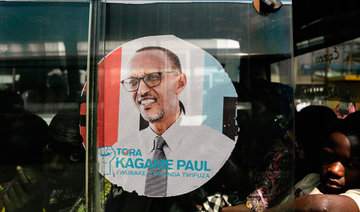
When Rwanda-backed rebels seized control of eastern Congo’s strategic city of Goma this week, it prompted a flurry of declarations condemning Rwanda from the UN and western nations, including the United States, France and the UK
Yet, the international community has stopped short of putting financial pressure on Kigali to withdraw its support for the rebels as happened when they took Goma in 2012.
The contrast has to do with the country’s evolving stature both in Africa and the West, where officials have long admired fourth-term President Paul Kagame for his role in uplifting Rwanda in the aftermath of genocide, analysts and diplomats said. They point to Rwanda’s shrewd branding, efforts to make itself more indispensable militarily and economically and divided attention spans of countries preoccupied with wars in the Middle East and Ukraine.
“So far there has been significantly less international pressure than there was in 2012 for various reasons, including the new administration in the White House, other ongoing international crises and Rwanda’s role in continental peacekeeping and security operations,” said Ben Shepherd, a fellow in Chatham House’s Africa Program.
Kagame’s efforts to transform his small east African nation into a political and economic juggernaut, they say, has made the international community more reluctant to pressure Rwanda.
That’s been true when Kagame has abolished term limits and waged a campaign of repression against his opponents at home. It’s been true as he’s backed rebels fighting Congolese forces across the country’s border. And it’s remained true despite the fact that Rwanda’s economy is still heavily reliant on foreign aid, including from the United States, the World Bank and the European Union.
The United States disbursed $180 million in foreign aid to Rwanda in 2023. The World Bank’s International Development Association provided nearly $221 million the same year. And in the years ahead, the European Union has pledged to invest over $900 million in Rwanda under the Global Gateway strategy, its response to China’s Belt and Road Initiative.
In 2012, that aid was a key source of leverage as the western powers pressured Rwanda to end its role in the fighting. Donor countries withheld aid and the World Bank threatened to. Only a few nations, including the UK and Germany, have implied Rwanda’s involvement could jeopardize the flow of aid.
But today, the international community has fewer means to influence Rwanda as M23 advances southward from Goma. The United States suspended military aid to Rwanda in 2012 in the months before it seized Goma but can’t make the same threats after suspending it again last year. And since taking office, President Donald Trump has since frozen the vast majority of foreign aid, stripping the United States of the means to use it to leverage any country in particular.
The Rwanda-backed M23 group is one of about 100 armed factions vying for a foothold in eastern Congo in one of Africa’s longest conflicts, displacing 4.5 million people and creating what the UN called “one of the most protracted, complex, serious humanitarian crises on Earth.”
A July 2024 report from a UN group of experts estimated at least 4,000 Rwandan troops were active across the Congolese border. More have been observed pouring into Congo this week.
Kagame has claimed that M23 rebels in eastern Congo merely want to defend Tutsis from the same Hutu extremists who carried out the genocide that killed some 800,000 Tutsis and moderate Hutus without intervention from the international community.
That failure and the resulting guilt informed a generation of politicians’ thinking about Rwanda.
“Rwanda’s justifications and references to the genocide continue to play to the West’s perception of it,” said South Africa-based risk analyst Daniel Van Dalen. “There’s always been apprehension to take any decisive action against Rwanda politically or economically.”
But today, there are other factors at play.
Set on transforming the country into the “Singapore of Africa,” Kagame has modernized Rwanda’s infrastructure, raised life expectancy rates and lured companies like Volkswagen and leagues like the NBA to open up shop in-country. Donors and foreign correspondents often profess wonder at Kigali’s clean streets, upscale restaurants and women-majority parliament.
The transformation has won Rwanda admiration from throughout the world, including in Africa, where leaders see Rwanda’s trajectory as a model to draw lessons from.
“The history of genocide still plays a role, but Kagame has very cleverly set up relationships with western capitals and established himself as a beacon of stability and economic growth in the region,” said a European diplomat, who did not want to be named because he was not allowed to speak on the matter publicly. “Some capitals still don’t want to see the truth.”
Rwanda contributes more personnel to UN peacekeeping operations than all but two countries. It is a key supplier of troops deployed to Central African Republic, where the United States worries about growing Russian influence. The country has also agreed deals to deploy its army to fight extremists in northern Mozambique, where France’s Total Energies is developing an offshore gas project.
“They have leveraged two things very well, which is their international diplomacy and their military prowess,” said Jason Stearns, a political scientist and Congo expert at Canada’s Simon Fraser University. “They’ve just been very good at making themselves useful.”
A decade ago, Rwanda was primarily exporting agricultural products like coffee and tea. But it has since emerged as a key partner for western nations competing with China for access to natural resources in east Africa.
In addition to gold and tin, Rwanda is a top exporter of tantalum, a mineral used to manufacture semiconductors. While it does not publish data on the volumes of minerals it mines, last year the US State Department said Rwanda exported more minerals than it mined, citing a UN report. And just last month, Congo filed lawsuits against Apple’s subsidiaries in France and Belgium, accusing Rwanda of using minerals sourced in eastern Congo.
Yet still, the European Union has signed an agreement with Kigali, opening the door to importing critical minerals from Rwanda. The deal sparked outrage from activists who criticized the lack of safeguards regarding sourcing of the minerals, and accused Brussels of fueling the conflict in eastern Congo.
The EU pushed back, saying that the deal was in early stages and that it was “working out the practicalities” on tracing and reporting minerals from Rwanda.
But even if the West stepped up its response, it has less leverage than in 2012, analysts said. Kagame invested in relationships with non-Western partners, such as China and the United Arab Emirates, which is now the country’s top trade partner. Rwanda also deepened its ties with the African nations that took much more decisive action to defuse the crisis in 2012.
“We are waiting to see how South Africans and Angolans react,” Shepherd said. “There was diplomatic pressure in 2012, but it only changed things because it came alongside African forces deployed in the UN intervention brigade.”