- Pakistan has said it will cut power tariff for operators of EV charging stations by 45% as part of ongoing reform of energy sector
- BYD Pakistan says up to 50% of all vehicles bought in Pakistan by 2030 will be electrified in some form in line with global targets
KARACHI / ISLAMABAD: A Senate Standing Committee this week criticized a lag in the production of Electric Vehicles (EVs) in Pakistan, saying only 60,000 had been produced by this year against a target of 600,000, as the government moves to transition to green transport solutions and beat climate change.
The government of Pakistan approved an ambitious National Electric Vehicles Policy (NEVP) in 2019 with the goal of electric vehicles comprising 30% of all passenger vehicle and heavy-duty truck sales by 2030, and an even more ambitious target of 90% by 2040. For two- and three-wheelers, as well as buses, the policy set a goal of achieving 50% of new sales by 2030 and 90% by 2040.
“Senator Sherry Rehman criticized Pakistan’s lagging EV production, noting that only 60,000 EVs have been produced against a 600,000 target,” according to a statement released on Wednesday by the Senate Standing Committee on Climate Change, which is chaired by Rehman.
“She also highlighted that the transport sector contributes 48% to air pollution, making EV adoption critical. The Ministry of Industries faced scrutiny for lacking data on local EV production and charging stations.”
While Pakistan had aimed to install 3,000 EV charging stations by 2030, only eight had been established, Rehman said, calling on banks to introduce EV financing to enhance accessibility.
“Key recommendations included expanding EV charging stations and incentivizing private investment, promoting renewable energy adoption in homes and businesses, ramping up local EV production to meet policy targets, enforcing energy-efficient building codes nationwide, and encouraging energy-efficient transport and public transit use,” the press release said.
Earlier this month, Pakistan said it would cut the power tariff for operators of EV charging stations by 45% as part of the ongoing reform of the energy sector designed to boost demand. The government is also planning to introduce financing schemes for e-bikes and the conversion of two- and three-wheeled petrol vehicles.
The cabinet on Jan. 15 approved a reduced tariff of 39.70 rupees ($0.14) per unit, down from 71.10 rupees previously, which will be in place within a month. The government expects an internal rate of return of more than 20% for investors in the sector.
According to a report submitted to the government by power ministry adviser Ammar Habib Khan and reported by Reuters on Jan. 15, there are currently more than 30 million two- and three-wheeled vehicles in Pakistan, which consume more than $5 billion worth of petroleum annually.
The energy ministry plans to convert 1 million two-wheelers to electric bikes in a first phase, at an estimated net cost of 40,000 rupees per bike, according to the report, saving around $165 million in fuel import costs annually.
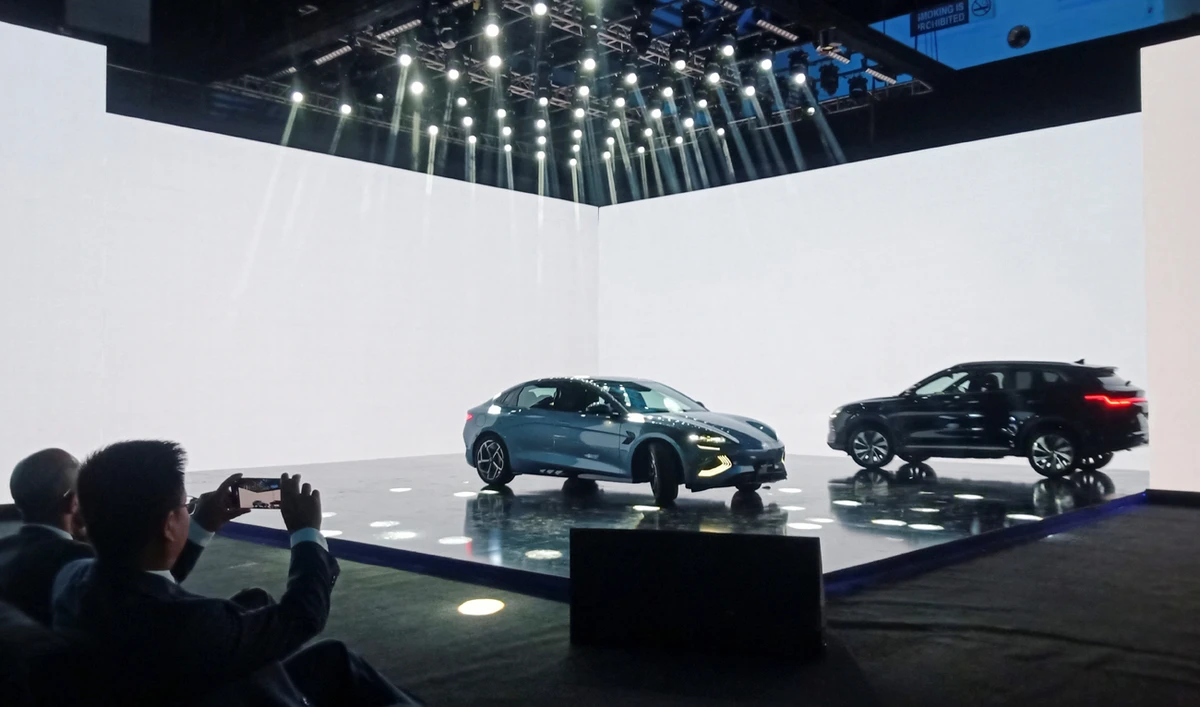
BYD Pakistan, a partnership between China’s BYD and Pakistani car group Mega Motors, told Reuters in September that up to 50% of all vehicles bought in Pakistan by 2030 will be electrified in some form in line with global targets.
Separately, Nasir Hussain Shah, the energy minister in Pakistan’s southern Sindh province, on Thursday announced the provincial administration would “extend maximum assistance” to the private sector for investment in the EV sector to curtail fossil fuel consumption.
He said this during a meeting with Yasir Bhambani, the chief executive officer of China’s ADM Group, which has announced it will invest $350 million to set up an electric vehicle manufacturing plant in Pakistan and 3,000 EV charging stations.
“The Sindh government would utilize its successful public-private partnership mode of development to provide suitable sites and other facilities to set up EV charging stations in cities and main highways,” the information department said in a statement.
Shah assured the ADM Group of uninterrupted power supply to promote EVs, saying he was also open to transitioning government vehicles to electric power.