

Where We Are Going Today: ‘Laduree’ the authentic French experience

1 / 3
Photo/Supplied
2 / 3
Photo/Supplied
3 / 3
Photo/Supplied
Short Url
Updated 25 January 2025
Follow

Where We Are Going Today: ‘Laduree’ the authentic French experience

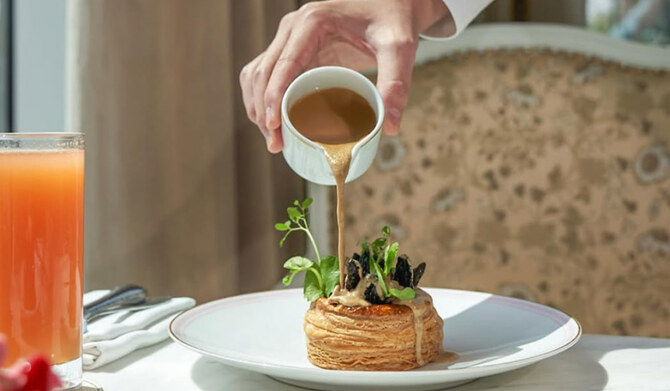
Laduree, in Jeddah’s Fayfa Avenue, blends the brand’s heritage of Parisian elegance with the rich essence of Arabian culture. This renowned patisserie has long been celebrated for its iconic macarons and pastries, and the Jeddah location does not disappoint.

Their macarons are works of art: delicate, flavorful, perfectly crafted and simply divine. Varieties include salted caramel, pistachio, rose, and chocolate.

The Eugenie macarons, with flavors including Marie-Antoinette tea and blackcurrant Violette, add an extra layer of sophistication. These treats are beautifully presented in gift boxes, making them perfect for presents to allow a friend to indulge in a sweet moment.

The menu features a wide range of delicacies, including flaky croissants (try the chocolate-pistachio or zatar walnut), savory breakfast options such as eggs Florentine and the signature Laduree omelet, and a delightful brunch spread.

The brunch platter is an absolute highlight, offering a variety of sweet and savory items, including warm French toast, Laduree’s signature granola, and fresh fruit salad. The addition of a macaron and a beverage makes it a well-rounded and indulgent experience.

The lunch menu includes mushroom risotto, grilled salmon, and gnocchi truffle asparagus. Each dish is crafted with care and attention to detail.

The main courses are substantial, and the quality of the ingredients shines through. A particular favorite is the vol-au-vent filled with chicken or salmon, served with a mushroom sauce that is rich, buttery, and satisfying.

There are numerous dessert options available. The isaphan yule log and traditional galette are both equally impressive, with layers of flavors and textures that transport you to a Parisian patisserie.

Laduree’s prices are relatively high, but the experience is undeniably luxurious and the menu features a variety of delightful dishes in each of which the attention to detail is evident.

Check @ladureesaudiarabia on Instagram for more details.


Chef serves up a taste of Spain at Ithra Cultural Days in Saudi Arabia 

Updated 20 January 2026
Follow

Chef serves up a taste of Spain at Ithra Cultural Days in Saudi Arabia 

DHAHRAN: Among the attractions of the Ithra Cultural Days: Spain at the King Abdulaziz Center for World Culture (Ithra), visitors can try a tantalizing selection of Spanish foods — none more renowned than its famous paella. 

Arab News spoke with chef Jose Zafra at the event, which runs until Jan. 31, who flew in from Spain to offer a taste of his homeland to the people of Saudi Arabia. 

A “master rice cook, paella researcher and promoter,” according to his business card, his logo is even designed around the recognizable cooking pan and the phrase “Pasion por la paella,” or “Passion for paella.”

“That's why the pan is round because people get around and eat all together — to share culture and passion and life,” Zafra told Arab News as foodies lined up behind him, eager to try a plateful.

Arab News spoke with chef Jose Zafra at the event, which runs until Jan. 31. (Supplied)

“It’s not just a food. It’s a link, a connection. Paella is the symbol of unity and sharing. And people now are going to try it — authentic Spanish paella in Saudi Arabia.”

The word “paella” comes from the Latin “patella,” meaning pan.

In Spanish, it refers both to the rice dish itself and the pan in which it is cooked.

Paella was introduced to Spain during Moorish rule. It originated in Valencia, on the country’s eastern coast, as a rural peasant dish that was cooked by farm workers over open fires using local ingredients. Over time, the dish’s popularity spread and other versions evolved, for example featuring seafood and meat.

It is different to Saudi Arabia’s kabsa, a communal dish which similarly uses rice and meat. Kabsa is cooked in a deep pot to ensure the rice stays soft and aromatic from the meaty broth, whereas paella uses a wide, shallow pan to fully absorb flavors evenly, often creating a prized crispy layer at the bottom. 

Visitors to Ithra’s Culture Days can enjoy the flavors of Spain made with a sprinkling of local love — true to the origins of the dish.

Find the scoops of Spanish joy near the food truck area and try chicken paella, seafood paella —or both! You will see the signs offering a plate, at SR35 ($9) for chicken and SR40 for seafood, or let your nose lead you there.

Zafra concluded: “The chicken is from here, the seafood is from here — and the passion, well, that is from Spain.”