

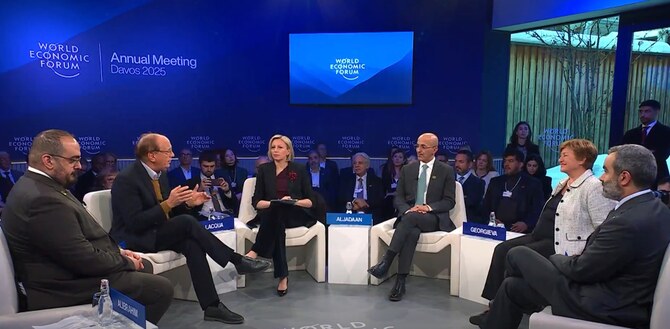

DAVOS: Saudi Finance Minister Mohammed Al-Jadaan on Thursday said that the Kingdom’s economic planners were being driven by their “North Star” and not egos as they look to maintain growth in the economy.
Speaking on a panel about the Saudi economy at the annual meeting of the World Economic Forum, Al-Jadaan highlighted Saudi Arabia’s shift from short-term budgets to longer-term fiscal planning, ensuring clear priorities and disciplined spending.
He said that there was flexibility and a readiness within the government to adapt plans based on global circumstances. “I’ve said this repeatedly, we don’t have egos. We are willing to change depending on circumstances and we will continue to do that. We will prioritize what matters,” he said.
“Our key North Star is what is driving us, and the tools can change, the means can change. It’s really that North Star that we are looking forward to,” he said.
He emphasized the progress and resilience of Saudi Arabia’s economy under Vision 2030, noting that the plan had mobilized the entire nation — government, businesses, right down to citizens — toward clear, long-term goals.
He attributed this success to visionary leadership, tough decision-making and consistent execution, adding that this approach could be a universal “recipe” for unlocking global potential.
On the Saudi-US relationship, Al-Jadaan highlighted its strategic importance over the past eight decades, emphasizing that Saudi Arabia had maintained strong economic, diplomatic and security ties with Washington, regardless of the administration in power, whether Republican or Democrat.
He described the partnership as a “win-win situation” that remained vital and was likely to endure into the foreseeable future.
Al-Jadaan was joined on the panel by Saudi Minister of Economy and Planning Faisal Al-Ibrahim, who attributed the Kingdom’s strong economic performance to a first wave of transformation driven by clear, courageous decisions and significant investments, not only financially but also in terms of effort and planning.
Looking ahead, Al-Ibrahim stressed that the next phase of Vision 2030 would focus on addressing more complex challenges, particularly in enabling the private sector.
He emphasized the goal of increasing the private sector’s contribution to 65 percent of GDP by fostering collaboration, co-developing opportunities and creating an environment where private enterprises could take the lead in driving economic growth.
Key priorities include enhancing institutional capabilities, ensuring policy clarity and predictability, and addressing barriers to innovation-driven entrepreneurship, he said.
Al-Ibrahim also underlined the government’s commitment to working closely with the private sector, noting that ministers and their teams often worked long hours to respond to and engage with private enterprises. This collaborative approach, he said, was deeply embedded in the country’s Vision 2030 blueprint for economic transformation.
IMF Chief Kristalina Georgieva, who was also on the panel, praised Saudi Arabia’s transformation efforts, highlighting the country’s ability to create an appealing environment for business and tourism.
She commended its forward-thinking approach in engaging the private sector to diversify experiences and attract repeat visitors. Referring to her visit to AlUla, she said: “I didn’t know what to expect, but I came out thinking it was great we decided to open our regional office in Riyadh.”
Georgieva also noted Saudi Arabia’s strategic planning to host global events and foster economic growth. She described the country as a “good example of transformation” that others could look to for inspiration in creating dynamic, sustainable growth through proactive planning and investment.


