


OBILIC: For 30 years, Shemsi Gara operated a giant digger in a Kosovo coal mine, churning up toxic dust that covered his face and got into his airways. Home life wasn’t much better: the power plants that the mine supplies constantly spew fumes over his village.
Gara died on Sunday aged 55 after three years of treatment failed to contain his lung cancer. In his final days, unable to walk, he lay on a couch at home, gaunt and in pain, as a machine pumped oxygen into his dying body.
“I kept telling him I wanted to help, but I couldn’t,” said his wife Xhejlane, who mourned in her living room with friends on Wednesday. “He would say ‘Only God knows the pain I have’.”
As much of the world moves to reduce the use of fossil fuels, pollution in Western Balkan countries remains stubbornly high due to household heating, outdated coal plants, old cars, and a lack of money to tackle the problem.
Relatively small cities such as Serbia’s capital Belgrade and Bosnia’s capital Sarajevo have frequently topped daily global pollution charts, according to websites that track air quality worldwide.
This has costly health impacts, and could also jeopardize such countries’ prospects of joining the European Union, which has stricter emissions standards.
“There are no resources in the region for the reduction of air pollution,” said Mirko Popovic, a director with the Renewables and Environmental Regulatory Institute think-tank in Belgrade.
In the EU, net greenhouse gas emissions have dropped by about 40 percent since 1990, driven by the embrace of renewable energy, a European Commission report said in November.
Western Balkan nations have pledged to reduce carbon emissions but economic hardship has slowed progress.
Kosovo, one of Europe’s poorest countries, generates more than 90 percent of its power from coal. The World Bank estimates that a transition to a coal-free economy will cost 4.5 billion euros.
SMOG
The impact of pollution is clear across the region, especially in winter.
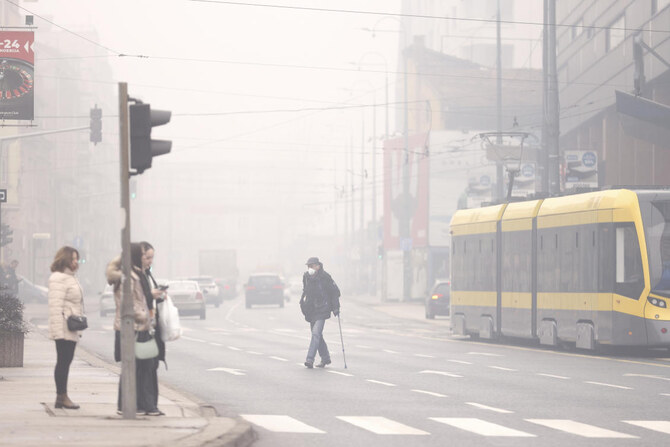
Smog has cloaked Belgrade this week, while Sarajevo sits in a valley that acts as a pollution trap. The Bosnian capital’s air quality was classed as “hazardous” on Tuesday, the worst in the world, according to IQAir, which tracks pollution levels.
In North Macedonia’s capital Skopje, mask-wearing locals often lose sight of nearby snow-capped mountains for days.
The rate of deaths attributable to ambient pollution is relatively high — 114 per 100,000 people in Bosnia and around 100 in Serbia and Montenegro, World Health Organization data show, compared with just 45 in Germany and 29 in France.
Gara was buried on Monday in a cemetery in Obilic, outside Kosovo’s capital Pristina. From the graveside, mourners could hear the chug of a nearby conveyor belt transporting coal from the mine to the power plants.
Gara’s doctor, Haki Jashari, blamed Gara’s cancer on his years at the coal mine, and on the polluting power plants.
Cancer rates more than doubled in Obilic over the last two years, Jashari said — the result, he added, of a generation of exposure to pollutants. He expects it will get worse.
Kosovo’s energy ministry told Reuters it was committed to reducing emissions and was investing in renewable energy projects and upgrading existing plants.
Jashari only wishes more could have been done sooner.
“They would have shut the plants down if we were part of the EU. It is unacceptable.”


