

Nearly 6 million Somalis need aid this year: UN

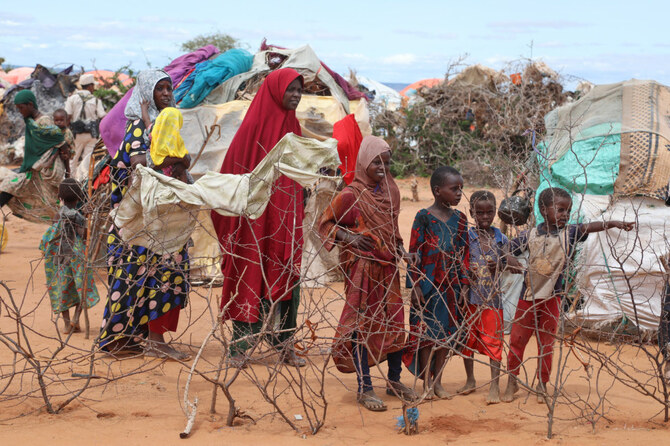
Somalis displaced by drought are seen at the Ladan camp in Dolow, Somalia, on May 1, 2023. (AFP file)
Short Url
Updated 23 January 2025
Follow

Nearly 6 million Somalis need aid this year: UN

  • Somalia is currently facing “widespread dry conditions following poor October to December rains,” says UN humanitarian agency OCHA said

UNITED NATIONS: Nearly six million people in Somalia, almost a third of the country’s population, need humanitarian aid this year, the United Nations said Wednesday as it launched a $1.43 billion funding appeal.
The Horn of Africa nation is one of the world’s poorest, enduring decades of civil war, a bloody insurgency by the Al-Qaeda-linked Al-Shabab, and frequent climate disasters.
“Somalia continues to face a complex, protracted humanitarian crisis,” a statement from the UN humanitarian agency OCHA said, citing a range of issues from conflict to “climate shocks.”


The country is currently facing “widespread dry conditions following poor October to December rains,” OCHA said.
The funding appeal launched Monday with the Somali government aims “to support some 4.6 million of the most vulnerable people in the country,” it added.


Most of Iranian women’s soccer team leave Australia

Updated 11 March 2026
Follow

Most of Iranian women’s soccer team leave Australia

GOLD COAST: The Iranian women’s soccer team left Australia without seven squad members after tearful protests of their departure outside Sydney Airport and frantic final efforts inside the terminal by Australian officials, who sought to ensure the women understood they were being offered asylum.

As the team’s flight time drew nearer and they passed through security late on Tuesday, each woman was taken aside to meet alone with officials who explained through interpreters that they could choose not to return to Iran.

Before the team traveled to the airport, seven women had accepted humanitarian visas allowing them to remain permanently in Australia and were ushered to a safe location by Australian police officers. 

One has since changed her mind, underscoring the tense and precarious nature of their decisions.

“In Australia, people are able to change their mind,” said Australian Home Affairs Minister Tony Burke, who had hours earlier posted photos of the seven women granted humanitarian visas to his social media accounts, their identities clearly visible.

After what Burke described as “emotional” meetings between the remaining women who reached the airport and Australian officials, the rest of the team declined offers of asylum and boarded their flight.

It was a dramatic conclusion to an episode that had gripped Australia since the Iranian team’s first game at the Asian Cup soccer tournament, when they remained silent during their national anthem.