ISLAMABAD: An armed crackdown in the northwestern Pakistani district of Kurram that has been marred by sectarian clashes since November continued on Wednesday, with the provincial chief minister’s office saying the process of demolishing bunkers would resume today.
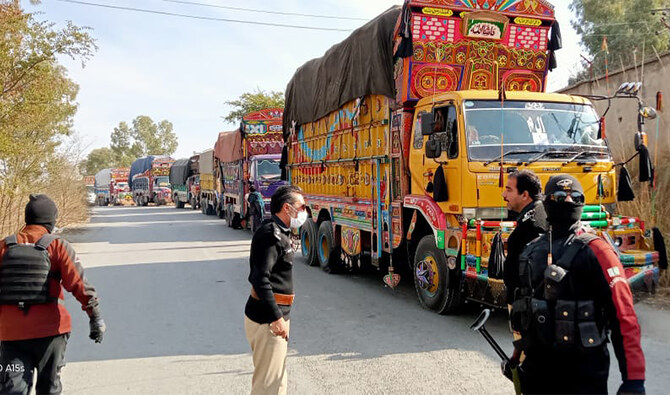
Kurram, a tribal district of around 600,000 where federal and provincial authorities have traditionally exerted limited control, has frequently experienced violence between its Sunni and Shiite communities over land and power. Travelers to and from the area often ride in convoys escorted by security officials.
The latest feuding started on Nov. 21 when gunmen ambushed a vehicle convoy and killed 52 people, mostly Shiites. The assault triggered road closures and other measures that have disrupted people’s access to medicine, food, fuel, education and work and created a humanitarian crisis in the area, where authorities say at least 150 people have been killed in two months of feuding.
Media widely reported on Monday that Pakistani security forces had launched a “large-scale” operation targeting militants in the restive northwestern district bordering Afghanistan, after unidentified gunmen ambushed and burned aid trucks on Friday, killing up to 10 people. Pakistani forces had earlier this month also launched an operation to demolish bunkers established by warring factions in the district. The action was in accordance with a peace agreement signed by the warring tribes on Jan. 1 in which they had committed to demolish bunkers and hand over heavy weapons to authorities within two weeks.
“The process of demolishing illegal bunkers in Kurram is being resumed from today,” a statement from the chief minister’s office said. The decision was taken after Gandapur presided over a meeting of senior provincial officials to take stock of the situation in the district.
“Four convoys of vehicles containing essential items will be sent to Kurram by the end of this month.”
The provincial government also decided to summon a jirga or tribal council meeting of the signatories of the peace agreement. It said that the responsibilities of the signatories in implementing the agreement should be highlighted in the jirga.
“Both sides will formulate a procedure to clear Kurram of weapons and submit it to the government as soon as possible,” the chief minister’s office said.
It reiterated that indiscriminate action will be taken against “terrorists” and “hard-liners” belonging to either of the rival tribes, adding that those nominated in police complaints for attacks on aid convoys will be arrested.
Earlier, Pakistani state media said a large number of weapons were confiscated from Bagan in Kurram district on Wednesday.
“In a joint search and clearance operation by the district administration, police and security forces in the conflict-affected area of Bagan, district Kurram, a significant number of illegal weapons were recovered,” the Associated Press of Pakistan said.
Feuding tribes have been engaging in battles with machine guns and heavy weapons, isolating the remote, mountainous Kurram region. Parachinar is the main town in Kurram and a main road that connects the town to Peshawar, the provincial capital of the larger Khyber Pakhtunkhwa province, has been blocked since sectarian fighting began in November.
Provincial and federal authorities have been supplying relief goods and evacuating the injured and ailing from Kurram to Peshawar via helicopters since last month.
Shiite Muslims dominate parts of Kurram, although they are a minority in the rest of Pakistan, which is majority Sunni. The area has a history of sectarian conflict.


![]()

Security forces to resume demolishing bunkers today in Pakistani district wracked by sectarian feuds
Short Url
https://arab.news/vrsr6
Security forces to resume demolishing bunkers today in Pakistani district wracked by sectarian feuds
- At least 150 people have been killed in Kurram district since sectarian clashes broke out in November
- Police and security forces confiscate large number of illegal weapons from district, says state media
Latest updates


© 2026 SAUDI RESEARCH & PUBLISHING COMPANY, All Rights Reserved And subject to Terms of Use Agreement.