LANGKAWI, Malaysia: The regional bloc ASEAN and China should make headway on a protracted code of conduct for the South China Sea by tackling thorny “milestone issues,” including its scope and if it can be legally binding, the Philippines’ top diplomat said on Saturday.
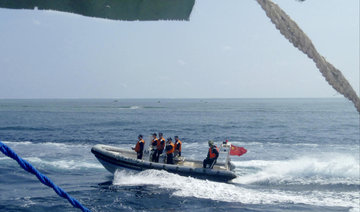
The South China Sea remains a source of tension between China and neighbors the Philippines, Vietnam and Malaysia, with ties between Beijing and US ally Manila at their worst in years amid frequent confrontations that have sparked concerns they could spiral into conflict.
The Association of Southeast Asian Nations and China pledged in 2002 to create a code of conduct, but took 15 years to start discussions and progress has been slow.
In an interview ahead of Sunday’s meeting with his ASEAN counterparts on the Malaysian island of Langkawi, Philippine Foreign Minister Enrique Manalo said discussions on a code were well underway, but it was time to start thrashing out the meatier, trickier aspects.
“It’s time that we try to look at issues which are, in our view, essential, which have not really been discussed in a thorough way or even much less negotiated. These are the so-called milestone issues,” Manalo told Reuters.
Those would include the code’s scope, whether it is legally binding and its impact on third-party countries, he said, adding the aim was to make it effective and substantive.
“We have to begin addressing these important issues,” Manalo added. “This might be the best way to at least move the negotiation forward.”
Beijing claims sovereignty over most of the South China Sea, which it asserts through a fleet of coast guard and fishing militia that some neighbors accuse of aggression and of disrupting fishing and energy activities in their exclusive economic zones.
China insists it operates lawfully in its territory and does not recognize a 2016 arbitration ruling that said its claim has no basis under international law.
‘US interests are still there’
Manalo also said that as President-elect Donald Trump prepares to take office, there was no sign the United States would reassess its engagement in Southeast Asia.
“We haven’t heard any or seen any indication of scaling down or any kind of particular change,” he said.
“We have to wait until the administration actually takes over. But from what we’ve seen so far, US interests are still there.”
Manalo said the civil war in military-ruled Myanmar remains a big challenge for ASEAN, which has barred the generals from meetings for failing to implement the bloc’s peace plan.
The junta plans to hold an election this year in which its opponents either cannot run, or refuse to contest.
Manalo said it was premature to discuss if ASEAN would make preconditions for recognizing the election, which he said must involve as much of the population as possible.
“If elections are held without being seen as inclusive, not transparent, I believe it would be very difficult for those elections to create more legitimacy,” he said.


![]()

ASEAN and China must start tackling thorny issues of South China Sea code, Philippines says

Short Url
https://arab.news/8zehs
ASEAN and China must start tackling thorny issues of South China Sea code, Philippines says
- The South China Sea remains a source of tension between China and its ASEAN neighbors
- ASEAN and China pledged in 2002 to create a code of conduct, but took 15 years to start discussions and progress has been slow

Latest updates


© 2026 SAUDI RESEARCH & PUBLISHING COMPANY, All Rights Reserved And subject to Terms of Use Agreement.