ISLAMABAD: Pakistan’s navy handed over command of the Combined Task Force (CTF) 150 multi-nation task force to New Zealand on Thursday, the navy said in a statement, after heading it for six months during which it boosted cooperation with regional allies and intercepted narcotics worth millions of dollars.
CTF 150 was established in February 2002 and is one of five operational task forces under the Combined Maritime Forces, the largest multi-nation naval alliance in the world. CTF 150 conducts maritime security operations outside the Arabian Gulf against threats from non-state actors.
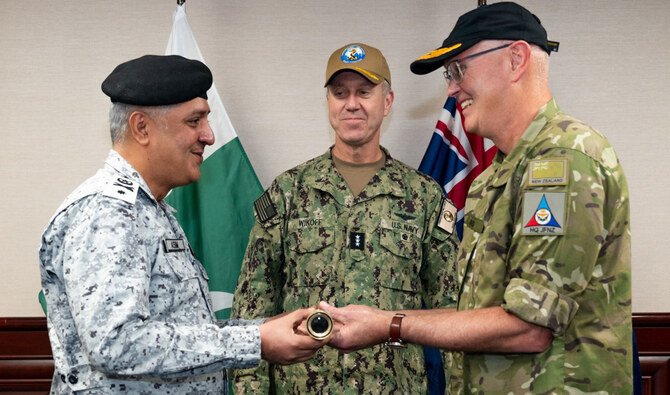
Pakistan Navy Commodore Asum Sohail Malik turned over command to Royal New Zealand Navy Commodore Rodger Ward during a change of command ceremony at the Naval Support Activity in Bahrain. Pakistan had taken command of CTF 150 in July 2024.
The navy said during Pakistan’s tenure as head of the CTF 150, the task force conducted numerous maritime security operations. Pakistan Navy and Pakistan Maritime Security Agency ships independently interdicted three narcotics-laden dhows, the navy’s media wing said.
“Collectively, Pakistan Navy and CMF intercepted approximately 10 tons of narcotics, with a street value exceeding 50 million US dollars over the last six months,” Pakistan Navy said in a statement.
It said that under Pakistan Navy’s leadership, CTF 150 also actively fostered regional collaboration, securing the participation of ships from Kenya Navy and Royal Navy of Oman in CTF 150 operations.
The incoming Commander of the CTF 150, Commodore Ward, expressed his gratitude to Pakistan Navy for its exemplary leadership and operational successes during its tenure.
The new CTF 150 commander has an extensive background in maritime operations, with deployments to Malaysia, the Solomon Islands, Afghanistan, and Iraq, the CMF said in a statement.
This will mark the second time New Zealand has taken command of CTF 150.


![]()

Pakistan Navy hands over command of multi-nation task force to New Zealand
Short Url
https://arab.news/9r4r8
Pakistan Navy hands over command of multi-nation task force to New Zealand
- Combined Task Force 150 conducts maritime security operations outside the Arabian Gulf
- Pakistan Navy says intercepted narcotics with street value exceeding $50 million in six months
Latest updates


Recommended


© 2026 SAUDI RESEARCH & PUBLISHING COMPANY, All Rights Reserved And subject to Terms of Use Agreement.