UNITED STATES: Brett Holmgren got woken up early on New Year’s Day by alerts that a driver had plowed into a crowd of revellers in New Orleans.
The rampage, which killed 14 people, was the deadliest attack on US soil in years and was inspired by the Daesh group.
The National Counterterrorism Center, which Holmgren leads, sprang into action to help the FBI run down information on the culprit from Texas and his plot.
It was a rare recent example of a mass attack motivated by religious extremism to hit the US homeland. But it didn’t occur in a vacuum, coming at a time when a terror threat that has waxed and waned in the two decades since the Sept. 11, 2001, attacks is decidedly on the rise around the world.
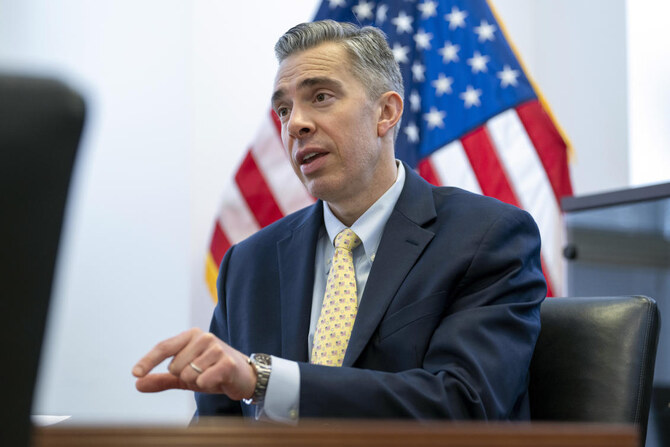
“We are in a period where we are facing an elevated threat environment,” Holmgren said in an interview with The Associated Press. “We faced that last year. We’re going to face it again in 2025.”
The NCTC emerged in the aftermath of 9/11 as a centralized US government hub to collect and analyze data and intelligence on the international terrorism threat, providing information to the White House and other agencies to shape policy decisions and protect against attacks.
A former counterterrorism analyst and assistant secretary of state, Holmgren was named its acting director last July and intends to step aside at the conclusion of the Biden administration.
At that point, new leadership under President-elect Donald Trump will grapple with managing some of the global hot spots like Syria that have vexed officials in recent months and that the NCTC has been tracking.
Holmgren cites multiple factors for why the threat is higher than before, including passions arising from the Israel-Hamas war — a conflict that he says has been a driving factor in some 45 attacks worldwide since October 2023. He also points to mass migration from the Russia-Ukraine war that has sent central Asians, some with ties to the Daesh group, to countries including Turkiye, Syria, Iraq and even the US
Around the world, officials are monitoring tensions in Africa, which Holmgren called potentially the greatest long-term threat to US security given that the Daesh group has a large footprint on the continent and is investing resources there.
He says the “most potent overseas threat facing the United States” right now is the group’s Afghanistan-based affiliate, known as Daesh-Khorasan, whose attacks include a March 2024 massacre at a Moscow theater and the August 2021 bombing that killed 13 US service members and about 170 Afghans in the chaotic US withdrawal from Afghanistan.
One ongoing spot of concern is Syria, where an insurgent group named Hayat Tahrir Al-Sham, or HTS, led a lightning offensive last month that toppled the government of President Bashar Assad.
HTS is a Sunni Islamist group that formerly had ties with Al-Qaeda, although its leader has preached religious coexistence since taking over in Damascus. The group has not plotted against US interests in recent years and has been “the most effective counterterrorism partner on the ground,” Holmgren said.
HTS has been designated by the State Department as a foreign terror organization, a label that carries severe sanctions.
Asked whether that designation would remain, Holmgren said that was a policy decision, though he noted: “They want to be perceived as being on the right side of the international community at this time when it comes to (counterterrorism). But we will continue to evaluate not just their words but also the actions that they’re undertaking.”
In an indication of Syria’s continued instability, Defense Secretary Lloyd Austin told The Associated Press last week that the US needs to keep troops there to prevent the Daesh group from reconstituting, and intelligence officials in Syria’s new de facto government already have thwarted a plan by Daesh to set off a bomb at a Shiite shrine in a Damascus suburb.
US officials, meanwhile, remain concerned about the possibility of Daesh gaining strength by taking over weapons left behind by Assad’s government or through a mass release of fighters who are now imprisoned.
“A large-scale prisoner release in Syria could provide a real boost in the arm for IS at a time where they have been under significant pressure,” Holmgren said.
The counterterrorism center’s focus is on international terrorism, which includes cases in the US like the New Orleans rampage in which the attacker was inspired by a group from abroad. The culprit, 42-year-old Shamsud-Din Jabbar, pledged his allegiance to Daesh in videos he recorded just before he drove his speeding pickup truck into a crowd on Bourbon Street early on Jan. 1.
As of now, Holmgren said, there’s no evidence that Jabbar was communicating with any Daesh operatives overseas or guided by anyone, but given that he was a lone actor who was radicalized, “this symbolizes exactly the type of attack that we’ve warned about for some time.”
“And I think it illustrates that while we have been quite effective as a government and across administrations at disrupting plotting overseas and going after terrorist leaders, we have a lot more work to do when it comes to countering violent extremism at home, countering violent extremist propaganda abroad,” he added.
“That is ultimately what is going to be needed to prevent more attacks like the one in New Orleans,” Holmgren said.
By the same token, through vast intelligence collection, hardened defenses and overseas counterterrorism operations, the US has made the risk of another large-scale attack like Sept. 11 lower than it’s ever been.
“But if we get complacent as a country,” he warned, “it will come back to bite us.”

US must not become complacent to a growing terrorism threat, a Counterterrorism Center official says
Short Url
https://arab.news/jj885
US must not become complacent to a growing terrorism threat, a Counterterrorism Center official says
- “We are in a period where we are facing an elevated threat environment,” Holmgren said
- He also points to mass migration from the Russia-Ukraine war that has sent central Asians to countries including Turkiye, Syria, Iraq and even the US
Greenland PM prefers Denmark ties over US
- Jens-Frederik Nielsen reiterated Greenland’s commitment to Denmark ahead of JD Vance meeting
- White House officials have been discussing various plans to bring Greenland under US control
NUUK: Residents in Greenland’s snow-covered capital, Nuuk, expressed support for remaining part of Denmark and called for a pause in independence discussions ahead of high-level talks in Washington on Wednesday, as US President Donald Trump intensifies his interest in the Arctic island.
Greenlandic and Danish foreign ministers will meet US Vice President JD Vance and Secretary of State Marco Rubio in Washington on Wednesday after renewed threats of taking control over Greenland, an autonomous territory Denmark.
Greenland’s Prime Minister Jens-Frederik Nielsen reiterated Greenland’s commitment to Denmark, dismissing the prospect of becoming a US territory.
“We face a geopolitical crisis, and if we have to choose between the US and Denmark here and now, then we choose Denmark,” Nielsen told reporters in Copenhagen on Tuesday, standing alongside Danish Prime Minister Mette Frederiksen. “We stand united in the Kingdom of Denmark.”
Greenland’s political landscape appears to be shifting, with leaders and residents focusing on long-term independence rather than immediate autonomy.
“In the current circumstances, I think it would be wise for Greenland to commit to Denmark for a very, very long time and remain under the NATO security umbrella,” said Finn Meinel, a Nuuk-based lawyer.
Some Greenlanders are worried about potential US intervention. Charlotte Heilmann, a pensioner in Nuuk, shared her reservations: “I can’t imagine living as an American. We are part of Denmark, and NATO, so I don’t understand why he keeps saying he wants to take our country.”
Casper Frank Moller, a tour operator, noted how US threats have brought Greenlanders closer together.
“Last year, some people were still focused on fast independence. But after what has happened, there’s more unity among us because we have to stand against this possible annexation. Hopefully, tomorrow’s meeting will lead to a diplomatic solution.”
’FOR US, IT’S HOME’
Greenland has been moving toward greater self-governance since 1979. However, cabinet minister Naaja Nathanielsen, responsible for business, energy, and minerals, acknowledged there is no immediate rush.
“For others, this might be a piece of land, but for us, it’s home,” she said in London. Nathanielsen added that Greenlanders are content being part of Denmark and see themselves as allies of the US, not as Americans.
Trump’s administration has repeatedly claimed Greenland’s strategic importance to US national security. White House officials have been discussing various plans to bring Greenland under US control, including potential use of the US military and lump-sum payments to Greenlanders as part of a bid to convince them to secede from Denmark.
’THE HARDEST PART IS AHEAD'
Danish Foreign Minister Lars Lokke Rasmussen and Greenlandic counterpart Vivian Motzfeldt had requested the upcoming meeting in Washington in response to Trump’s remarks. Rasmussen emphasized the importance of addressing disputes diplomatically. “Our aim is to move the discussion into a meeting room where we can look each other in the eye,” he said.
Denmark, which has managed Greenland for centuries, faces growing pressure to bolster Arctic defenses to counter geopolitical tensions. Danish Defense Minister Troels Lund Poulsen plans to meet NATO Secretary General Mark Rutte in Brussels next week, with multinational NATO exercises in Greenland scheduled by 2026.
Danish Prime Minister Frederiksen acknowledged the challenges presented by the heightened US interest. “It is hard to stand up to the US, our most important ally,” she said on Tuesday. “But the hardest part may still be ahead of us.”
Greenlandic and Danish foreign ministers will meet US Vice President JD Vance and Secretary of State Marco Rubio in Washington on Wednesday after renewed threats of taking control over Greenland, an autonomous territory Denmark.
Greenland’s Prime Minister Jens-Frederik Nielsen reiterated Greenland’s commitment to Denmark, dismissing the prospect of becoming a US territory.
“We face a geopolitical crisis, and if we have to choose between the US and Denmark here and now, then we choose Denmark,” Nielsen told reporters in Copenhagen on Tuesday, standing alongside Danish Prime Minister Mette Frederiksen. “We stand united in the Kingdom of Denmark.”
Greenland’s political landscape appears to be shifting, with leaders and residents focusing on long-term independence rather than immediate autonomy.
“In the current circumstances, I think it would be wise for Greenland to commit to Denmark for a very, very long time and remain under the NATO security umbrella,” said Finn Meinel, a Nuuk-based lawyer.
Some Greenlanders are worried about potential US intervention. Charlotte Heilmann, a pensioner in Nuuk, shared her reservations: “I can’t imagine living as an American. We are part of Denmark, and NATO, so I don’t understand why he keeps saying he wants to take our country.”
Casper Frank Moller, a tour operator, noted how US threats have brought Greenlanders closer together.
“Last year, some people were still focused on fast independence. But after what has happened, there’s more unity among us because we have to stand against this possible annexation. Hopefully, tomorrow’s meeting will lead to a diplomatic solution.”
’FOR US, IT’S HOME’
Greenland has been moving toward greater self-governance since 1979. However, cabinet minister Naaja Nathanielsen, responsible for business, energy, and minerals, acknowledged there is no immediate rush.
“For others, this might be a piece of land, but for us, it’s home,” she said in London. Nathanielsen added that Greenlanders are content being part of Denmark and see themselves as allies of the US, not as Americans.
Trump’s administration has repeatedly claimed Greenland’s strategic importance to US national security. White House officials have been discussing various plans to bring Greenland under US control, including potential use of the US military and lump-sum payments to Greenlanders as part of a bid to convince them to secede from Denmark.
’THE HARDEST PART IS AHEAD'
Danish Foreign Minister Lars Lokke Rasmussen and Greenlandic counterpart Vivian Motzfeldt had requested the upcoming meeting in Washington in response to Trump’s remarks. Rasmussen emphasized the importance of addressing disputes diplomatically. “Our aim is to move the discussion into a meeting room where we can look each other in the eye,” he said.
Denmark, which has managed Greenland for centuries, faces growing pressure to bolster Arctic defenses to counter geopolitical tensions. Danish Defense Minister Troels Lund Poulsen plans to meet NATO Secretary General Mark Rutte in Brussels next week, with multinational NATO exercises in Greenland scheduled by 2026.
Danish Prime Minister Frederiksen acknowledged the challenges presented by the heightened US interest. “It is hard to stand up to the US, our most important ally,” she said on Tuesday. “But the hardest part may still be ahead of us.”
© 2026 SAUDI RESEARCH & PUBLISHING COMPANY, All Rights Reserved And subject to Terms of Use Agreement.


