Saudi center’s robotic liver study earns recognition

The study presents the world’s first series of fully robotic recipient liver transplants from living donors. (SPA)
Short Url
Updated 14 January 2025
Follow

Saudi center’s robotic liver study earns recognition

  • Prof. Dieter Broering, executive director of the Organ Transplant Centre of Excellence in Riyadh, led the study
  • In 2024, Prof. Broering performed the world’s first fully robotic left lobe liver transplant

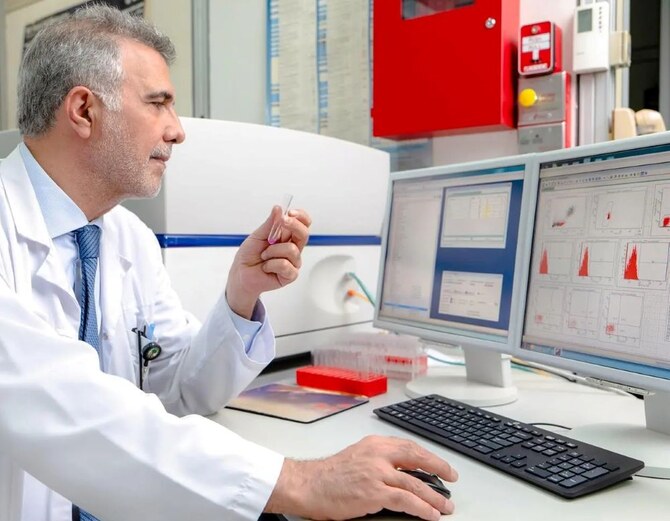
RIYADH: King Faisal Specialist Hospital and Research Center has earned recognition for its study on fully robotic liver transplants, named one of the Top 10 Most Impactful Papers of 2024 by the American Society of Transplantation.

The study presents the world’s first series of fully robotic recipient liver transplants from living donors.

The paper, “Outcomes of Fully Robotic Recipient Living Donor Liver Transplant about the Open Approach,” highlighted improvements in robot-assisted liver transplants, including reduced blood loss, shorter hospital stays, and better cosmetic outcomes compared with traditional surgery, without increasing complication rates.

Prof. Dieter Broering, executive director of the Organ Transplant Centre of Excellence in Riyadh, led the study. In 2024, he also performed the world’s first fully robotic left lobe liver transplant.

Broering said that this achievement demonstrates the potential of robotic transplant surgeries, particularly for high-risk procedures, and underscores our commitment to safer, faster and more effective patient outcomes.

The study was published in the Transplantation Journal, a leading platform for transplant research.

The center has been ranked first in the Middle East and Africa and 20th globally in the top 250 academic medical centers for the second consecutive year and was recognized as the most valuable healthcare brand in the region by the 2024 Brand Finance rankings. Additionally, it was included in the 2025 World’s Best Smart Hospitals list by Newsweek magazine.


Prince Turki visits nation’s new DarkSky International site

Updated 6 sec ago
Follow

Prince Turki visits nation’s new DarkSky International site

  • Naming of Nafud Al-Kabir Desert highlights Kingdom’s standing
  • 80% of world’s people live under skies affected by light pollution

JEDDAH: Prince Turki bin Mohammed bin Fahd bin Abdulaziz recently toured the Kingdom’s recently named DarkSky International site, the Saudi Press Agency reported on Monday.

The prince visited the Imam Turki bin Abdullah Royal Nature Reserve after it was officially recognized last week.

Prince Turki, who is a minister of state and chairman of the reserve’s development authority, was accompanied by Prince Faisal bin Fahd bin Muqrin bin Abdulaziz, deputy governor of the Hail region.

During the visit, Prince Turki met with members of the local community, reviewed grazing conditions in the area, and toured historical sites.

The DarkSky designation represents a national achievement that reflects Saudi Arabia’s advanced regional and global environmental standing and its commitment to protecting rare environments, the SPA reported.

Prince Turki said the achievement was made possible by the support of the Kingdom’s leadership in line with the goals of Vision 2030.

He added that the designation of the Nafud Al-Kabir Desert as a DarkSky site highlights the Kingdom’s pioneering approach to international environmental initiatives amid growing global light pollution.

International studies indicate that around 80 percent of the world’s people now live under skies affected by light pollution.

Prince Turki was briefed on the scientific and regulatory efforts undertaken by the authority to reduce light pollution and implement internationally recognized DarkSky management standards.

These efforts aim to preserve the site’s astronomical characteristics, support ecosystem sustainability, and position the area as a hub for astronomical tourism and scientific research, the SPA reported.

The Nafud Al-Kabir Desert is one of the largest accredited sites in the region, covering approximately 13,416 sq. km.

It joins more than 250 protected dark-sky areas worldwide, further strengthening the Kingdom’s position among leading countries in this field.

The Imam Turki bin Abdullah Royal Nature Reserve Development Authority aims to establish the location as a leading environmental destination and center for astronomy tourism, the SPA reported.

There are more than 160,000 sq. km of land protected from light pollution across 22 countries on six continents.