

QASSIM: A prized wild fungus found under the desert sands is popping up at markets across the Kingdom as Saudi Arabia’s truffle season is in full swing.
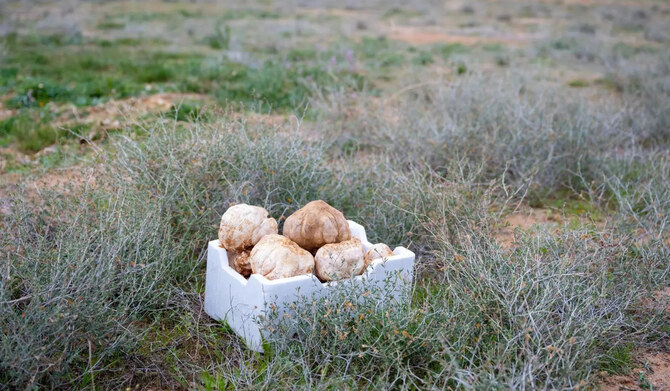
The central region of Qassim is a leading center for the cultivation of the desert truffle, known by its scientific name Terfeziaceae, or in Arabic as fage, as reported by the Saudi Press Agency.

The central region of Qassim is a leading center for the cultivation of the desert truffle. (SPA)
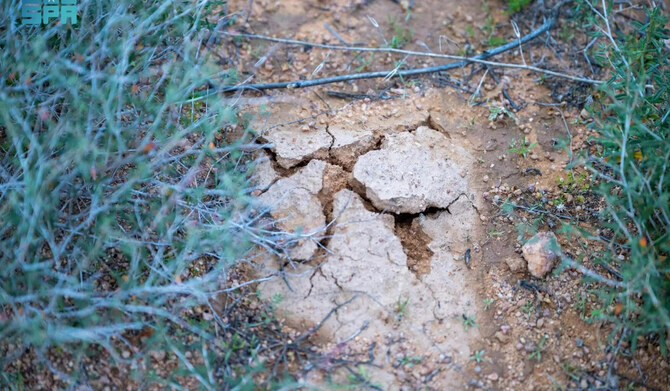
Several natural environmental factors contribute to the area’s proliferation of truffles, including fertile soil, untouched land, access to fresh water, climate, and the presence of the sunrose or raqrooq plant, particularly in the northern Qassim areas of Shari and Al-Sa’ira.
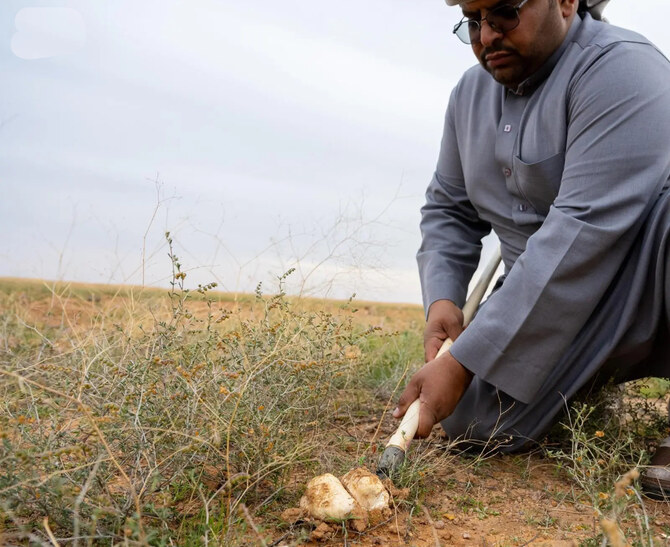
Local farmer Abdulkarim Saleh Al-Rasheed harvests truffles found near the sunrose plant thriving in lowlands adjacent to wheat fields irrigated by overflowing pivot sprinklers.

The central region of Qassim is a leading center for the cultivation of the desert truffle. (SPA)
He said that the emergence of truffles had coincided with the cessation of thunderstorms accompanied by lightning, a phenomenon traditionally linked to truffle growth.
Al-Rasheed told SPA that successful cultivation depended on irrigation timing, water salinity, soil fertility and temperature, each playing a crucial role.
For truffles, the optimal temperature is measured ten days after the typically mild “Wasm” season beginning in mid-October.
In northern Qassim, this translates to nighttime temperatures between 15 and 20 degrees Celsius.
Irrigation typically begins around Sept. 25 in areas where the sunrose plant is present, with truffles beginning to appear about 50 days later.
He added that cultivated truffles in northern Qassim typically begin to appear around Nov. 20.
Truffles offer various benefits beyond their culinary value. Their water is traditionally believed to have medicinal properties for eye ailments, based on a saying attributed to the Prophet Muhammad. They also serve as a natural food source for grazing animals.
The Qassim Truffle Festival, currently in its fourth year, is a marker of the region’s truffle production.
The ten-day festival features 18 booths showcasing truffles, a dedicated auction area, 32 booths for local producers, and other exhibits featuring dates, honey, food products, and related activities.