
KARACHI: Prime Minister Shehbaz Sharif admitted on Wednesday that Pakistan’s tax slabs were “prohibitive” and were hindering businesses from growing but reiterated his government’s commitment to honor pledges made to the International Monetary Fund (IMF).
Pakistan’s assembly passed the national budget in June 2024 with a challenging tax revenue target of Rs13 trillion ($46.66 billion) for the financial year starting July 1, 2024. This target was up about 40 percent from the last financial year.
Islamabad’s move was in line with the IMF’s demands, which has urged Pakistan to undertake fiscal reforms, which include increasing its tax revenue and base. The measures helped Pakistan secure a $7 billion, 37-month financial bailout from the international lender last year.
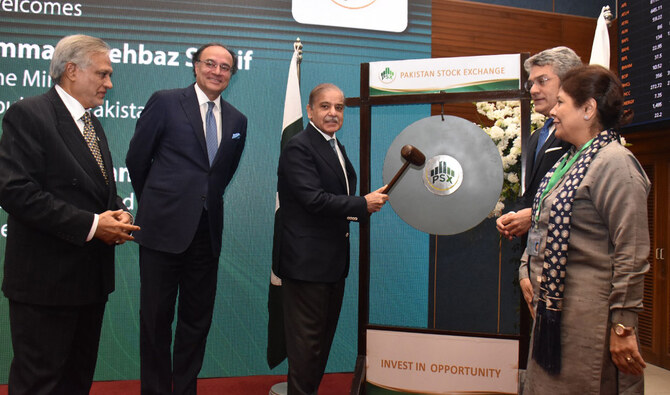
“Now see it is evident that our tax slabs, they are prohibitive,” Sharif told businesspersons and investors during a visit to the Pakistan Stock Exchange (PSX).
“They won’t let businesses run. They won’t support investments. But we are in an IMF [International Monetary Fund] program mode. We have to honor the IMF’s commitments,” he added.
He said Islamabad could not afford to say “goodbye” to the IMF currently.
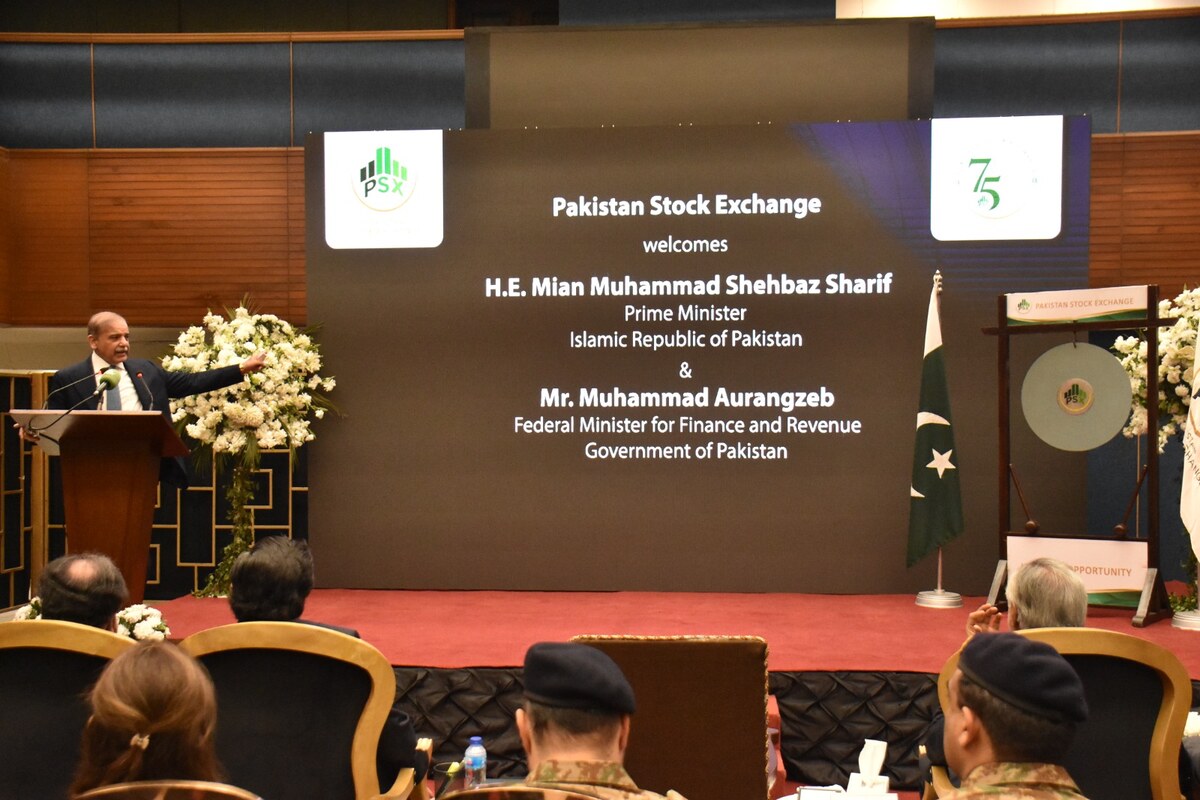
Pakistan Prime Minister Shehbaz Sharif addresses a ceremony at the Pakistan Stock Exchange in Karachi on January 8, 2025, to celebrate achievements by the equity market being the world’s second best performing market in 2024. (Photo courtesy: PMO)
“At present, we need to build this relationship and achieve those targets,” he said.
Sharif emphasized that while the IMF had set a target for Pakistan’s tax-to-GDP ratio at 10.6 percent, the government had managed to enhance it to 10.8 percent.
“We now need to push forward to meet our goals,” he said. “We need to build up our finances, and to do that, we need loans from banks, capital investments for day-to-day expenses, and running operations.”
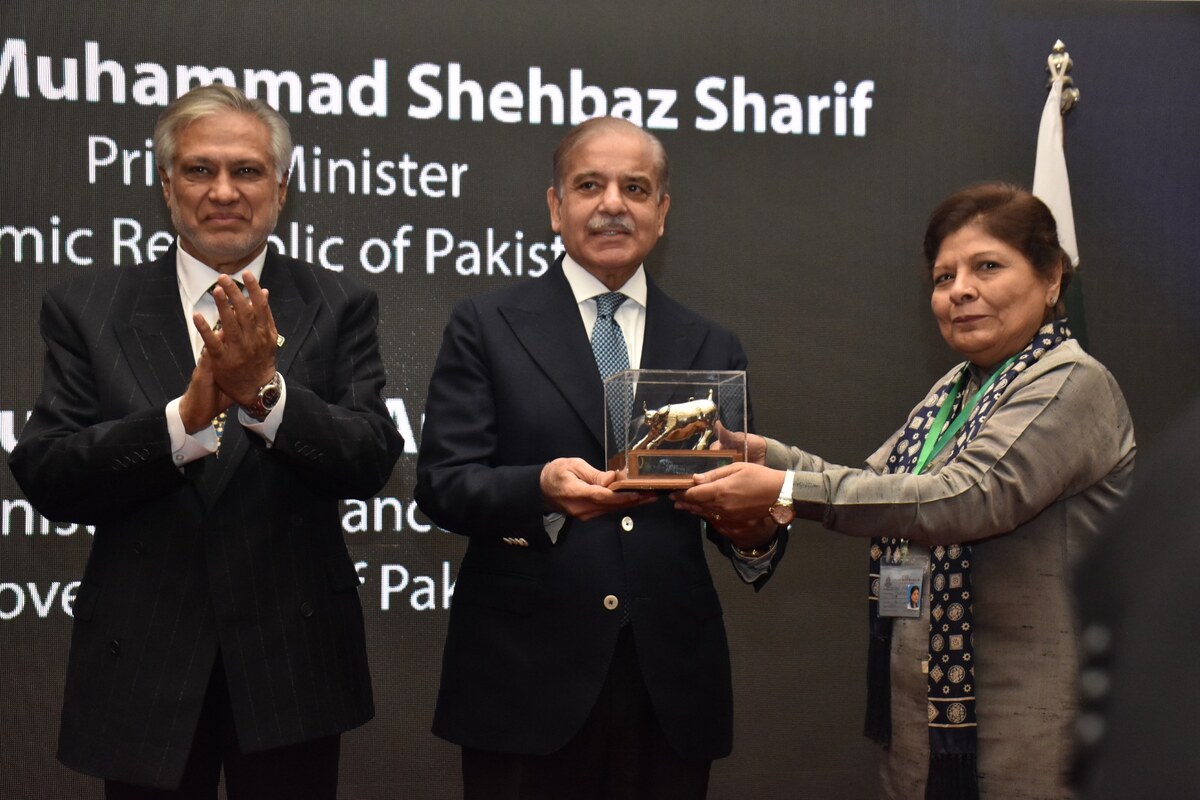
Pakistan Stock Exchange Chairperson Shamshad Akhtar (right) gives a souvenir to Prime Minister Shehbaz Sharif during his visit to Pakistan Stock Exchange in Karachi on January 8, 2025. (PMO)
Sharif also praised Pakistan’s business community, noting that some of its “bright minds” who were not just billionaires but “trillionaires,” were key to the country’s economic backbone as they were generating income, creating jobs and contributing to taxes.
His PSX visit comes at a time when the government aims to unlock both foreign and domestic investment to overcome a prolonged economic crisis. Pakistani officials have described the stock market’s strong performance last year as a reflection of growing investor confidence and the administration’s commitment to fiscal reforms and improved business facilitation.
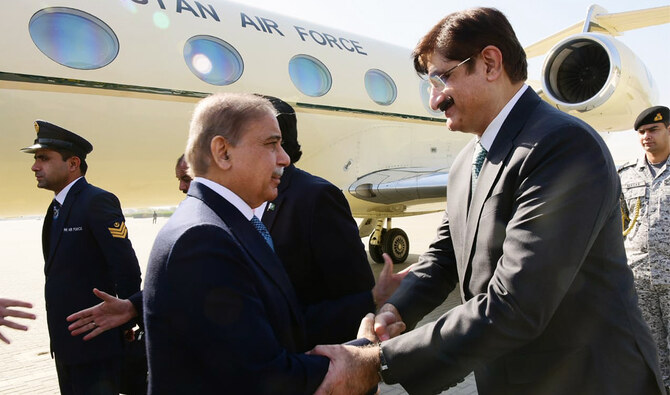
Murad Ali Shah (right), Chief Minister of Pakistan's Sindh province, receives Prime Minister Shehbaz Sharif in Karachi on January 8, 2025. (PID)
PM Sharif also inaugurated the Faceless Customs Assessment System during his visit to Karachi, launched as a pilot project in December 2024 that aims to streamline customs clearance through automation.
By minimizing human interaction, the system seeks to enhance transparency, reduce clearance times and improve trade facilitation.
The initiative marks the first step in a broader government plan to scale up the system to upcountry ports and border stations in the coming months.
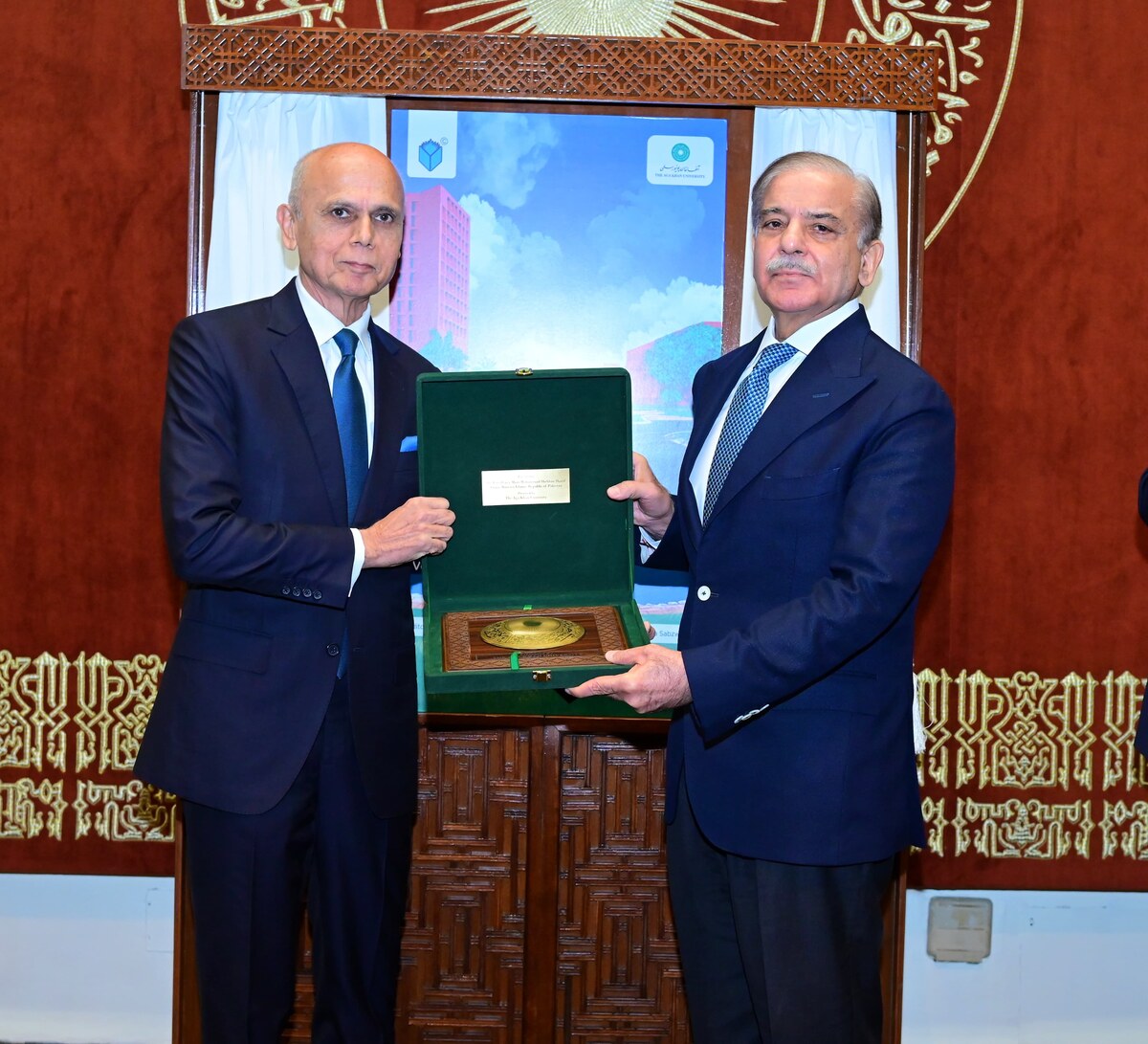
Pakistan Prime Minister Shehbaz Sharif receives a souvenir at the Aga Khan University in Karachi on January 8, 2025. (PMO)
Sharif attended the launch of the "Manual of Clinical Practice Guidelines" at Aga Khan University, calling it a milestone in Pakistan's health care sector. The guidelines are expected to standardize medical practices and improve health care delivery nationwide.