RIYADH: Economies worldwide have faced significant challenges in 2024, marked by escalating geopolitical tensions and the ongoing conflicts in the Middle East.
Despite these difficult circumstances, the Saudi Fund for Development remained steadfast in its mission to support developing nations through financing vital social and infrastructure projects.
In the first nine months of 2024, the SFD supported various initiatives, including a $101 million investment for the Shounter and Jagran-IV Hydropower Projects in Pakistan, a $55 million loan to bolster Turkiye’s education sector, and a $5 million grant to fund a water project in Benin.
As the official development arm of Saudi Arabia, the SFD has financed more than 800 projects across over 100 countries, contributing a total of $20 billion since its inception in 1974. Now, in its 50th year, the SFD continues to build on its legacy, making significant strides during the final quarter of 2024. Here are some of the highlights from its activities in the last three months of the year.
Loans to Serbia
In October, the SFD marked its entry into Serbia by signing three development loan agreements valued at $205 million. The loans are aimed at supporting key sectors, including agriculture, education, and energy. This partnership is seen as a significant step in Serbia’s socio-economic development.
During the signing ceremony, Sinisa Mali, the deputy prime minister and minister of finance of Serbia, expressed his gratitude for the support and highlighted the importance of the projects in creating jobs and strengthening the country’s economy. “We are grateful for the support. The projects for which this money is intended will contribute to the creation of new jobs, the strengthening of our economy, and better positioning of the Republic of Serbia in the world scientific community,” said Mali.
He also emphasized the importance of the partnership: “The agreements will also reinforce the long-term partnership between the Republic of Serbia and the Kingdom of Saudi Arabia and contribute to the implementation and development of important projects in our country.”
Sultan Al-Marshad, CEO of SFD, commented on the significance of the partnership, stating that it aligns with the fund’s mission to support sustainable development through strategic investments in infrastructure and education.
Partners with the World Bank Group
In another significant move in October, SFD signed a memorandum of understanding with the World Bank Group to deepen international cooperation in advancing sustainable development in emerging economies. The partnership focuses on joint efforts in knowledge-sharing, co-financing, and tackling critical challenges like water and food security, particularly in regions vulnerable to climate change and fragility.
The agreement includes all five institutions within the World Bank Group: the International Bank for Reconstruction and Development, the International Development Association, the International Finance Corporation, the Multilateral Investment Guarantee Agency, and the International Center for Settlement of Investment Disputes.
Key areas of focus outlined in the MoU include promoting renewable energy, enhancing transportation infrastructure, developing digital economies, and strengthening institutional capacity.
Cooperation with the Global Water Organization
In October, the Saudi fund also signed an MoU with the Global Water Organization. This collaboration aims to support water-related projects worldwide, with the goal of achieving sustainable development goals in various countries.
“This memorandum reflects SFD’s efforts over the past 50 years in enhancing international cooperation in the field of water resource management and water security. This partnership will enhance the provision of innovative financing options to support water projects,” said Al-Marshad at the time.
Deal with AIIB
In the same month, the SFD further extended its reach by signing an MoU with the Asian Infrastructure Investment Bank. The agreement seeks to foster sustainable, resilient, and inclusive development in AIIB member countries, with a particular focus on mobilizing resources through joint initiatives, knowledge sharing, and coordinated communication.
The MoU builds on a $10 million contribution by the SFD to AIIB’s Special Fund Window for Less Developed Members in 2023.
“As a key player in global development, SFD is dedicated to supporting least developed countries and advancing sustainable growth. We strongly believe that partnerships are essential for fostering long-term, impactful development,” said Al-Marshad.
He added: “Working closely with AIIB is a natural fit, given our aligned mission of promoting sustainability and resilience. With the Kingdom of Saudi Arabia’s recent contributions to AIIB’s Special Fund Window, this MoU marks an important milestone in our joint efforts to expand collaboration and drive meaningful change in developing countries.”
AIIB President Jin Liqun highlighted the significance of the agreement, noting that it would unlock new synergies and enhance institutional capabilities to drive resilient, inclusive growth in regions most in need.
“Building on SFD’s support to our Special Funds Window, and our joint effort to explore co-financing project opportunities, the collaboration with SFD will unlock new synergies and bolster our institutional capabilities, driving resilient and inclusive growth, where it is most critically needed,” said Liqun.
Healthcare in Djibouti
In November, the SFD signed an MoU with Djibouti to bolster the East African nation’s healthcare sector. The agreement involves the rehabilitation of the Sultan bin Abdulaziz Dialysis Center at Peltier General Hospital and the construction of a new dialysis center in the Balbala district of Djibouti City, with a total value of SR1.6 million ($426,000).
“This large-scale health project is expected to significantly expand Djibouti’s medical services, reinforcing SFD’s commitment to advancing healthcare infrastructure in Djibouti,” said the fund in a statement.
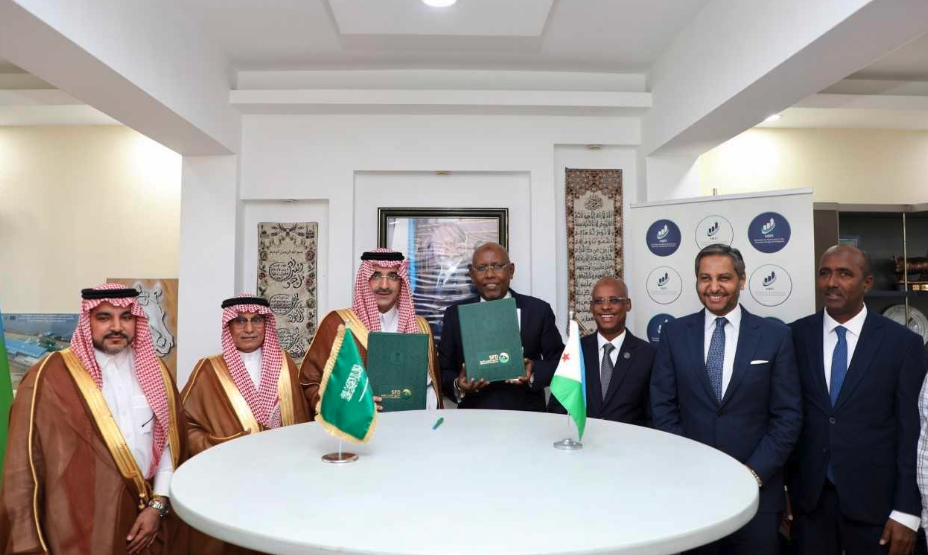
Djibouti’s Minister of Economy and Finance, Ilyas Moussa Dawaleh, welcomed a delegation from the Saudi Development Fund. SFD
Meetings
In the final quarter of the year, SFD participated in the Multilateral Industrial Policy Forum, organized by Saudi Arabia’s Ministry of Industry and Mineral Resources in partnership with the UN Industrial Development Organization. At the event, SFD showcased its developmental journey since its founding in 1974.
Al-Marshad met with several world leaders to discuss ongoing development projects. In November, Kyrgyzstan President Sadyr Japarov met with the SFD CEO during the Extraordinary Arab and Islamic Summit in Riyadh to review development projects in the Central Asian nation. Likewise, in October, Vietnam’s Prime Minister Pham Minh Chinh met with Al-Marshad to discuss future support for pivotal sectors in Vietnam, which has been benefiting from SFD’s initiatives since 2011.
Through loans exceeding $164 million, the SFD has financed 12 development projects in Vietnam across sectors like transportation, communications, and social infrastructure, all contributing to the country’s economic growth and sustainable development.