Pakistan begins week-long anti-polio vaccination in worst affected province

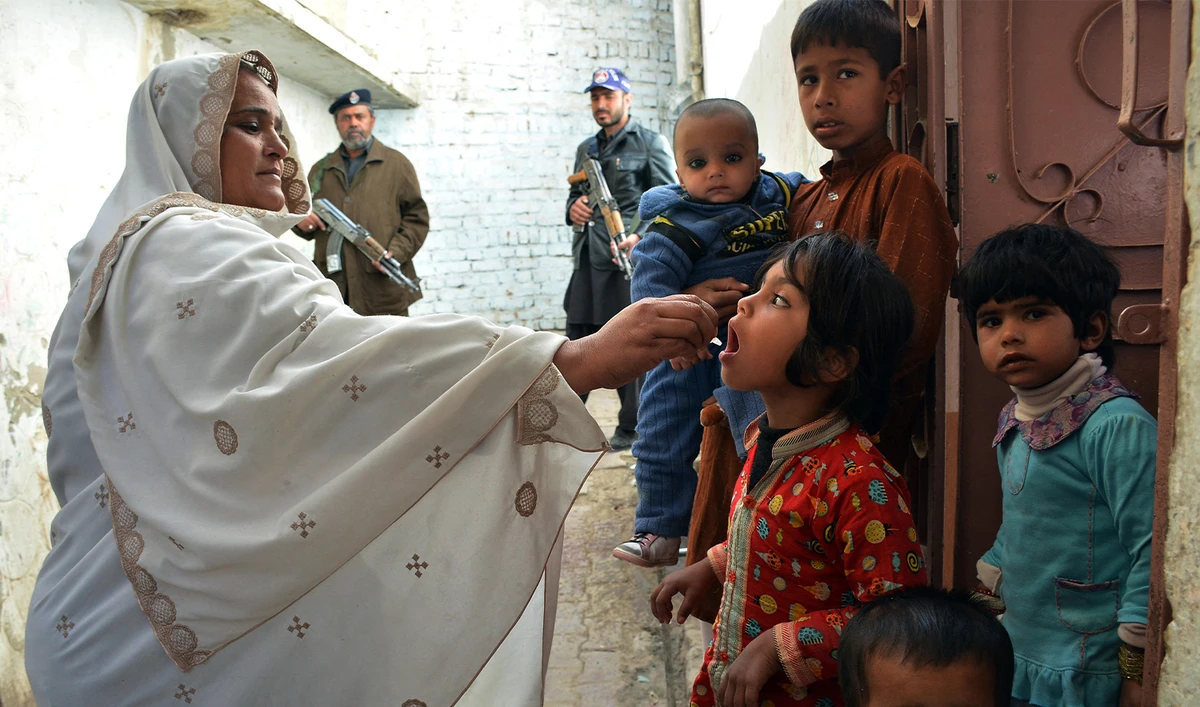
A Pakistani health worker administers polio drops to a child during a polio vaccination campaign in Quetta on February 15, 2016. (AFP/File)
Short Url
Updated 30 December 2024
Follow

Pakistan begins week-long anti-polio vaccination in worst affected province

  • Balochistan has so far reported highest number of polio cases among provinces this year, 27
  • Pakistan, along with neighbor Afghanistan, remains the last polio-endemic country in the world

ISLAMABAD: Pakistani health authorities have launched a week-long anti-polio vaccination drive in the country’s southwestern Balochistan, the province worst affected by poliovirus, on Monday, state-run media reported. 

Balochistan has reported 27 polio cases this year, the highest among all Pakistani provinces this year out of a total of 67 cases. Pakistan’s Khyber Pakhtunkhwa and Sindh provinces have reported 19 cases each this year while Punjab and Islamabad have each reported one case of the infection. 

Pakistan, along with neighboring Afghanistan, remains the last polio-endemic country in the world. The nation’s polio eradication campaign has faced serious problems with a spike in reported cases this year that have prompted officials to review their approach to stopping the crippling disease.

“In Balochistan, weeklong anti-polio vaccination drive across the province starts today,” state broadcaster Radio Pakistan said. “According to the Coordinator Emergency Operation Center Balochistan Inamul-Haq, more than 2.6 million children up to five years of age would be administered anti-polio drops.”

Haq said over 11,000 teams have been constituted for administering anti-polio vaccines to children up to five years of age at their doorstep. The official requested parents, media and citizens to play their role in making the anti-polio campaign a successful one. 

Pakistani authorities this month conducted a large-scale sub-national polio vaccination campaign in Punjab, Sindh, KP, Azad Jammu and Kashmir, Gilgit-Baltistan and Islamabad, vaccinating over 42 million children. 

Poliovirus, which can cause crippling paralysis particularly in young children, is incurable and remains a threat to human health as long as it has not been eradicated. Immunization campaigns have succeeded in most countries and have come close in Pakistan, but persistent problems remain.

In the early 1990s, Pakistan reported around 20,000 cases annually but in 2018 the number dropped to eight cases. Six cases were reported in 2023 and only one in 2021.

Pakistan’s polio program began in 1994 but efforts to eradicate the virus have since been undermined by vaccine misinformation and opposition from some religious hard-liners, who say immunization is a foreign ploy to sterilize Muslim children or a cover for Western spies. Militant groups also frequently attack and kill members of polio vaccine teams. 

Customs seize narcotics, smuggled goods, vehicles worth $4.9 million in southwest Pakistan

Updated 16 December 2025
Follow

Customs seize narcotics, smuggled goods, vehicles worth $4.9 million in southwest Pakistan

  • Customs seize 22.14 kg narcotics, consignments of smuggled betel nuts, Hino trucks, auto parts, says FBR
  • Smuggled goods enter Pakistan’s Balochistan province from neighboring countries Iran and Afghanistan

ISLAMABAD: Pakistan Customs seized narcotics, smuggled goods and vehicles worth a total of Rs1.38 billion [$4.92 million] in the southwestern Balochistan province on Tuesday, the Federal Board of Revenue (FBR) said in a statement. 

Customs Enforcement Quetta seized and recovered 22.14 kilograms of narcotics and consignments of smuggled goods comprising betel nuts, Indian medicines, Chinese salt, auto parts, a ROCO vehicle and three Hino trucks in two separate operations, the FBR said. All items cost an estimated Rs1.38 billion, it added. 

Smuggled items make their way into Pakistan through southwestern Balochistan province, which borders Iran and Afghanistan. 

“These operations are part of the collectorate’s intensified enforcement drive aimed at curbing smuggling and dismantling illegal trade networks,” the FBR said. 

“All the seized narcotics, goods and vehicles have been taken into custody, and legal proceedings under the Customs Act 1969 have been formally initiated.”

In the first operation, customs officials intercepted three containers during routine checking at FEU Zariat Cross (ZC) area. The containers were being transported from Quetta to Pakistan’s Punjab and Khyber Pakhtunkhwa provinces, the FBR said. 

The vehicles intercepted included three Hino trucks. Their detailed examination led to the recovery of the smuggled goods which were concealed in the containers.

In the second operation, the staff of the Collectorate of Enforcement Customs, Quetta, intercepted a ROCO vehicle at Zariat Cross area with the local police’s assistance. 

The driver was interrogated while the vehicle was searched, the FBR said. 

“During interrogation, it was disclosed that drugs were concealed inside the spare wheel at the bottom side of the vehicle,” it said. 

“Upon thorough checking, suspected narcotics believed to be heroin was recovered which was packed in 41 packets, each weighing 0.54 kilograms.”

The narcotics weighed a total of 22.14 kilograms, with an estimated value of Rs1.23 billion in the international market, the FBR concluded. 

“The Federal Board of Revenue has commended the Customs Enforcement Quetta team for their effective action and reiterated its firm resolve to combat smuggling, illicit trade and illegal economic activities across the country,” it said.