

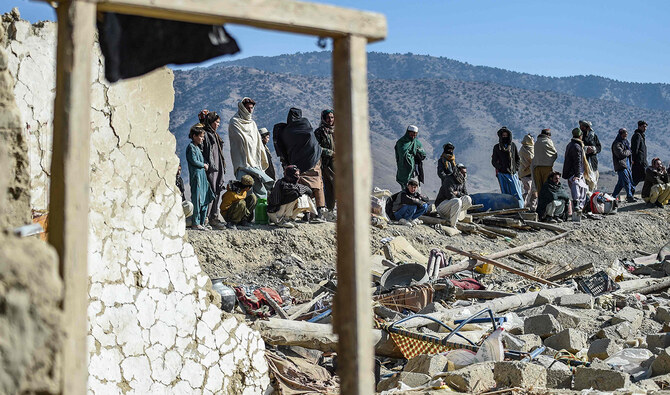

KARACHI: Pakistan is using both political engagement and military action to counter militant groups operating from Afghanistan, analysts said on Friday, after Afghan authorities reported airstrikes conducted by Pakistani forces this week that killed 46 people.
The strikes, which targeted alleged hideouts of the banned Tehreek-e-Taliban Pakistan (TTP), came amid allegations by Pakistani officials of cross-border militant attacks, as extremist violence targeting civilians and security forces has surged more recently.
Afghan authorities claimed the victims included residents from Pakistan’s border regions, who were uprooted during military operations against TTP fighters in recent years, as the United Nations expressed concern over civilian casualties and urged an investigation.
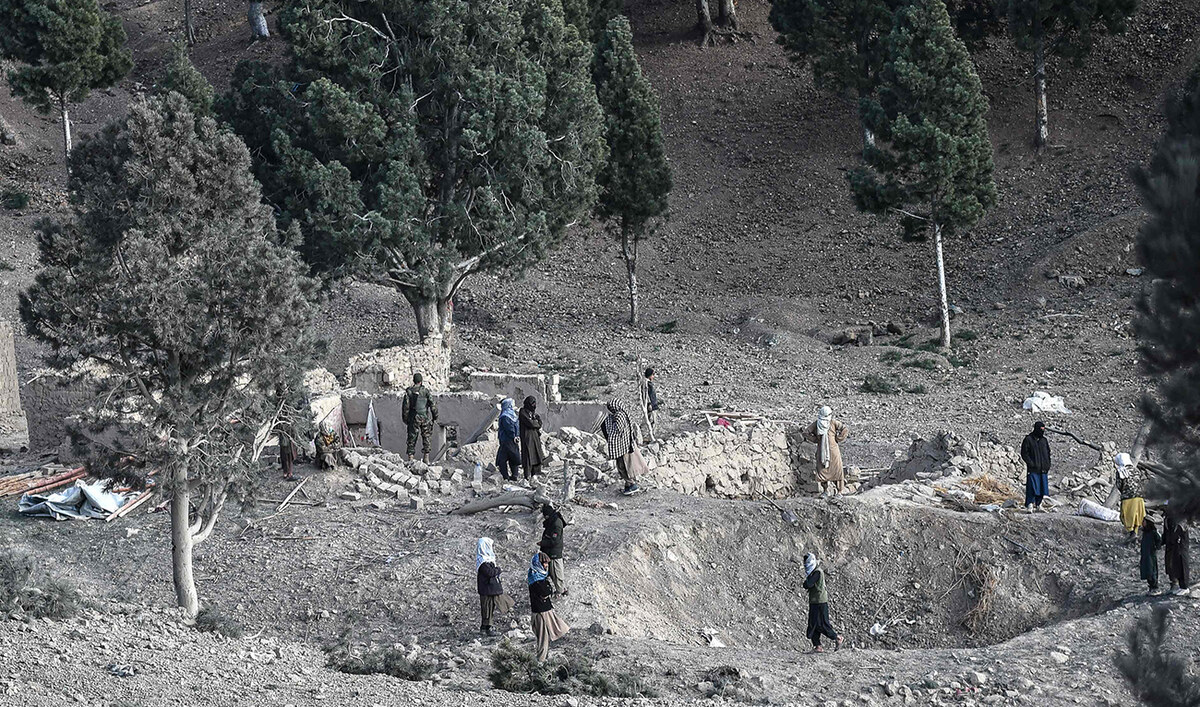
Residents gather near a damaged house two days after air strikes by Pakistan in the Barmal district of eastern Paktika province on December 26, 2024. (AFP)
While Pakistan has not officially confirmed the airstrikes, with both the foreign office and the military’s media wing declining to comment, Prime Minister Shehbaz Sharif said the TTP cross-border attacks constituted a “red line” for his government, asking Afghan authorities to take action against militants using their soil.
The reported airstrikes coincided with a visit to Kabul by Mohammad Sadiq, Pakistan’s special representative for Afghanistan, to discuss trade and regional ties.
“It seems that Pakistan wants to continue to talk to the Taliban while also flexing its military muscle, just as the Taliban did once they engaged in talks with the US,” Husain Haqqani, a former Pakistani ambassador, told Arab News.
He maintained that Pakistan’s military leadership believed its past support for the Afghan Taliban, when the US-led international forces were still operating in Kabul, would shield it from violent attacks, adding these armed groups did not consider any Muslim country “exempt from imposition of their extreme ideology.”
However, Sami Yousufzai, an Afghan political analyst, highlighted the delicate nature of Pakistan-Afghanistan ties, saying such strikes were viewed as a direct affront by Kabul.
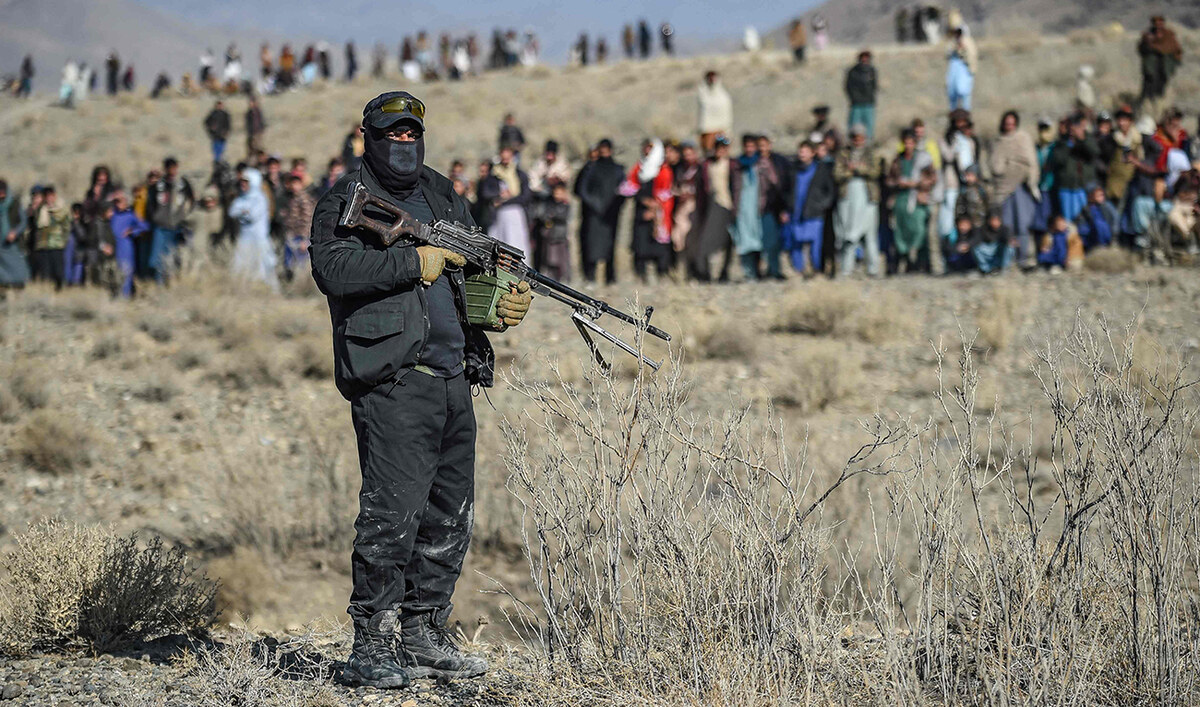
A Taliban security personnel stands guard at the site two days after airstrikes by Pakistan in the Barmal district of eastern Paktika province on December 26, 2024. (AFP)
“Afghanistan is particularly sensitive to invasions or attacks within its borders,” he told Arab News, acknowledging that the airstrikes resulted from growing pressure on Pakistan due to the surge in TTP attacks.
However, he maintained Pakistan had made errors of judgment relating to the timings of the attack, as one of its senior diplomats, Ambassador Sadiq, was in Afghanistan, and the number of civilian casualties.
Yousufzai informed that Afghan authorities had recently taken confidence-building measures at Pakistan’s request by relocating 200 TTP families from border areas to central Afghanistan, adding that the move had been undermined by the airstrikes.
“Afghanistan has little to lose, but as a more stable nation, Pakistan should avoid irresponsible actions,” he continued. “Such attacks will not eliminate the TTP. Instead, it will likely increase their support.”
He maintained the real issue was the TTP presence in Pakistan, adding that its fighters were even residing in districts like Bannu and Dera Ismail Khan, which do not share border with Afghanistan, though they have experienced several deadly attacks.
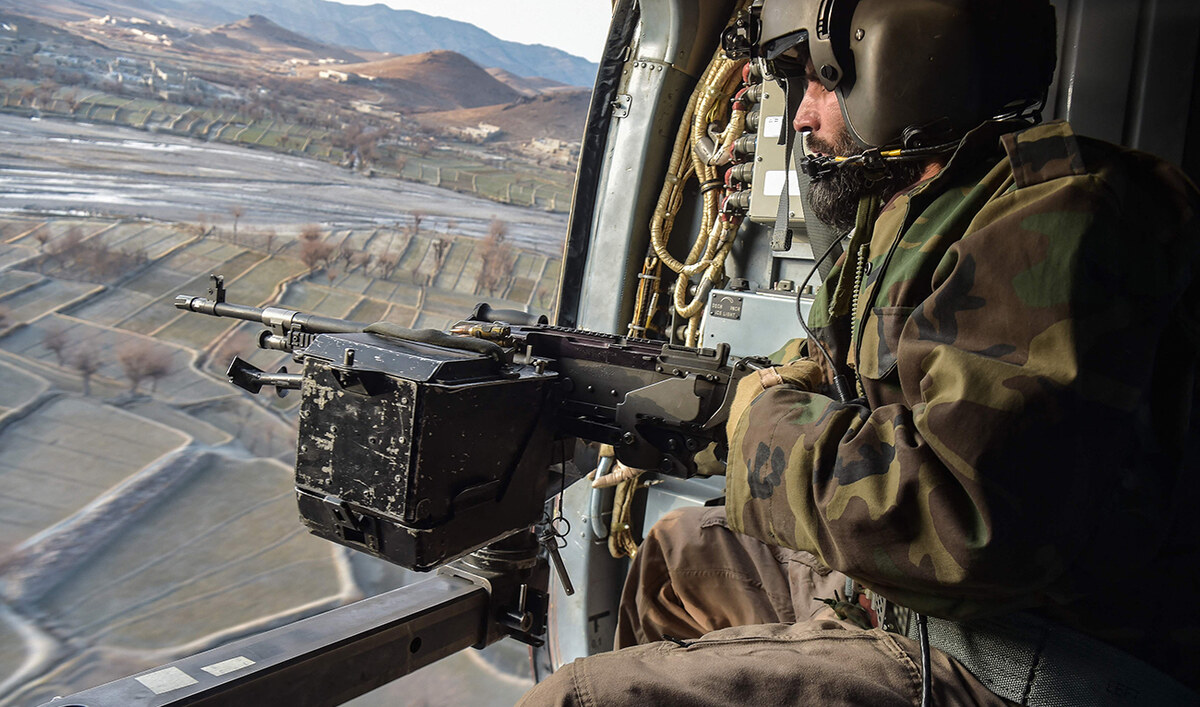
A Taliban security personnel keeps watch from a helicopter two days after air strikes by Pakistan in the Barmal district of eastern Paktika province on December 26, 2024. (AFP)
Mehmood Jan Babar, a Peshawar-based journalist specializing in Afghan and tribal affairs, argued the strikes did not derail diplomacy, as evidenced by continued meetings between Sadiq and Afghan officials, including Taliban Foreign Minister Amir Khan Muttaqi.
Asked about Afghan warning of consequences to Pakistan, he said: “Such speeches and statements are often for public consumption.”
Syed Khalid Muhammad, a security expert in Islamabad, dismissed the claims of civilian casualties, arguing that militants deliberately use civilian populations as shields.
“The key thing to understand about the Pakistani airstrikes on the TTP is that the militants have hidden themselves among the civilian population, much like every terror group globally, which serves a greater purpose for them,” he added. “It allows them to manufacture an alternative narrative to gain sympathy.”
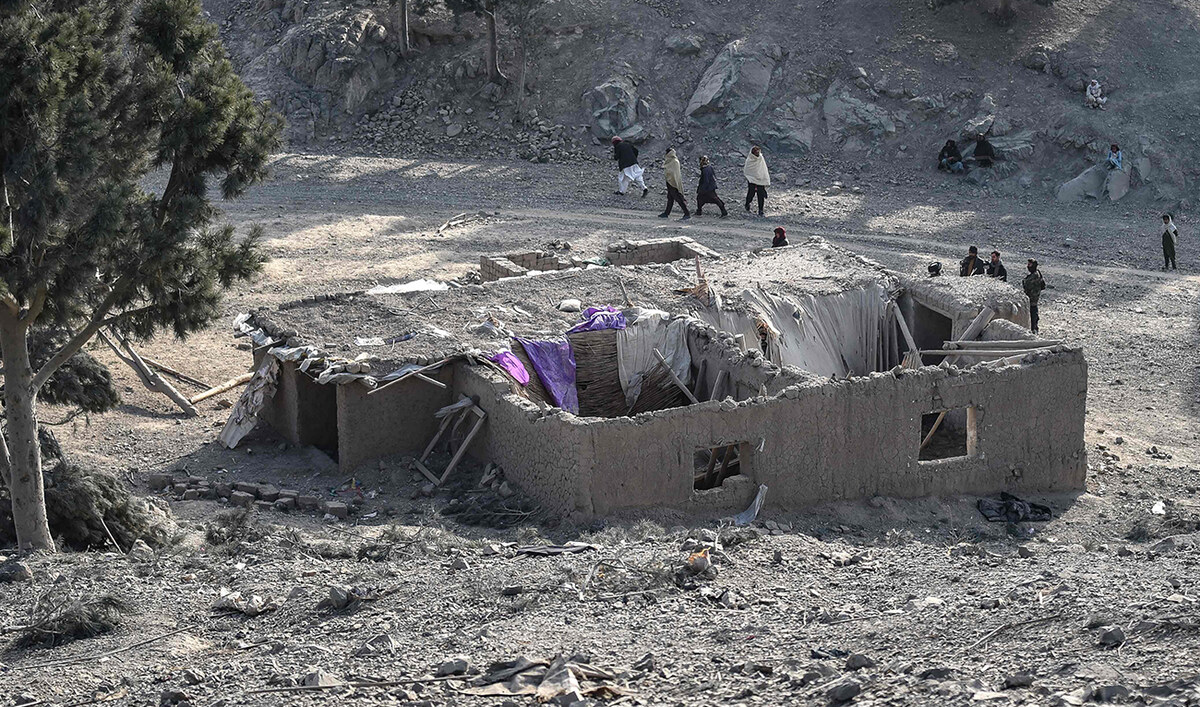
Residents gather near a damaged house two days after air strikes by Pakistan in the Barmal district of eastern Paktika province on December 26, 2024. (AFP)
Meanwhile, Pakistani military’s spokesperson Lt. Gen. Ahmed Sharif Chaudhry said his country had repeatedly pointed out to the Afghan government on state level that the TTP and other militants had been launching cross-border attacks in Pakistan in a news conference earlier today.
“Pakistan will leave no stone unturned in dismantling terrorist networks and safeguarding its citizens against terrorism,” he told the media without confirming the airstrikes.


