ISLAMABAD: Saudi Arabia’s King Salman Humanitarian Aid and Relief Center (KSrelief) on Thursday launched a food security initiative in Pakistan’s northwestern Khyber Pakhtunkhwa province, distributing food packages to people from a district marred by sectarian clashes since last month.
Kurram — a tribal district of around 600,000 in the northwestern Khyber Pakhtunkhwa where federal and provincial authorities have traditionally exerted limited control — has frequently experienced violence between its Sunni and Shia communities over land and power. Travelers to and from the town often ride in convoys escorted by security officials. The latest violence erupted on Nov. 21 when gunmen ambushed a vehicle convoy, killing 52 people, mostly Shias.
The assault triggered road closures and other measures that have disrupted people’s access to medicine, food, fuel, education and work. Over 130 people have been killed in the fighting that has ensued after the convoy attack, according to police records.
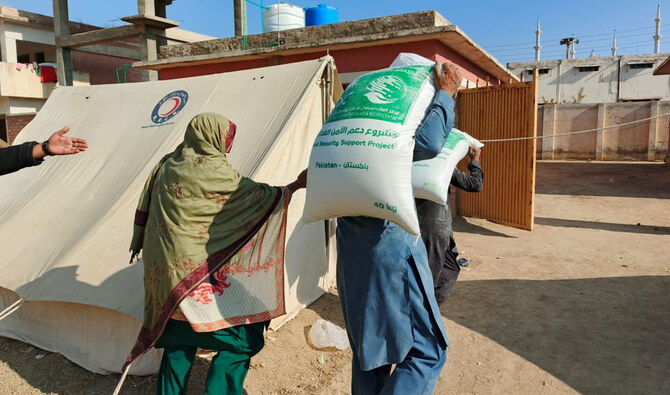
“As part of this effort, 500 food packages were distributed to displaced beneficiaries from Kurram district, who are currently residing in Tehsil Thall and facing urgent food insecurity,” the Saudi charity KSRelief said in a statement.
“The distribution took place in a camp in District Hangu, providing timely relief to displaced families in need.”
The initiative is part of KSrelief’s first phase of the Food Security Support Project for 2024-25, which aims to distribute 10,000 food packages among poor people across 14 districts in Khyber Pakhtunkhwa.
KSrelief has implemented 210 projects in Pakistan worth millions of dollars to improve the lives of vulnerable communities. Efforts include emergency relief for natural disasters, and long-term projects addressing food security, health care, education, and shelter. Shelter NFI and Winter Kits Project are notable initiatives providing essential items to families in harsh weather conditions, and food distribution programs that combat hunger and malnutrition.
In partnership with UNICEF, KSrelief supports critical health initiatives, such as vaccination campaigns to prevent polio and measles, safeguarding millions of children. The Noor Saudi Volunteer Project provides free eye care through eye camps, combating blindness among underprivileged populations.


![]()

KSrelief distributes food aid to displaced persons from Pakistani district facing sectarian clashes
Short Url
https://arab.news/9f8yn
KSrelief distributes food aid to displaced persons from Pakistani district facing sectarian clashes
- 500 food packages distributed to people from Kurram district currently residing in Tehsil Thall and facing urgent food insecurity
- KSrelief has implemented 210 projects in Pakistan worth millions of dollars to improve the lives of vulnerable communities
Latest updates


© 2026 SAUDI RESEARCH & PUBLISHING COMPANY, All Rights Reserved And subject to Terms of Use Agreement.