


RIYADH: The UAE economy is expected to grow by 4 percent in 2024, driven by robust performance across key non-oil sectors, according to official projections.
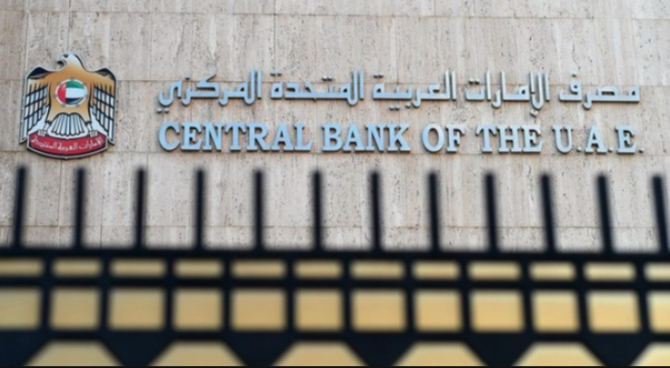
The Central Bank of the UAE’s Quarterly Economic Review for December indicates that growth will be supported by sectors including tourism, transportation and financial services, as well as insurance, construction, real estate, and communications.
Looking ahead, growth is projected to accelerate to 4.5 percent in 2025 and 5.5 percent in 2026, as the country continues to benefit from economic diversification policies aimed at reducing its dependence on oil revenues.
Non-oil GDP growth is forecast to remain robust, expanding by 4.9 percent in 2024 and 5 percent in 2025.
The report attributed this growth to strategic government policies aimed at attracting foreign investment and promoting economic diversification.
In the second quarter, non-oil GDP grew by 4.8 percent year on year, compared to 4.0 percent in the first quarter, supported by manufacturing, trade, transportation and storage, and real estate activities.
In September, the CBUAE revised its GDP growth forecast for the year upward by 0.1 percentage points, citing expected improvements in the oil sector.
Initially projecting a 3.9 percent growth for 2024, the central bank adjusted the figure to 4 percent. In its second-quarter economic report, the CBUAE forecasted a growth rate of 6 percent for 2025.
The UAE’s 16 non-oil sectors continued their steady growth in the third quarter of the year, with wholesale and retail trade, manufacturing, and construction being key contributors.
The manufacturing sector has benefited from increased foreign direct investment, aligning with both federal and emirate-level strategies.
The first nine months of the year also saw strong performance in the construction sector, reflecting significant investment in infrastructure and development projects.
Non-oil trade exceeded 1.3 trillion dirhams ($353.9 billion) in the first half of the year, representing 134 percent of the country’s GDP, a 10.6 percent year-on-year increase.
This growth underscores the success of the UAE’s economic diversification agenda and its comprehensive economic partnership agreements with various countries, which have strengthened trade relationships and driven exports.
The UAE has set ambitious economic targets to diversify its economy and reduce dependence on oil revenues.
Under the We the UAE 2031 vision, the country aims to double its GDP from 1.49 trillion dirhams to 3 trillion dirhams, generate 800 billion dirhams in non-oil exports, and raise the value of foreign trade to 4 trillion dirhams.
Additionally, the UAE plans to increase the tourism sector’s contribution to GDP to 450 billion dirhams.
Oil production averaged 2.9 million barrels per day in the first 10 months of the year and is forecasted to grow by 1.3 percent for the year, with further acceleration to 2.9 percent in 2025.
The fiscal sector also performed strongly in the first half of the year, with government revenue rising 6.9 percent on a yearly basis to 263.9 billion dirhams, equivalent to 26.9 percent of GDP.
This increase was fueled by a significant 22.4 percent rise in tax revenues. Meanwhile, the fiscal surplus reached 65.7 billion dirhams, or 6.7 percent of GDP, marking a 38.8 percent increase from the 47.4 billion dirhams surplus, or 5.1 percent of GDP, recorded in the first half of 2023.
Government capital expenditure surged by 51.7 percent year on year to 11 billion dirhams, reflecting the UAE’s commitment to advancing large-scale infrastructure projects and enhancing the country’s economic and investment landscape.
In the private sector, economic activity remained robust, with the UAE’s Purchasing Managers’ Index reaching 54.1 in October this year, signaling continued optimism among businesses driven by sustained demand and sales growth.
Dubai’s PMI stood at 53.2 in October, closely aligning with the national average, indicating consistent growth in the emirate’s non-oil private sector.
Employment and wages also showed strong performance, with the number of employees covered by the CBUAE’s Wages Protection System rising by 4 percent year-on-year in September.
Average salaries increased by 7.2 percent yearly during the same period, reflecting strong domestic consumption and sustainable GDP growth.


