Ancient winter festival in Pakistan’s Chitral concludes with rituals, traditional dance

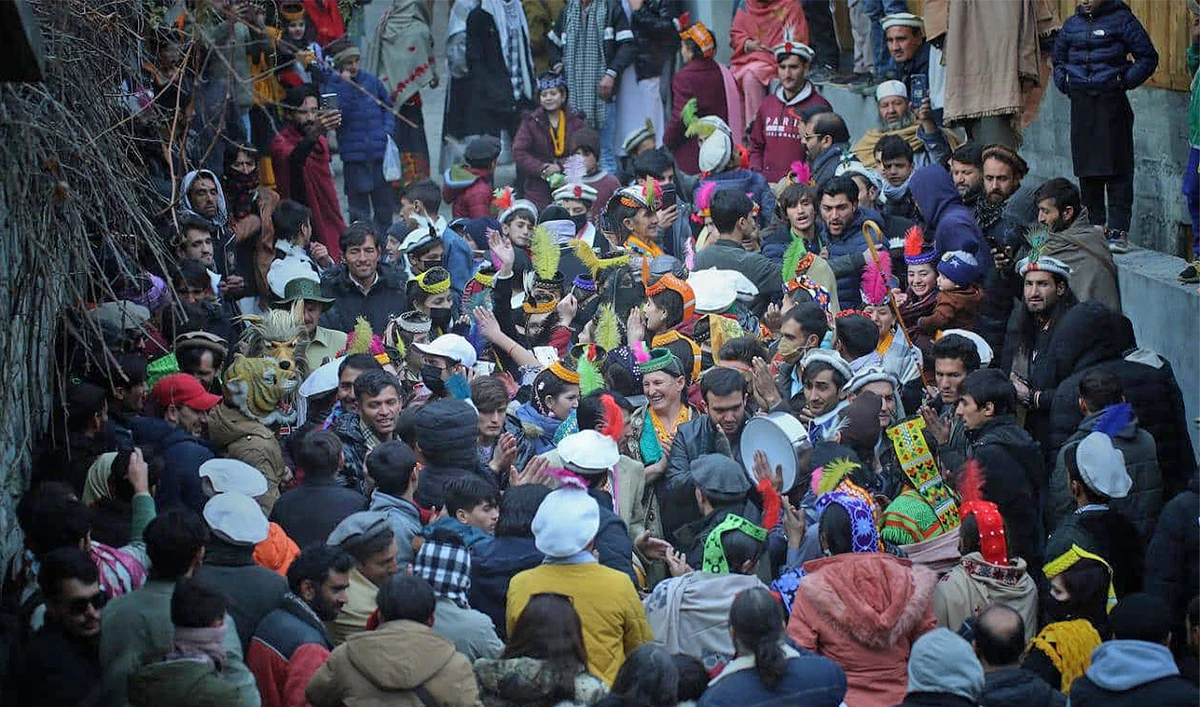
The picture shared by the Khyber Pakhtunkhwa Culture and Tourism Authority on December 23, 2024, shows Kalash tribespeople and tourists participate in the two-week Chawmos festival in the northwestern Pakistani district of Chitral. (kptourism/Facebook)
Short Url
Updated 23 December 2024
Follow

Ancient winter festival in Pakistan’s Chitral concludes with rituals, traditional dance

  • Chawmos festival is celebrated in December by the Kalash people, who are numbered around 4,000
  • Festival marks welcoming of new year, celebrated with dance, animal sacrifice, singing and feasting

PESHAWAR: A religious winter festival celebrated by the Kalash people in the northwestern Pakistani district of Chitral has concluded after featuring rituals, traditional dance and other festivities for two weeks, provincial tourism authority said on Monday.

The Kalash are a group of about 4,000 people, possibly Pakistan’s smallest minority, who live in the mountains of the Hindu Kush, where they practice an ancient polytheistic faith.

They come together each year in December to celebrate the two-week Chawmos festival after the community finishes fieldwork and stores cheese, fruit, vegetables and grains for the year.

The festival features various rituals, animal sacrifice, dance, songs and feasting, preserving the Kalash culture and attracting a number of tourists to Pakistan’s Khyber Pakhtunkhwa.

“The religious Chawmos festival of the ancient Kalash Valley has concluded,” Mohammad Saad, a spokesperson for the KP Tourism Authority, said in a statement.

“The festival continued from Dec. 8 in the three valleys of Bumburet, Birir and Rumbur.”
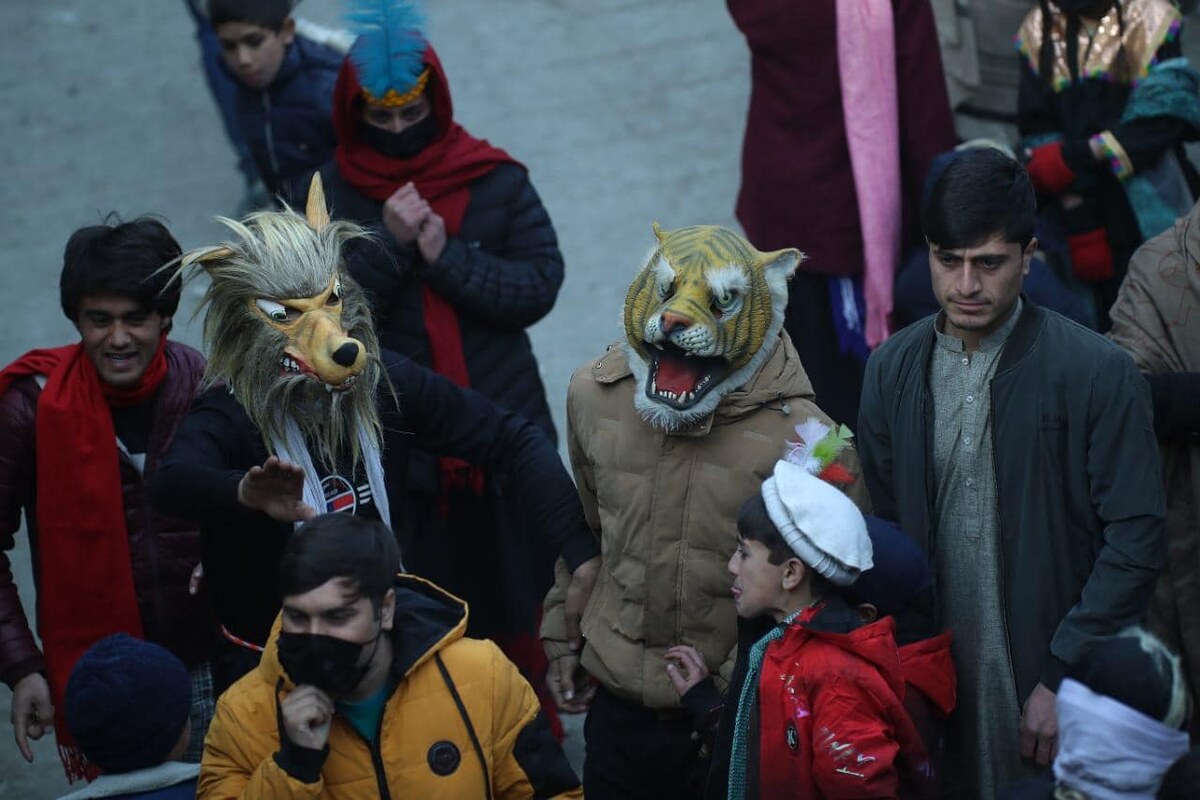


The picture shared by the Khyber Pakhtunkhwa Culture and Tourism Authority on December 23, 2024, shows men wearing animal masks participate in the two-week Chawmos festival in the northwestern Pakistani district of Chitral. (kptourism/Facebook)

The Kalash community’s religion incorporates animiztic traditions of worshipping nature as well as a pantheon of gods, and its people live mainly in the three Kalash valleys of Bumburet, Birir and Rumbur.

The Chawmos festival is celebrated to welcome the new year, with the Kalash people indulging in religious practices and distributing vegetables and fruit among each other, according to the official.
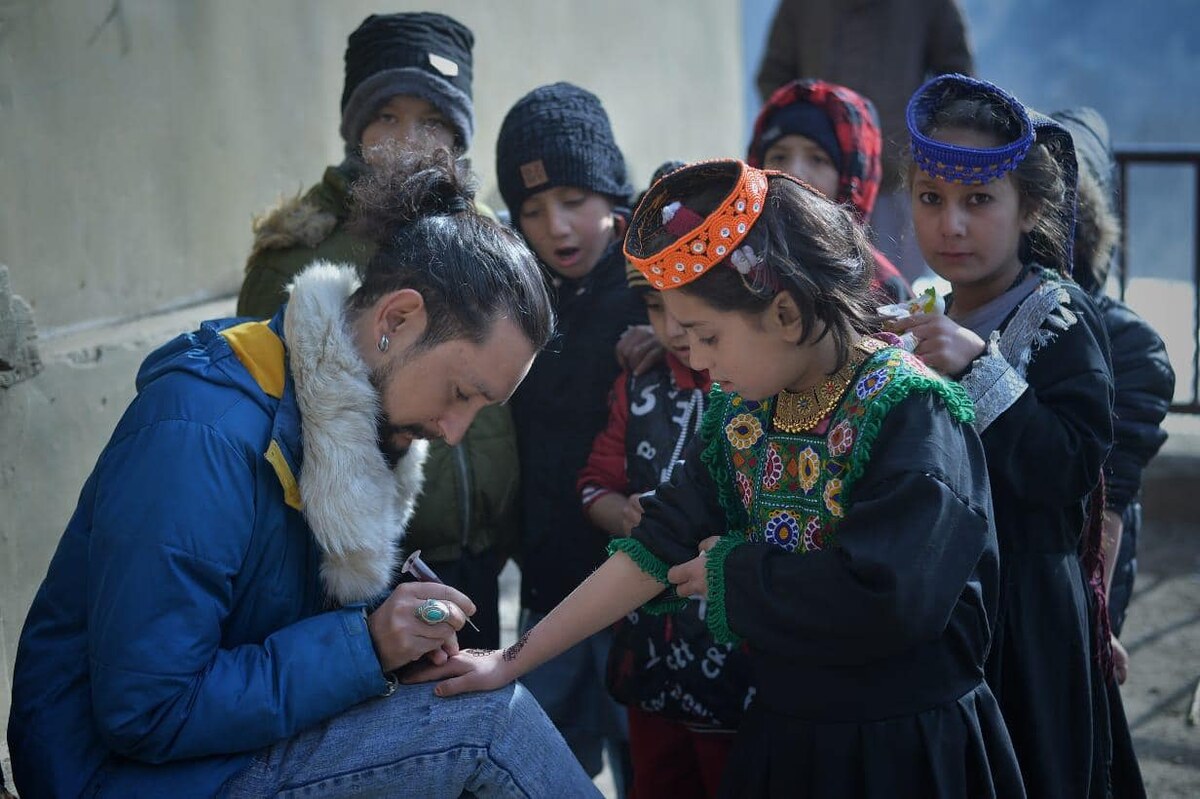


The picture shared by the Khyber Pakhtunkhwa Culture and Tourism Authority on December 23, 2024, shows a man applying henna at the Chawmos festival in the northwestern Pakistani district of Chitral. (kptourism/Facebook)

The festival was attended by a large number of domestic and foreign tourists who were fully facilitated by the provincial tourism authority.
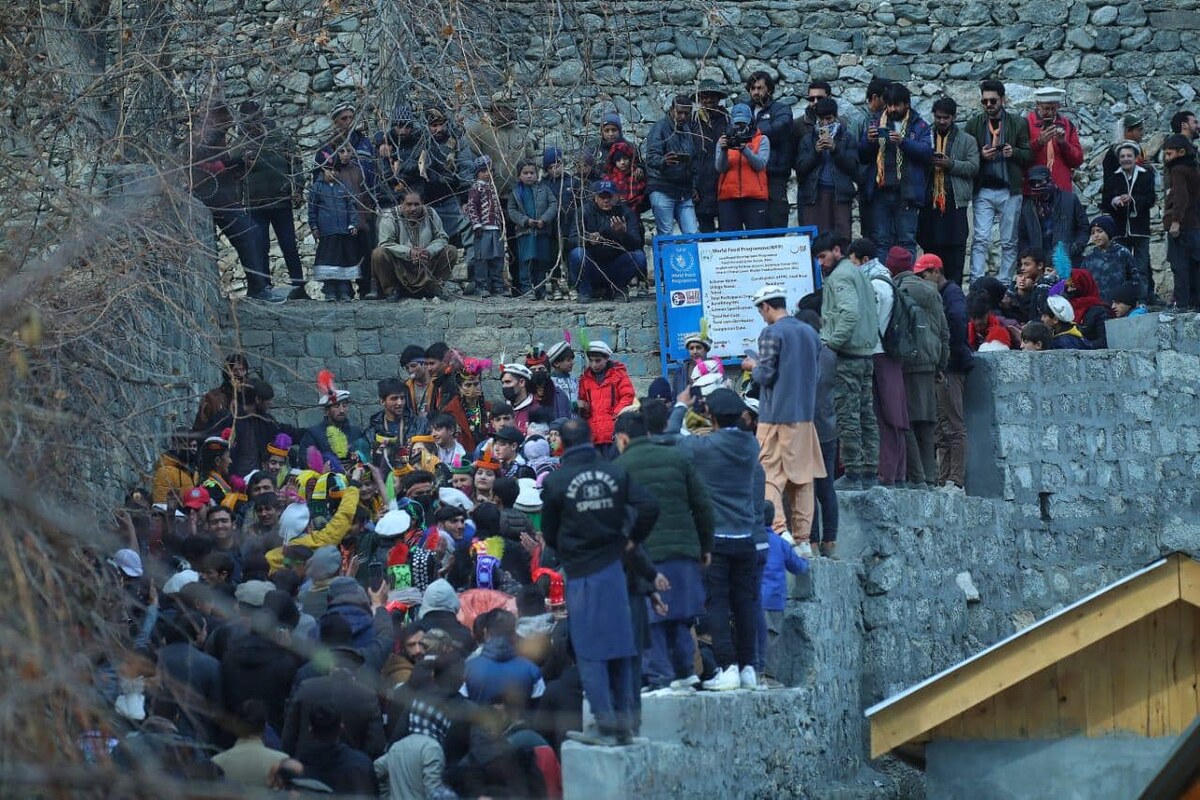


The picture shared by the Khyber Pakhtunkhwa Culture and Tourism Authority on December 23, 2024, shows Kalash tribespeople and tourists participate in the two-week Chawmos festival in the northwestern Pakistani district of Chitral. (kptourism/Facebook)


Pakistan moves to digitize payments for 10 million women under flagship poverty initiative

Updated 5 sec ago
Follow

Pakistan moves to digitize payments for 10 million women under flagship poverty initiative

  • BISP Official says accounts will be linked to phones to boost financial inclusion and curb payment deductions
  • Over 1.9 million SIMs issued as the nationwide rollout continues across provinces ahead of the March deadline

ISLAMABAD: Pakistan’s flagship poverty alleviation initiative, the Benazir Income Support Program (BISP), plans to equip 10 million women with digital bank accounts linked to their phone numbers within four months in one of the largest such exercises in the world, one of its top officials said on Wednesday.

Launched in 2008, the initiative is named after the late former prime minister Benazir Bhutto and has a budget of Rs716 billion ($2.5 billion) during the current fiscal year. Through its Benazir Kafaalat — or financial assistance — program, BISP provides quarterly stipends of Rs13,500 ($48) to around 10 million women.

In an exclusive interview with Arab News, BISP Secretary Amir Ali Ahmed said the opening of digital bank accounts for the beneficiaries was part of Prime Minister Shehbaz Sharif’s initiative related to a cashless economy and digital transformation of the country.

“I’m glad to share that 10 million bank accounts, wallet accounts were created,” he said. “This is a follow-up of the same exercise whereby now 10 million SIMs are being distributed.

“It is significant to share that the entire beneficiary network that we have is female-centric,” he continued. “So these are 10 million female accounts that have been created.”

Ahmed said the process of issuing mobile phone SIM cards to BISP beneficiaries had started on November 17 and would be completed by March next year.

“Let me share that this is one of the largest such exercises to be conducted in the world which is female-centric, linked with financial inclusion and financial empowerment.”

The BISP official added that out of the more than 10 million beneficiaries, only five to 10 percent had bank accounts, but nearly 90 to 95 percent were excluded from the system.

He said they were being linked to the banking system with cellphone SIMs that are being distributed with the help of the IT ministry, Pakistan Telecommunication Authority, National Database and Registration Authority and telecom companies across the country.

“We feel that this initiative of the government of Pakistan will not only result in financial empowerment of our beneficiaries, it will also result in financial inclusion of a segment which was not part of the banking sector in Pakistan,” he said, adding that the move will also lead to transparency.

In the past, there have been complaints of women not getting their full payment from bank officials in the absence of their own accounts, but Ahmed said this was going to change.

“They will be free from any exploitation at the agent networks, the queues that one would witness, the complaints of corruption or deductions that would emerge,” he continued.

According to official data, more than 1.9 million SIMs have so far been issued for BISP beneficiaries across the country.

The province of Punjab leads the rollout with 810,597 SIMs, followed by Sindh with 523,629 and Khyber Pakhtunkhwa with 371,427 SIMs.

In other regions, Azad Jammu and Kashmir has received 59,617, Balochistan 82,826, Gilgit-Baltistan 45,184, and Islamabad 4,508 SIMs.