ISLAMABAD: Pakistan plans to establish 35 special economic zones (SEZs) to facilitate businesses and industry, officials said on Friday, amid Islamabad’s efforts to boost foreign investment.
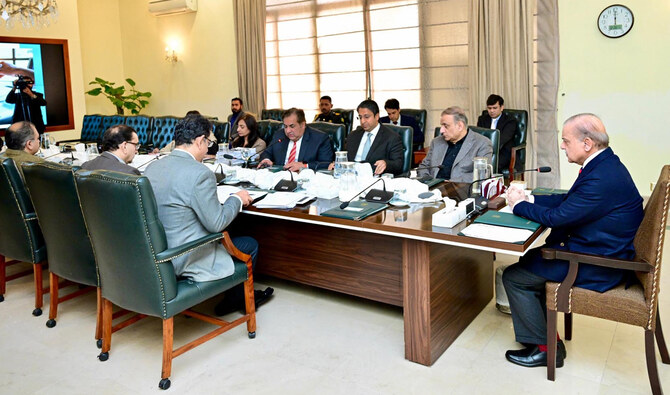
The statement came at a meeting of Board of Investment (BOI) officials, presided over by Prime Minister Shehbaz Sharif, to review progress of various ongoing projects, according to Sharif’s office.
Officials briefed the prime minister that they had conducted a survey of the 35 SEZs under the Geographical Information System (GIS) and had extensive data to accelerate the progress of projects in these zones.
More than 200 business-to-business (B2B) agreements have been reached with several Chinese companies and memorandums of understanding (MoUs) worth $70 million have been signed, they added.
“Work on regulatory reforms should be accelerated to provide a conducive environment for business in the country,” Sharif was quoted as saying by his office.
“An effective and comprehensive roadmap should be created for the completion of B2B agreements with international investors and the implementation of signed memorandums of understanding.”
Pakistan, which has been facing an economic crisis, has been making attempts to boost foreign direct investment in a bid to support its $350 billion fragile economy, with Islamabad seeing a flurry of high-level exchanges with China, Saudi Arabia, Japan, Tajikistan, Azerbaijan, Qatar and other countries in recent months.
During the BOI meeting, PM Sharif instructed officials to set investment targets that could be achieved at the earliest.
“Effective marketing of investment opportunities in Pakistan is essential to attract foreign investors,” he said. “Construction of business facilitation centers, organization of road shows and other such measures are very important to bring foreign investment to the country.


![]()

Pakistan plans to set up 35 special economic zones to facilitate businesses, industry
Short Url
https://arab.news/mjnwm
Pakistan plans to set up 35 special economic zones to facilitate businesses, industry
- Pakistani officials say over 200 B2B agreements reached with several Chinese companies, signed MoUs worth $70 million
- PM Shehbaz Sharif calls for accelerating work on regulatory reforms to provide a conducive environment for businesses
Latest updates


© 2026 SAUDI RESEARCH & PUBLISHING COMPANY, All Rights Reserved And subject to Terms of Use Agreement.