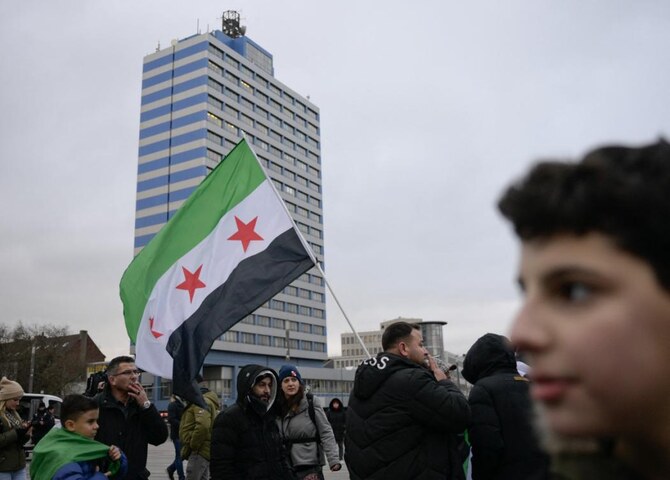
BERLIN: Thousands of Syrian doctors work in Germany, and the fall of Bashar Assad is raising concern over the potential consequences for the health sector if many of them were to return home.
Germany became a leading destination for Syrian refugees over the past decade, and some politicians were quick to start talking about encouraging the return of at least some after rebels took Damascus earlier this month. Others noted that the exiles include many well-qualified people and said their departure would hurt Germany — particularly that of doctors and other medical staff.
“Whole areas in the health sector would fall away if all the Syrians who work here now were to leave our country,” Interior Minister Nancy Faeser said last week. “For us it is important that we make the offer to the Syrians who are here, who have a job, who have integrated, who are crime-free, whose children go to school, to stay here and be there for our economy.”
Syrians have become a factor in a health sector that struggles to fill jobs, part of a wider problem Germany has with an aging population and a shortage of skilled labor.
The head of the German Hospital Federation, Gerald Gass, says Syrians now make up the largest single group of foreign doctors, accounting for 2 percent to 3 percent.
An estimated 5,000 Syrian doctors work in hospitals alone. Health Minister Karl Lauterbach, who puts the total number of Syrian doctors at over 6,000, says they are “indispensable” to health care.
Gass said the picture hospital operators are getting from Syrian doctors so far is “very varied.” Some — particularly those with many relatives still in Syria — are considering a quick return if the situation proves stable, while others feel at ease and well-integrated in Germany and want to stay. But “no looming mass movement toward Syria is recognizable” at present.
“It’s certainly not the case that patient care would collapse in Germany if all Syrian doctors returned now,” Gass said. “But of course we have the situation that these people often work in smaller groups at individual sites” — whose quick departure could force temporary local closures.
“We are well advised to treat these people respectfully,” Gass said. “And yes, hospital owners are giving thought to how they could fill these jobs.”
Many Syrian doctors have made Germany their home
Dr. Hiba Alnayef, an assistant pediatric doctor at a hospital in Nauen, just outside Berlin, said she has been asked in the last 10 days, “what if the Syrians all go back now?”
“I don’t know — some want to, but it’s very difficult and uncertain,” said Aleppo-born Alnayef, who has spent much of her life outside Syria and came to Germany from Spain in 2016. She said it’s something she thinks about, “but I have a homeland here too now.”
She said she and other Syrian doctors and pharmacists would like to build cooperation between Germany and Syria.
“The Germans need specialists, Syria needs support ... renovation, everything is destroyed now,” she said. “I think we can work well together to help both societies.”
Alnayef said the German health system would have “a big problem” if only part of its Syrian doctors decided to leave — “we are understaffed, we are burned out, we are doing the work of several doctors.” She said Germany has offered “a safe harbor,” but that discrimination and racism have been issues and integration is a challenge.
Dr. Ayham Darouich, 40, who came from Aleppo to Germany to study medicine in 2007 and has had his own general practice in Berlin since 2021, said that “as far as I have heard, none of my circle of friends wants to go back.”
“They have their family or their practices here, they have their society here,” Darouich said. German concerns that many might return are “a bit exaggerated, or unjustified.”
But he said Germany needs to do more to persuade medical professionals it trains to stay in the country, and that it could also do more to make itself attractive to foreigners needed to fill the gaps.
“We see that the nurses and medical professionals in hospitals earn relatively little in comparison with the US or Switzerland,” Darouich said, and poorly regulated working hours and understaffed hospitals are among factors that “drive people away.”


![]()


On Monday, Czarzasty criticized a joint US-Israeli proposal to support Donald Trump’s candidacy for the Nobel Peace Prize.
“I will not support the motion for a Nobel Peace Prize for President Trump, because he doesn’t deserve it,” he told journalists.
Czarzasty said that rather than allying itself more closely with Trump’s White House, Poland should “strengthen existing alliances” such as NATO, the United Nations and the World Health Organization.
He criticized Trump’s leadership, including the imposition of tariffs on European countries, threats to annex Greenland, and, most recently, his claims that NATO allies had stayed “a little off the front lines” during the war in Afghanistan.
He accused Trump of “a breach of the politics of principles and values, often a breach of international law.”
After Rose’s reaction, Czarzasty told local news site Onet: “I maintain my position” on the issue of the peace prize.
“I consistently respect the USA as Poland’s key partner,” he added later on X.
“That is why I regretfully accept the statement by Ambassador Tom Rose, but I will not change my position on these fundamental issues for Polish women and men.”
The speaker heads Poland’s New Left party, which is part of Tusk’s pro-European governing coalition, with which the US ambassador said he has “excellent relations.”
It is currently governing under conservative-nationalist President Karol Nawrocki, a vocal Trump supporter.
In late January, Czarzasty, along with several other high-ranking Polish politicians, denounced Trump’s claim that the United States “never needed” NATO allies.
The parliamentary leader called the claims “scandalous” and said they should be “absolutely condemned.”
Forty-three Polish soldiers and one civil servant died as part of the US-led NATO coalition in Afghanistan.
Germany faces uncertainty as Syrian doctors weigh returning home amid Assad’s fall
Short Url
https://arab.news/96et2
Germany faces uncertainty as Syrian doctors weigh returning home amid Assad’s fall
- Syrians have become a factor in a health sector that struggles to fill jobs, part of a wider problem Germany has with an aging population and a shortage of skilled labor
US ambassador accuses Poland parliament speaker of insulting Trump
- Tom Rose said the decision was made because of speaker Wlodzimierz Czarzasty’s “outrageous and unprovoked insults” against the US leader
- “We will not permit anyone to harm US-Polish relations, nor disrespect (Trump),” Rose wrote on X
WARSAW: The United States embassy will have “no further dealings” with the speaker of the Polish parliament after claims he insulted President Donald Trump, its ambassador said on Thursday.
Tom Rose said the decision was made because of speaker Wlodzimierz Czarzasty’s “outrageous and unprovoked insults” against the US leader.
“We will not permit anyone to harm US-Polish relations, nor disrespect (Trump), who has done so much for Poland and the Polish people,” Rose wrote on X.
Poland’s Prime Minister Donald Tusk responded the same day, writing on X: “Ambassador Rose, allies should respect, not lecture each other.”
“At least this is how we, here in Poland, understand partnership.”
On Monday, Czarzasty criticized a joint US-Israeli proposal to support Donald Trump’s candidacy for the Nobel Peace Prize.
“I will not support the motion for a Nobel Peace Prize for President Trump, because he doesn’t deserve it,” he told journalists.
Czarzasty said that rather than allying itself more closely with Trump’s White House, Poland should “strengthen existing alliances” such as NATO, the United Nations and the World Health Organization.
He criticized Trump’s leadership, including the imposition of tariffs on European countries, threats to annex Greenland, and, most recently, his claims that NATO allies had stayed “a little off the front lines” during the war in Afghanistan.
He accused Trump of “a breach of the politics of principles and values, often a breach of international law.”
After Rose’s reaction, Czarzasty told local news site Onet: “I maintain my position” on the issue of the peace prize.
“I consistently respect the USA as Poland’s key partner,” he added later on X.
“That is why I regretfully accept the statement by Ambassador Tom Rose, but I will not change my position on these fundamental issues for Polish women and men.”
The speaker heads Poland’s New Left party, which is part of Tusk’s pro-European governing coalition, with which the US ambassador said he has “excellent relations.”
It is currently governing under conservative-nationalist President Karol Nawrocki, a vocal Trump supporter.
In late January, Czarzasty, along with several other high-ranking Polish politicians, denounced Trump’s claim that the United States “never needed” NATO allies.
The parliamentary leader called the claims “scandalous” and said they should be “absolutely condemned.”
Forty-three Polish soldiers and one civil servant died as part of the US-led NATO coalition in Afghanistan.


Latest updates


© 2026 SAUDI RESEARCH & PUBLISHING COMPANY, All Rights Reserved And subject to Terms of Use Agreement.