LONDON: The father and stepmother of Sara Sharif, a 10-year-old girl who was found dead in her home in Britain, were on Tuesday jailed for 40 and 33 years respectively for her murder after a trial which heard harrowing details of Sara’s treatment.
Sharif was found dead in August 2023 at her home in Woking, a town southwest of London, after what prosecutors said was a campaign of “serious and repeated violence.”
The family fled to Pakistan immediately after Sara Sharif was killed, before they were arrested in September 2023 at London’s Gatwick airport after flying from Dubai.
Prosecutor Bill Emlyn Jones told jurors at the start of the trial that Sara had suffered injuries including burns, multiple broken bones and bite marks.
Sara’s father Urfan Sharif, 43, and his wife Beinash Batool, 30, stood trial at London’s Old Bailey court charged with her murder, which they denied.
Last week, the jury convicted Urfan Sharif and Batool of Sara’s murder. Sara’s uncle Faisal Malik, 29, was found not guilty of murder but guilty of causing or allowing Sara’s death.
Sharif and Batool appeared in the dock at the Old Bailey, where they heard a statement read on behalf of Sara’s mother Olga Domin who called them “executioners.”
“You are sadists, although even this word is not enough for you,” her statement read. “I would say you are executioners.”
Judge John Cavanagh sentenced Sharif to a minimum of 40 years in prison and Batool to a minimum of 33 years. Malik was sentenced to 16 years.
“The courts at the Old Bailey have been witness to many accounts of awful crimes, but few can have been more terrible than the account of the despicable treatment of this poor child that the jury in this case have had to endure,” Cavanagh said.
“It is no exaggeration to describe the campaign of abuse against Sara as torture.”

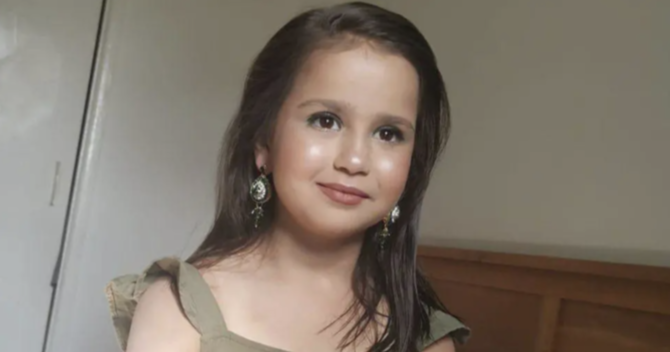
Father and stepmother jailed in UK for 10-year-old Sara Sharif's murder
https://arab.news/vwpmp
Father and stepmother jailed in UK for 10-year-old Sara Sharif's murder
- Sara Sharif was killed after campaign of 'serious and repeated violence'
- Urfan Sharif and Beinash Batool jailed for 40 and 33 years respectively
UN’s top court opens Myanmar Rohingya genocide case
- The Gambia filed a case against Myanmar at the UN’s top court in 2019
- Verdict expected to impact Israel’s genocide case over war on Gaza
DHAKA: The International Court of Justice on Monday opened a landmark case accusing Myanmar of genocide against its mostly Muslim Rohingya minority.
The Gambia filed a case against Myanmar at the UN’s top court in 2019, two years after a military offensive forced hundreds of thousands of Rohingya from their homes into neighboring Bangladesh.
The hearings will last three weeks and conclude on Jan. 29.
“The ICJ must secure justice for the persecuted Rohingya. This process should not take much longer, as we all know that justice delayed is justice denied,” said Asma Begum, who has been living in the Kutupalong refugee camp in Bangladesh’s Cox’s Bazar district since 2017.
A mostly Muslim ethnic minority, the Rohingya have lived for centuries in Myanmar’s western Rakhine state but were stripped of their citizenship in the 1980s and have faced systemic persecution ever since.
In 2017 alone, some 750,000 of them fled military atrocities and crossed to Bangladesh, in what the UN has called a textbook case of ethnic cleansing by Myanmar.
Today, about 1.3 million Rohingya shelter in 33 camps in Cox’s Bazar, turning the coastal district into the world’s largest refugee settlement.
“We experienced horrific acts such as arson, killings and rape in 2017, and fled to Bangladesh,” Begum told Arab News.
“I believe the ICJ verdict will pave the way for our repatriation to our homeland. The world should not forget us.”
A UN fact-finding mission has concluded that the Myanmar 2017 offensive included “genocidal acts” — an accusation rejected by Myanmar, which said it was a “clearance operation” against militants.
Now, there is hope for justice and a new future for those who have been displaced for years.
“We also have the right to live with dignity. I want to return to my homeland and live the rest of my life in my ancestral land. My children will reconnect with their roots and be able to build their own future,” said Syed Ahmed, who fled Myanmar in 2017 and has since been raising his four children in the Kutupalong camp.
“Despite the delay, I am optimistic that the perpetrators will be held accountable through the ICJ verdict. It will set a strong precedent for the world.”
The Myanmar trial is the first genocide case in more than a decade to be taken up by the ICJ. The outcome will also impact the genocide case that Israel is facing over its war on Gaza.
“The momentum of this case at the ICJ will send a strong message to all those (places) around the world where crimes against humanity have been committed,” Nur Khan, a Bangladeshi lawyer and human rights activist, told Arab News.
“The ICJ will play a significant role in ensuring justice regarding accusations of genocide in other parts of the world, such as the genocide and crimes against humanity committed by Israel against the people of Gaza.”


