

US building support in UN for Houthi ship inspections: Envoy

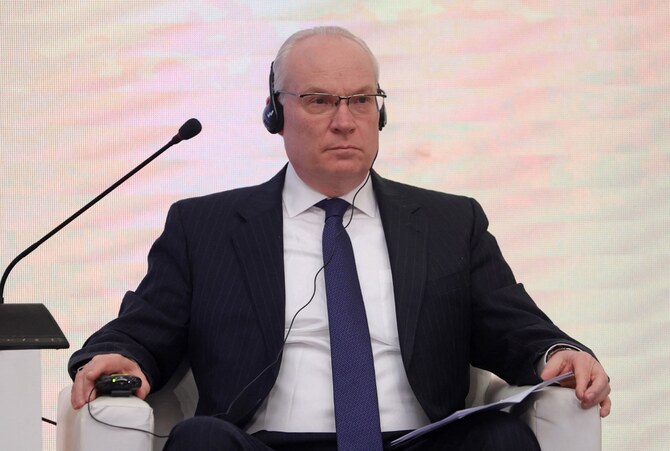
US Special Envoy for Yemen Tim Lenderking (AFP)
Short Url
Updated 17 December 2024
Follow

US building support in UN for Houthi ship inspections: Envoy

  • Existing UN mission has limited powers to inspect ships for weapons deliveries
  • Tim Lenderking: Washington also considering re-designating Yemeni militia as terrorist group

London: The US is building international support for a UN campaign to disrupt supplies heading for the Houthi militia in Yemen, Washington’s special envoy to the country has said.

Tim Lenderking added that the US is also considering re-designating the militia as a terrorist group.

Last week, he visited the UN Verification and Inspection Mission for Yemen, based in Djibouti on the opposite side of the Red Sea.

The mission’s focus is to inspect ships arriving in Houthi-controlled ports, to intercept weapons deliveries.

Though the UN Security Council has imposed an arms embargo, UNVIM, established in 2016, has limited means to interdict ships.

Lenderking said he is researching ways to make the mission more effective at preventing Houthi access to foreign weaponry.

The Houthis have said their Red Sea campaign is a stand of solidarity with Palestinians in the Gaza Strip.

The campaign will come to an end if a ceasefire is reached between Israel and Hamas, Houthi leaders have said.

“UNVIM is not equipped or given the mandate to do interdictions. We are working with partners to look at a change to the mandate,” Lenderking said.

“We all have to plug the holes, and that requires a different mindset and different sort of focus than simply escorting ships.”

The number of commercial ships transiting the Red Sea has halved in the past year due to the Houthi campaign. The US and UK militaries have staged a series of attacks on the militia’s positions in Yemen.

As a result, Houthi leaders are “much more careful how they are moving around,” said Lenderking. “They have altered their communications in light of the walkie talkie attacks on Hezbollah.”


Bulgarian parliament approves resignation of ruling coalition

Bulgaria’s Prime Minister Rossen Zhelyazkov delivers a speech following his government’s resignation in Sofia on Thursday. (AFP)
Updated 6 sec ago
Follow

Bulgarian parliament approves resignation of ruling coalition

  • The 240-seat chamber voted 127-0 to accept the resignation

SOFIA: Bulgarian parliament has approved the resignation of the coalition government of Prime Minister Rosen Zhelyazkov amid nationwide anti-corruption protests, and weeks ahead of the country’s scheduled euro zone entry.
Protesters, many of them young Bulgarians, have been protesting in the tens of thousands across the nation for weeks. 
The direct trigger was a proposed budget for next year that would have increased taxes and social security contributions to finance more state spending. 
The deeper cause, however, was rising anger over a perception of widespread corruption among the political elite and a sense that justice does not prevail for ordinary citizens.

BACKGROUND

The protests and the fall of the ninth government in five years underscored Bulgaria’s political instability.

The protests and the fall of the 9th government in five years underscored the country’s political instability as it plans to join the common European currency.
The 240-seat chamber voted 127-0 to accept the resignation. 
The Cabinet will continue performing its duties until a new government is elected.
Zhelyazkov’s minority government survived six votes of no confidence since it was appointed in January, but this time the large turnout of protesters on the streets changed the game.
The prime minister announced his resignation on Thursday, saying it was a direct response to the growing public pressure and that the demand for the government to step down had become impossible to ignore.
“Vox populi, vox Dei,” Zhelyazkov said, using a Latin expression meaning “the voice of the people is the voice of God.”
In the next step, President Rumen Radev must allow the largest parliamentary group to form a new government. If that fails, the second-largest grouping will get a chance before the president chooses a candidate.
If all attempts fail — which is likely — Radev will appoint a caretaker Cabinet until a new election is held. Political analysts expect that another election — the eighth since 2021 — will likely produce a deeply fragmented parliament, making it difficult to form a stable government.
The Balkan country of 6.4 million people is due to make the switch from its national currency, the lev, to the euro on Jan. 1, to become the euro zone’s 21st member. 
Bulgaria joined the EU in 2007.