


ISLAMABAD: Pakistani authorities took significant steps to counter terror financing and completed an updated National Risk Assessment (NRA), which included terror financing components, in 2023, the United States (US) State Department said this week.
The South Asian country continued to face significant money-laundering and terrorist financing risks last year, the State Department noted in its country report for 2023 issued last week.
Pakistan assessed 87 militant organizations and conducted a sectoral vulnerability assessment, which revealed that 41 militant organizations had been active in the country with varying degrees of operations.
“The assessment also identified donations and extortion as key sources for terrorist financing, with cash/cash couriers and illegal money or value transfer services as the most common channels, noting that Pakistan’s porous border with Afghanistan was an important contextual challenge,” the report read.
“Pakistan disseminated the assessment to relevant law enforcement agencies and other stakeholders, directing them to implement policy and operational priorities.”
In 2022, Pakistan was removed by the Financial Action Task Force (FATF), a global anti-money laundering and anti-terror financing watchdog, from a list of countries under “increased monitoring” for terror financing, following years of rigorous efforts by Pakistani authorities.
FATF added Pakistan to the list in June 2018. The South Asian country, which risked being blacklisted by the watchdog, was removed from the list of countries with vulnerable financial systems after it successfully implemented 34 action points to counter money laundering and terror financing.
Pakistan witnessed a significant increase in the number of terrorist attacks in 2023, compared with 2022, according to the State Department. The government continued to operate “deradicalization” camps offering “corrective religious education,” vocational training, and counseling last year.
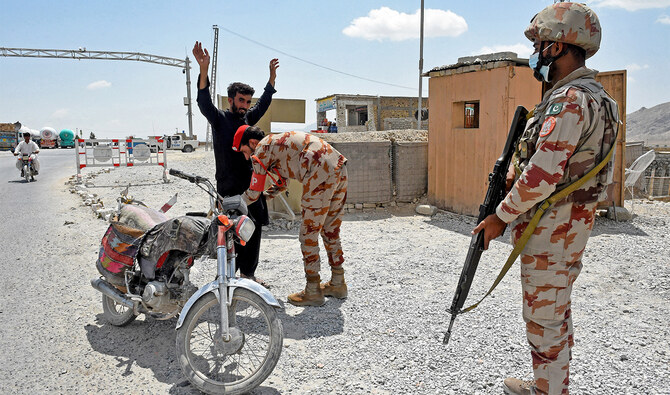
“Military, paramilitary, and civilian security forces conducted CT (counter-terrorism) operations throughout Pakistan against anti-state militants in 2023,” it said.
“Pakistan participated in several formal and informal multilateral fora where CT cooperation was discussed, including, the Global Counterterrorism Forum, and the South Asian Association for Regional Cooperation.”
Pakistan witnessed an increase of 17 percent in militant attacks that hit the country in 2023, the Pak Institute for Peace Studies (PIPS) said in its report in January.
This was the third year in a row when the number of militant attacks and consequent casualties surged in Pakistan, according to the Islamabad-based research and advocacy think-tank. A total of 306 militant attacks took place in Pakistan in 2023, including 23 suicide bombings, which killed 693 people and injured 1,124 others.
Pakistan has seen a sharp rise in militant attacks in its northwestern and southwestern parts that border Afghanistan since the Tehreek-e-Taliban Pakistan (TTP) called off its fragile truce with the government in Islamabad in November 2022. The militant group is separate from but a close ally of the Afghan Taliban.
Islamabad has blamed Kabul’s Afghan Taliban rulers for facilitating the TTP and other anti-Pakistan militant groups who launch attacks from their soil. Afghan officials deny involvement, insisting Pakistan’s security issues are an internal matter of Islamabad.


