

Turkiye says told Russia, Iran not to intervene militarily in Syria rebel push

1 / 2
Russian soldiers stand by military pickups as they prepare to evacuate a position in Qamishli in northeastern Syria on December 12, 2024. Islamist-led rebels took the Syrian capital Damascus in a lightning offensive on December 8, ousting president Bashar al-Assad and ending five decades of Baath rule in the country. (AFP)
2 / 2
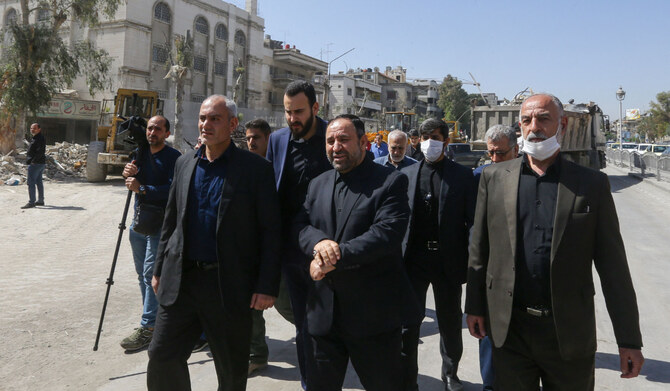
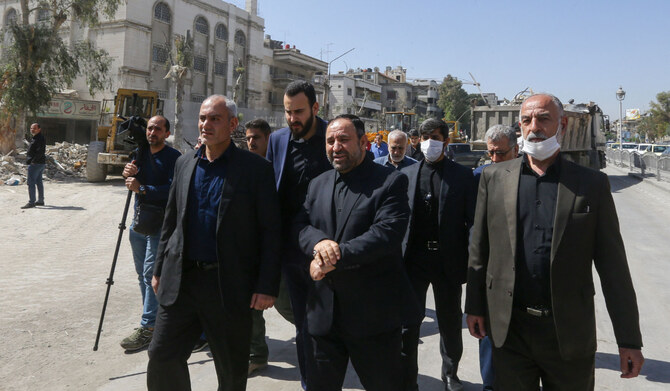
Iran's ambassador to Syria, Hossein Akbari (C) walks near a building annexed to the embassy a day after an air strike in Damascus on April 2, 2024. (AFP)
Short Url
Updated 14 December 2024
Follow

Turkiye says told Russia, Iran not to intervene militarily in Syria rebel push

  • Turkiye’s aim was to “hold focused talks with the two important power players to ensure minimum loss of life,” Fidan said

ANKARA: Turkiye said Friday it had urged Russia and Iran not to intervene militarily to support Bashar Assad’s forces as Islamist-led rebels mounted their lightning advance on Damascus that ended with the Syrian strongman’s ouster.
“The most important thing was to talk to the Russians and Iranians to ensure that they didn’t enter the equation militarily. We had meetings with (them) and they understood,” Foreign Minister Hakan Fidan told Turkiye’s private NTV television.
He said if Moscow and Tehran, both key Assad allies since the start of the civil war in 2011, had come to the Syrian president’s aid, the rebels could still have won but the outcome could have been far more violent.


In this image from video provided by the Syrian official news agency SANA, Defense Minister Ali Abbas gives a televised statement about the fall of Bashar Assad’s government, Thursday, Dec. 5, 2024. (AP)

“If Assad had received support, the opposition could have achieved victory with their determination, but it would have taken a long time and could have been bloody,” he said.
Turkiye’s aim was to “hold focused talks with the two important power players to ensure minimum loss of life,” Fidan said.
When the Islamist-led HTS rebel alliance first began its offensive on November 27, Moscow and Tehran initially offered Assad military support to hold off the rebels.
But the scale of the collapse of Assad’s forces took them by surprise.
And it came at a time when both nations were caught up with problems of their own: Russia mired in the war with Ukraine, and Iran’s proxies including Lebanon’s Hezbollah taking a major battering from Israel.
They quickly realized the game was up, that Assad “was no longer someone to invest in” and “there was no point anymore,” the Turkish minister added.
Turkiye expressed support for the rebels with experts saying it even gave its green light for the offensive by Hayat Tahrir Al-Sham (HTS), without being directly involved.
Many nations, especially in the region, have expressed concern about HTS, which is rooted in Al-Qaeda’s former Syria branch and proscribed by many Western governments as a terror organization.
But Fidan said it was “perfectly normal” to have such concerns about HTS, which would “need to be resolved.”
“No one knows them as well as we do, we want a Syria without terrorism, not posing a threat to the countries in the region.”
Since 2016, Turkiye has held considerable sway over northwestern Syria, maintaining a working relationship with HTS which ran most of the Idlib area, which was Syria’s last bastion of opposition.
With open lines of communication with HTS, Turkiye was relaying such concerns directly to them, he said.
“We reflect our friends’ concerns to them and ensure they take steps. They have made many announcements and people see they are on the right track,” he said.
The message that Ankara was sending to the new administration in Damascus was: “This is what Turkiye — which has stood by you for years — expects. And this is what the world expects,” he said.


UN, aid groups warn Gaza operations at risk from Israel impediments

Updated 18 December 2025
Follow

UN, aid groups warn Gaza operations at risk from Israel impediments

  • Dozens of international aid groups face de-registration by December 31, which then means they have to close operations within 60 days

UNITED NATIONS: The United Nations and aid groups warned on Wednesday that humanitarian operations in the Palestinian territories, particularly Gaza, were at risk of collapse if Israel does not lift impediments that include a “vague, arbitrary, and highly politicized” registration process.
Dozens of international aid groups face de-registration by December 31, which then means they have to close operations within 60 days, said the UN and more than 200 local and international aid groups in a joint statement.
“The deregistration of INGOs (international aid groups) in Gaza will have a catastrophic impact on access to essential and basic services,” the statement read.
“INGOs run or support the majority of field hospitals, primary health care centers, emergency shelter responses, water and sanitation services, nutrition stabilization centers for children with acute malnutrition, and critical mine action activities,” it said.

SUPPLIES LEFT OUT OF REACH: GROUPS
While some international aid groups have been registered under the system that was introduced in March, “the ongoing re-registration process and other arbitrary hindrances to humanitarian operations have left millions of dollars’ worth of essential supplies — including food, medical items, hygiene materials, and shelter assistance — stuck outside of Gaza and unable to reach people in need,” the statement read.
Israel’s mission to the United Nations in New York did not immediately respond to a request for comment on the statement. Under the first phase of US President Donald Trump’s Gaza plan, a fragile ceasefire in the two-year-old war between Israel and Palestinian militants Hamas began on October 10. Hamas released hostages, Israel freed detained Palestinians and more aid began flowing into the enclave where a global hunger monitor said in August famine had taken hold.
However, Hamas says fewer aid trucks are entering Gaza than was agreed. Aid agencies say there is far less aid than required, and that Israel is blocking many necessary items from coming in. Israel denies that and says it is abiding by its obligations under the truce.
“The UN will not be able to compensate for the collapse of INGOs’ operations if they are de-registered, and the humanitarian response cannot be replaced by alternative actors operating outside established humanitarian principles,” the statement by the UN and aid groups said.
The statement stressed “humanitarian access is not optional, conditional or political,” adding: “Lifesaving assistance must be allowed to reach Palestinians without further delay.”