ISLAMABAD: Former prime minister Imran Khan’s party on Friday filed a petition against Prime Minister Shehbaz Sharif, Interior Minister Mohsin Naqvi and other officials over “firing” on its supporters during last month’s protest in Islamabad, which the party says killed at least 12 people and injured more than a hundred others.
Khan’s Pakistan Tehreek-e-Insaf (PTI) party on Nov. 24 led thousands of supporters to Islamabad, seeking to pressure the government to release the ex-premier from jail and order an audit of Feb. 8 national election results. The protests resulted in clashes that Pakistan’s government says killed four law enforcers and injured hundreds of others.
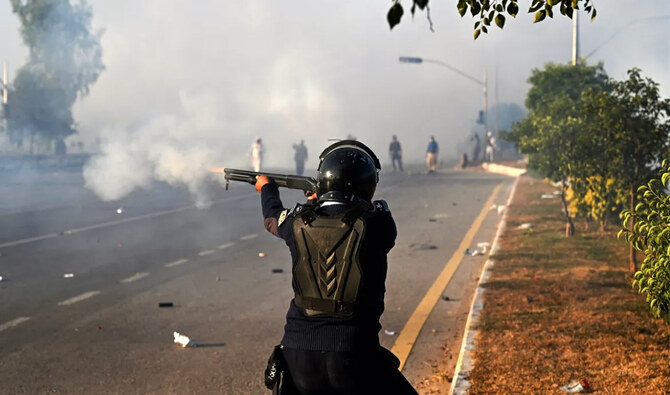
The PTI says at least 12 of its supporters were killed and another 38 sustained injuries due to firing by law enforcers near Islamabad’s Jinnah Avenue on Nov. 26, while 139 of its supporters were still “missing.” Pakistani authorities have denied the deaths, saying security personnel had not been carrying live ammunition during the protest.
“On the 26th November, 2024 when thousands of peaceful demonstrators had assembled on the Jinnah Avenue Islamabad, the lights were switched off and the armed personnel/snippers got on top of all the adjacent buildings,” PTI Chairman Gohar Khan said in a complaint filed in a local court in Islamabad on Friday.
“The law enforcing agency persons equipped with teargas machines started profuse firing adulterating the entire atmosphere with tear gas, smoke and suffocation. Flurry of firing by the snippers followed by indiscriminate straight firing at the crowd resulted in bullet injuries causing instant deaths and the panic stricken people started running who too were sprayed with bullet fires.”
The party has named PM Sharif, Interior Ministry Mohsin Naqvi, Defense Minister Khawaja Asif, Information Minister Ataullah Tarar, Islamabad police chief Ali Nasir Rizvi and others as accused persons. It requested the court to accept the complaint, issue non-bailable warrants for the accused persons and punish them as provided by law.
The government has accused Khan’s party of waging a “propaganda” regarding the Islamabad protest, following statements by several PTI members that gave varied accounts of casualties.
The coalition government of Prime Minister Shehbaz Sharif formed two task forces in the aftermath of the Islamabad protest: one to identify and take legal action against rioters and another to track and bring to justice suspects behind what the government described as a “malicious campaign” to spread “concocted, baseless and inciting” online news, images and video content against the state and security forces.
The PTI has staged several protests this year to demand the release of Khan and to challenge results of the Feb. 8 national election, which it says were manipulated to favor its opponents. The Pakistani government and election authorities deny this.
Last month’s protests were by far the largest to grip the capital since the poll, while Khan, who remains a popular figure in Pakistan despite being in prison and facing several court cases, has also threatened to launch a civil disobedience movement.


![]()

Ex-PM Khan party files petition against PM Sharif, others over ‘firing’ at supporters in Islamabad
Short Url
https://arab.news/8js43
Ex-PM Khan party files petition against PM Sharif, others over ‘firing’ at supporters in Islamabad
- Khan’s party on Nov. 24 led thousands of supporters to Islamabad, seeking to pressure the government to release the ex-premier from jail
- The protests resulted in clashes that government says killed four law enforcers, while the party says 12 supporters were killed in crackdown
Latest updates


© 2026 SAUDI RESEARCH & PUBLISHING COMPANY, All Rights Reserved And subject to Terms of Use Agreement.