PARACHINAR, Pakistan: Once again, Ali Ghulam receives mourners at his home — his brother and nephew killed 40 years apart in the same sectarian conflict that was reignited this year in northwest Pakistan, claiming 200 lives since July alone.
Thousands of residents are stranded without food and medicine in parts of remote Kurram district, which borders Afghanistan, as the government struggles to end clashes between Sunni and Shiite Muslims stemming from decades-old tensions over farmland.
“Our generations yearn for peace,” 72-year-old Ghulam told AFP at his home in Parachinar, the main town and a Shiite bastion of the restive district.
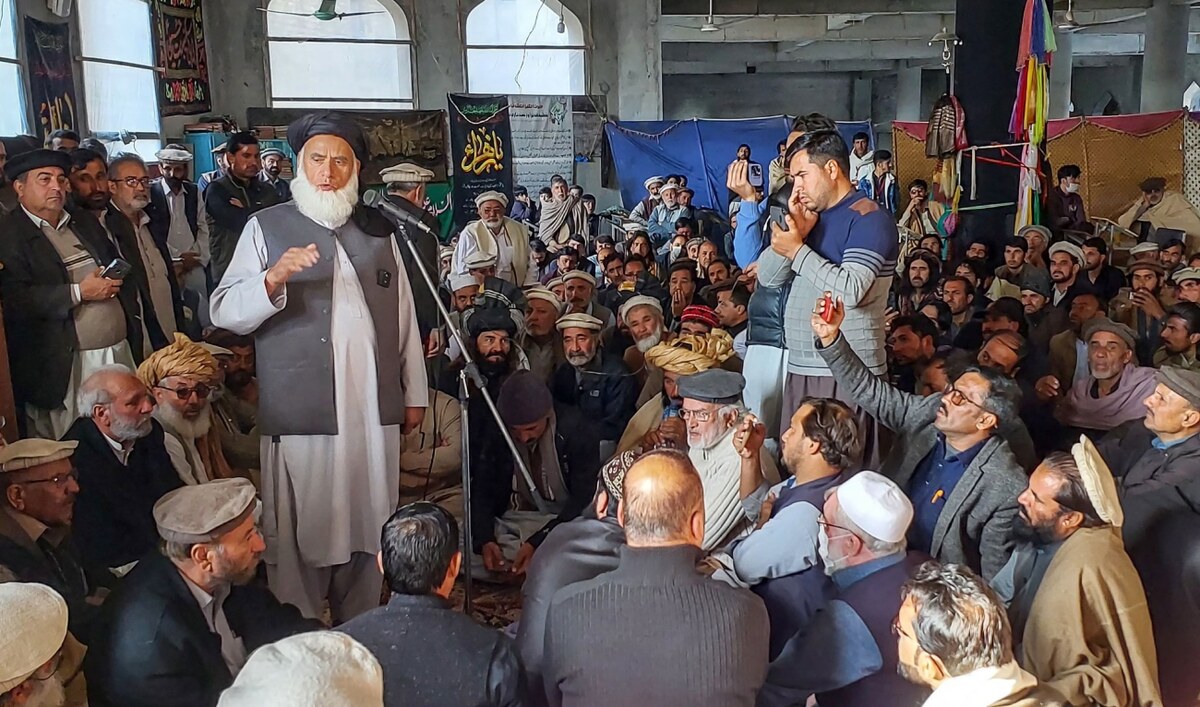
This photograph taken on December 5, 2024, shows Muslim men gathered during 'Jirga', a tribal council meeting wherein village elders resolve disputes, at a Shiite mosque after sectarian clashes in Parachinar, Khyber Pakhtunkhwa province. (AFP)
The latest flare-up of violence has “reopened wounds” he said, recalling how his brother was killed in an attack in 1987 that also wounded another three of his brothers.
Kurram, known as the “Parrot’s Beak” for its protrusion into neighboring Afghanistan, is bounded by dizzyingly high mountains, the northern flank of which includes the Tora Bora caves where Al Qaeda founder and 9/11 mastermind Osama bin Laden once hid.
Pakistan’s northwestern border districts have long been a haven for various militant groups, with militants and weapons able to flow largely unchecked in and out of Afghanistan.
“I have never experienced peace in my life and have no hope my coming generations will live free of fear,” Ghulam said.
Tribal and family feuds are common in Pakistan.

This photograph taken on December 3, 2024, shows Shiite Muslim men gathered during a meeting at a mosque, after sectarian clashes in Parachinar, Khyber Pakhtunkhwa province. (AFP)
But they can be particularly protracted and violent in the mountainous tribal northwest, where communities live by traditional codes of honor and revenge.
The latest round of violence in Kurram erupted in May and intensified in July when gunmen opened fire on a council of elders attempting to settle the latest round of disagreements over land.
Various truces announced since then have held for only weeks or days at a time.
More than 300 shops and over 200 homes in Sunni areas have been destroyed, often by fire, and hundreds of families have fled.
Pakistan is a Sunni-majority country with Shiites making up 10 to 15 percent of the population, or at least 25 million people.
Members of the two sects have periodically clashed in Kurram, where Shiites are particularly vulnerable as they must pass through Sunni-majority neighborhoods to access essential services.
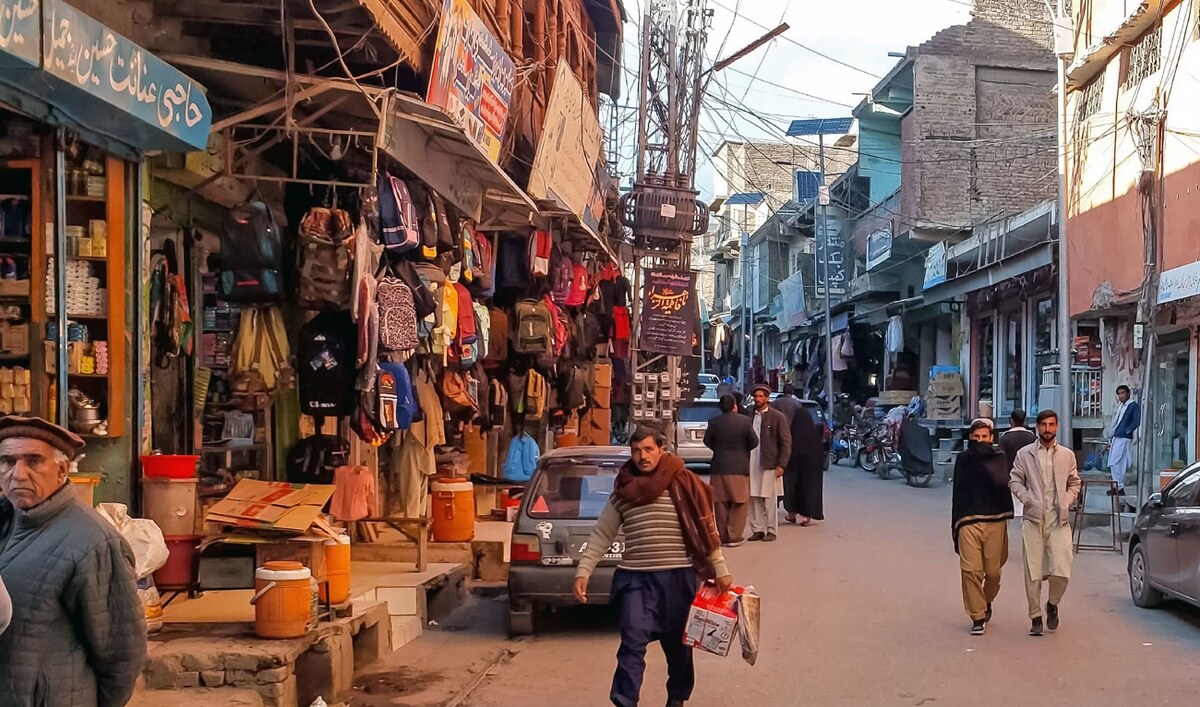
This photograph taken on December 3, 2024, shows local residents walking across a market reopened after sectarian clashes in Parachinar, Khyber Pakhtunkhwa province. (AFP)
Kurram’s location on the frontier of Pakistan and Afghanistan put it at the heart of the religious and political upheavals of the last five decades.
In 1979, Shiites led a revolution in Iran and later that year the Soviet Union invaded Afghanistan, prompting Sunni hard-liners there to rise up against them.
“It became a hub for arms supply to Afghanistan, including land mines, mortar shells, and weapons of all kinds. Every household in Kurram had a stockpile of weapons,” Malik Attaullah Khan, a local tribal elder told AFP.
Khan, who signed a 2007 agreement aimed at bringing peace to Kurram, criticized the government for failing to “fulfil in its responsibilities” in enforcing land settlements.
The ethnic Pashtun heartland was merged into the Khyber Pakhtunkhwa province in 2018, but the Pakistani state maintains limited control in the merged districts.
In rural areas of Pakistan, villages often bypass the formal justice system and men-only “jirgas” or councils made up of respected village elders resolve disputes, sometimes in the form of fines or land reallocation.

This photograph taken on December 3, 2024, shows Shiite Muslim men gathered during a meeting at a mosque, after sectarian clashes in Parachinar, Khyber Pakhtunkhwa province. (AFP)
Ghulam’s nephew was killed along with at least 42 others last month, when Sunni gunmen opened fire on a convoy of Shiites being escorted by the police to their homes.
In retaliation, a market in a Sunni-dominated area was set on fire.
Syed Ghani Shah told AFP his cousin was burned to death inside his shop.
“When we buried him, he was so unrecognizable that we couldn’t even let his parents see his face,” Shah said.
“Can we ever make peace after all this? Never, if we ever get the chance, we will surely avenge our blood,” he warned.
Authorities have enforced curfews and road closures to reduce the chances of violence breaking out, providing escorts through high-risk areas and using helicopters to deliver supplies.
But Akbar Khan, a representative of Pakistan’s independent Human Rights Commission told AFP that the state needs to do more to resolve the issue.
“In the past, jirgas were successful because they had the full support of the state. Now, the authorities don’t even provide the expenses needed to hold a jirga,” he said.
Fatima Ahmed’s husband was killed last month while traveling to Islamabad to arrange her admission to medical college.
“I don’t want to live a life without him. I’ve lost my will to exist,” the 21-year-old told AFP.
“They haven’t just martyred my husband — they’ve also murdered my dreams with him,” she said, bursting into tears.