


RIYADH: Qatar’s real estate market is showing resilience amid shifting dynamics, with a clear divergence between the performance of luxury and standard offerings, a new report showed.
Over the past 12 months, villa rents declined by 7.5 percent to an average of 15,085 Qatari riyals ($4,139) per month, while luxury apartment rents rose by 2.3 percent to 11,200 riyals per month, according to the latest Qatar Real Estate Market Review from Knight Frank.
The market has been evolving in recent years, driven by government reforms and infrastructure investments aimed at fostering long-term economic growth and diversification.
The government’s introduction of property-linked residency schemes and designated freehold zones for expatriates has spurred activity in the residential market.
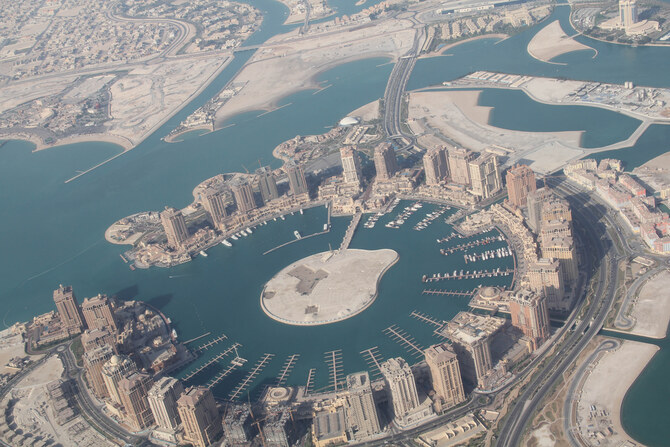
For apartments, this has meant stronger demand for premium locations like the Pearl Island and Lusail, reinforcing their status as highly coveted destinations for both living and investment.
Apartment rentals in Qatar’s premium locations have emerged as a key growth driver, reflecting shifting tenant preferences. Areas such as West Bay and the Marina District have become hotspots for expatriates and professionals, with rental increases of 9.6 percent and 3.2 percent, respectively.
In contrast, villa rents have continued to decline, with key neighborhoods like Nuaija and West Bay Lagoon seeing even steeper drops of 20 percent and 9 percent, respectively. This reflects a supply glut and shifting tenant priorities toward more compact, urban living.
Price office spaces
Despite some pressures in the residential sector, Qatar’s office market is experiencing growth, supported by demand for prime office spaces. Grade A office rents have risen by 3.2 percent over the past 12 months, driven by increased activity from government ministries, state-owned enterprises, and multinational firms.
Prime districts such as Lusail have reported a 3 percent annual increase in rents, with rates reaching 92 riyals per sq. meter per month. West Bay remained a leading destination, commanding rents as high as 150 riyals per sq. meter for premium spaces.
This growth aligns with Qatar’s National Vision 2030, the report stated, adding that the vision aims to foster a sustainable and diverse economy, with plans to double the size of the economy on track, supported by an expected increase in government revenues to 2014 levels this year.
The report noted that an emphasis on high-quality, contemporary spaces continues to drive tenants. away from secondary locations, where rents have dropped to 50 riyals to 70 riyals per sq. meter. This shift reflects the broader “flight to quality” trend, with tenants increasingly prioritizing modern facilities in central business hubs.
Hospitality sector
The Qatari hospitality market continued to expand, driven by a series of major developments and a growing influx of tourists.
The country’s efforts to diversify its tourism industry have led to the creation of new attractions such as the Qatar National Museum, Meryal Water Park, and the upcoming $5.5 billion Simaisma theme park.
“Qatar’s tourism sector has solidified its position as a vital driver of economic growth, achieving an impressive 31 percent growth in 2023 to reach a historic high of 81.2 billion riyals, which equates to 10.3 percent of the gross domestic product,” the report stated.
This growth has fueled the hospitality market, with more than 1,300 new hotel rooms added in 2023 alone. The report noted that the quality room supply is expected to grow further, with projections reaching 47,290 keys by 2026.


