



LAHORE: Pakistani politician Azma Bukhari is haunted by a counterfeit image of herself: a sexualized deepfake video published to discredit her role as one of the nation’s few female leaders.
“I was shattered when it came into my knowledge,” said 48-year-old Bukhari, the information minister of Pakistan’s most populous province of Punjab.
Deepfakes — which manipulate genuine audio, photos or video of people into false likenesses — are becoming increasingly convincing and easier to make as artificial intelligence (AI) enters the mainstream.
In Pakistan, where media literacy is poor, they are being weaponized to smear women in the public sphere with sexual innuendo deeply damaging to their reputations in a country with conservative mores.
Bukhari — who regularly appears on TV — recalls going quiet for days after she saw the video of her face superimposed on the sexualized body of an Indian actor in a clip quickly spreading on social media.
“It was very difficult, I was depressed,” she told AFP in her home in the eastern city of Lahore.
“My daughter, she hugged me and said: ‘Mama, you have to fight it out’.”
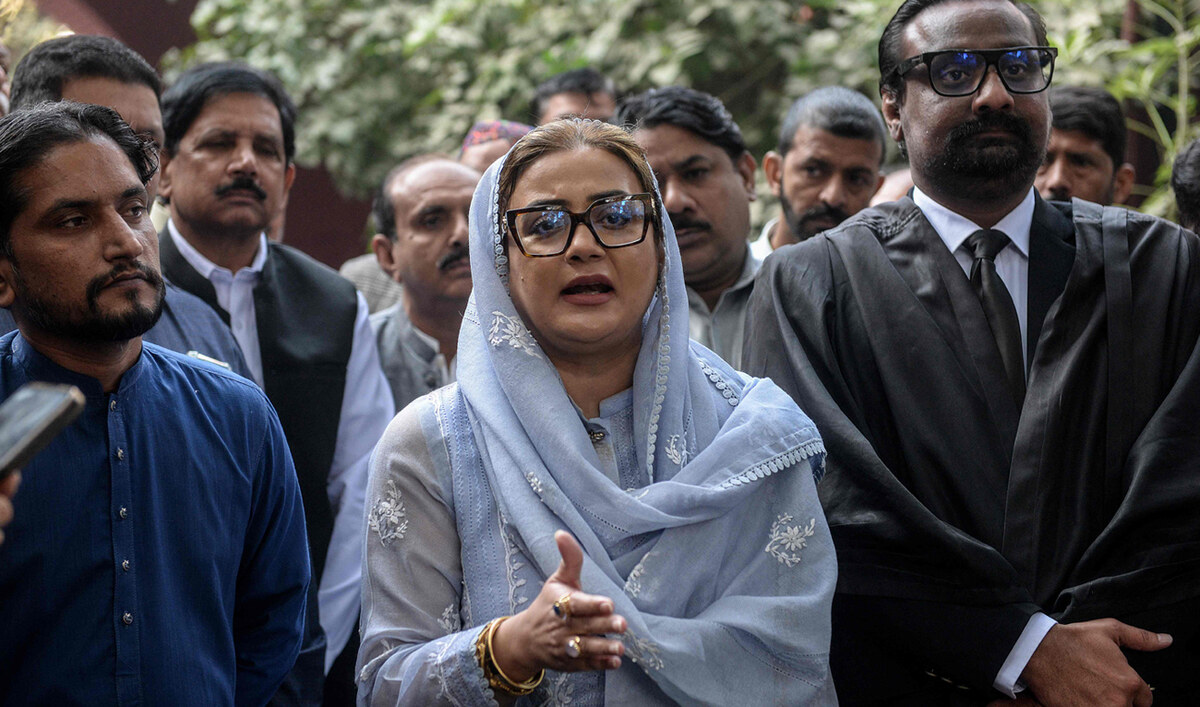
In this photograph taken on November 20, 2024, Azma Bukhari (C), Information Minister of Pakistan’s province of Punjab, speaks with media after attending her deepfake video case hearing in Lahore. (AFP)
After initially recoiling she is pressing her case at Lahore’s High Court, attempting to hold those who spread the deepfake to account.
“When I go to the court, I have to remind people again and again that I have a fake video,” she said.
In Pakistan — a country of 240 million people — Internet use has risen at staggering rates recently owing to cheap 4G mobile Internet.
Around 110 million Pakistanis were online this January, 24 million more than at the beginning of 2023, according to monitoring site DataReportal.
In this year’s election, deepfakes were at the center of digital debate.
Ex-prime minister Imran Khan was jailed but his team used an AI tool to generate speeches in his voice shared on social media, allowing him to campaign from behind bars.
Men in politics are typically criticized over corruption, their ideology and status. But deepfakes have a dark side uniquely suited to tearing down women.
“When they are accused, it almost always revolves around their sex lives, their personal lives, whether they’re good mums, whether they’re good wives,” said US-based AI expert Henry Ajder.
“For that deepfakes are a very harmful weapon,” he told AFP.
In patriarchal Pakistan the stakes are high.
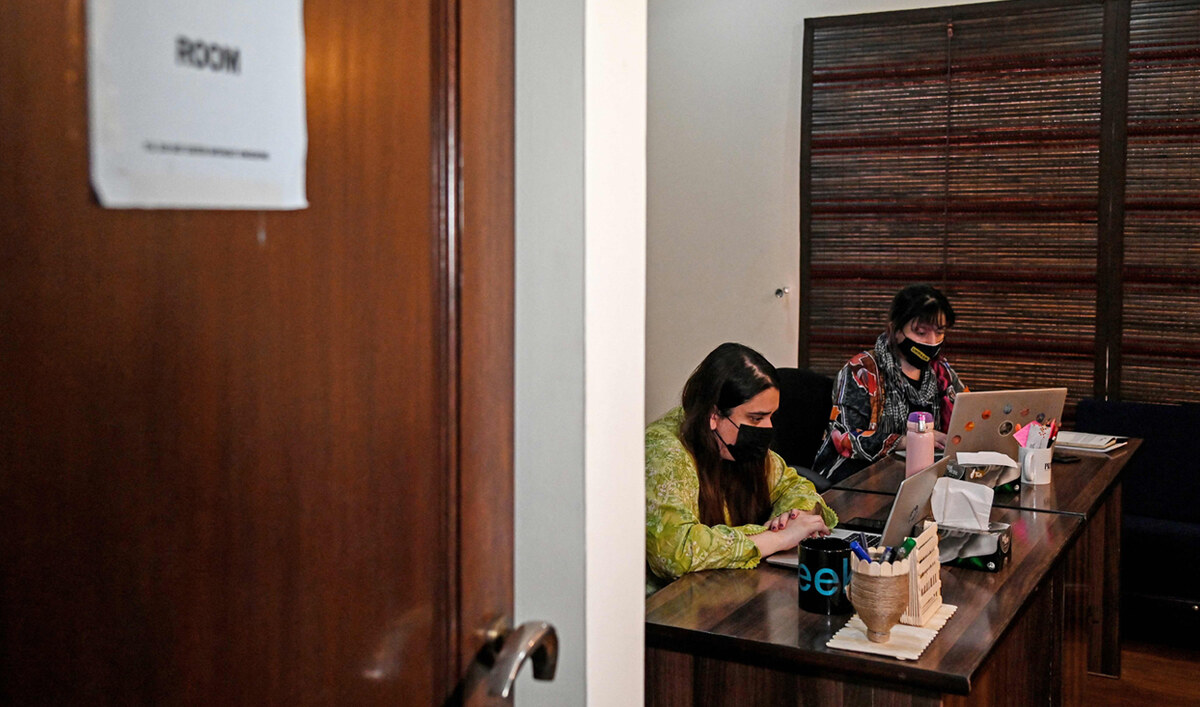
In this photograph taken on October 21, 2024, staff members work at the Digital Rights Foundation (DRF), an NGO aims to strengthen protections for human rights defenders in digital spaces, in Lahore. (AFP
Women’s status is typically tied to their “honor,” generally defined as modesty and chastity. Hundreds are killed every year — often by their own families — for supposedly besmirching it.
Bukhari describes the video targeting her as “pornographic.”
But in a country where premarital sex and cohabitation are punishable offenses, deepfakes can undermine reputations by planting innuendo with the suggestion of a hug or improper social mingling with men.
In October, AFP debunked a deepfake video of regional lawmaker Meena Majeed showing her hugging the male chief minister of Balochistan province.
A social media caption said: “Shamelessness has no limits. This is an insult to Baloch culture.”
Bukhari says photos of her with her husband and son have also been manipulated to imply she appeared in public with boyfriends outside her marriage.
And doctored videos regularly circulate of Punjab Chief Minister Maryam Nawaz Sharif — Bukhari’s boss — showing her dancing with opposition leaders.
Once targeted by deepfakes like these, women’s “image is seen as immoral, and the honor of the entire family is lost,” said Sadaf Khan of Pakistani non-profit Media Matters for Democracy.
“This can put them in danger,” she told AFP.
Deepfakes are now prevalent across the world, but Pakistan does have legislation to combat their deployment in disinformation campaigns.
In 2016, a law was passed by Bukhari’s party “to prevent online crimes” with “cyberstalking” provisions against sharing photos or videos without consent “in a manner that harms a person.”
Bukhari believes it needs to be strengthened and backed up by investigators. “The capacity building of our cybercrime unit is very, very important,” she said.
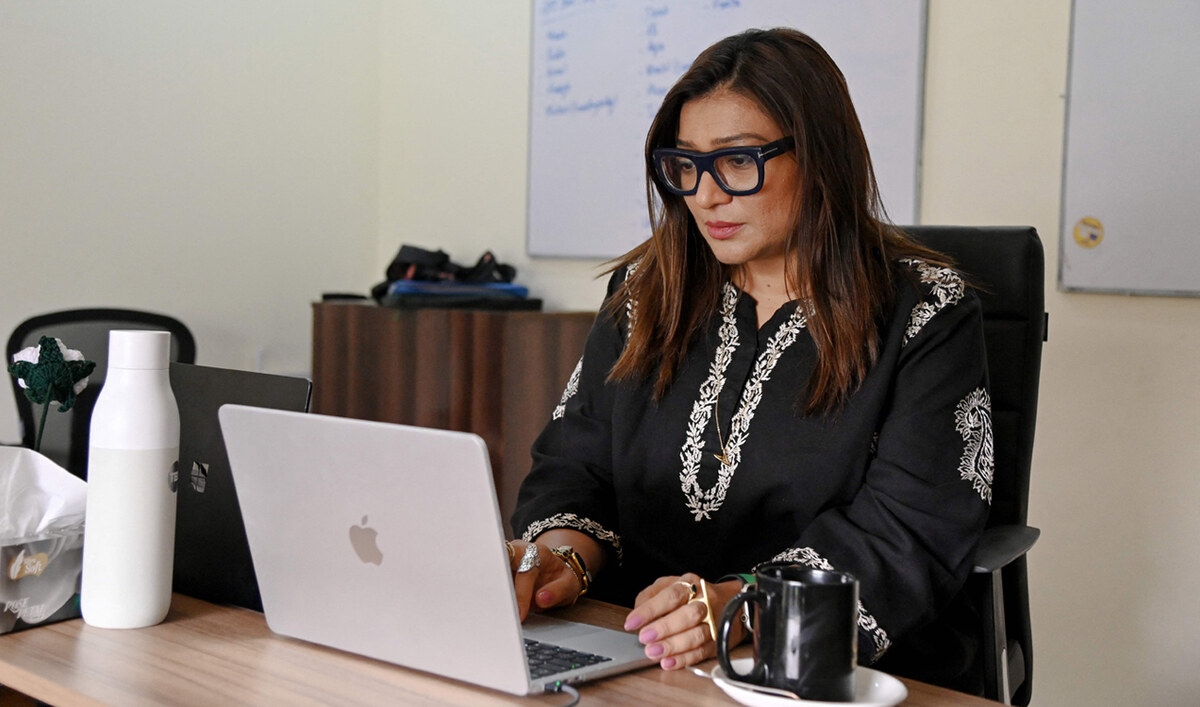
In this photograph taken on October 21, 2024, Nighat Dad, a Pakistan-based digital rights activist, works on her laptop during an interview with AFP in Lahore. (AFP)
But digital rights activists have also criticized the government for wielding such broad legislation to quash dissent.
Authorities have previously blocked YouTube and TikTok, and a ban on X — formerly Twitter — has been in place since after February elections when allegations of vote tampering spread on the site.
Pakistan-based digital rights activist Nighat Dad said blocking the sites serves only as “a quick solution for the government.”
“It’s violating other fundamental rights, which are connected to your freedom of expression, and access to information,” she told AFP.


