

US, France, Germany, UK urge ‘de-escalation’ in Syria: joint statement

1 / 2
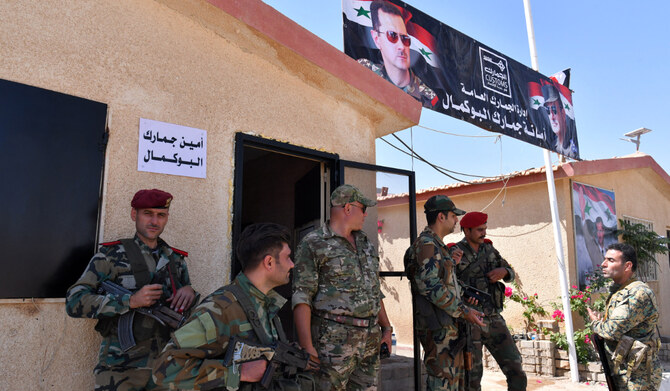
Members of the Syrian security forces gather at the border-crossing between Albu Kamal in Syria and Al-Qaim in Iraq, on the Syrian side in the eastern region of Deir Ezzor, on September 30, 2019. (AFP)
2 / 2
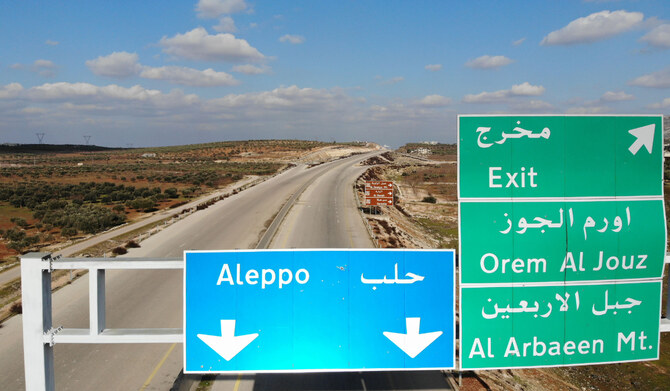
An general view taken on February 17, 2020 shows the M4 highway, which links the northern Syrian provinces of Aleppo and Lattakia, just outside the northwestern Syrian village of Urum al-Jawz, in Syria's war-battered Idlib province. (AFP)
Short Url
Updated 02 December 2024
Follow

US, France, Germany, UK urge ‘de-escalation’ in Syria: joint statement

WASHINGTON: The United States and its allies France, Germany and Britain called Sunday for “de-escalation” in Syria and urged in a joint statement for the protection of civilians and infrastructure.
“The current escalation only underscores the urgent need for a Syrian-led political solution to the conflict, in line with UNSCR 2254,” read a statement issued by the US State Department, referencing the 2015 UN resolution that endorsed a peace process in Syria.


Iraq PM candidate Al-Maliki meets senior US diplomat

Updated 5 sec ago
Follow

Iraq PM candidate Al-Maliki meets senior US diplomat

  • Last month President Donald Trump intervened in Iraq’s affairs by issuing an ultimatum that if Al-Maliki — a two-time former premier with close ties to Iran — was named Iraq’s next prime minister, the US would no longer help the country

BAGHDAD: The leading candidate to become Iraq’s next prime minister, Nouri Al-Maliki, met with US diplomat Tom Barrack on Friday after refusing to withdraw his nomination despite the US threatening to stop supporting the country if he returns to the post.
Barrack, the US envoy to Syria and ambassador to Turkiye, has recently visited Iraq multiple times to meet with senior officials.
Maliki’s media office said in a short statement that the PM candidate stressed during the meeting “the need to respect Iraq’s sovereignty and the will of its people.”
He also spoke of the “importance of supporting the democratic process and strengthening political stability” in Iraq.
It wasn’t clear what message Barrack conveyed to Maliki.
Last month President Donald Trump intervened in Iraq’s affairs by issuing an ultimatum that if Al-Maliki — a two-time former premier with close ties to Iran — was named Iraq’s next prime minister, the US would no longer help the country.
Trump’s threat left Iraqi leaders at a loss, particularly within the Coordination Framework — a ruling alliance of Shiite groups with varying degrees of links to Iran that nominated Maliki.
Earlier this week, Al-Maliki told AFP he would not withdraw his nomination, while also seeking to allay Washington’s concerns.
“I have absolutely no intention of withdrawing out of respect for my country, its sovereignty, and its will,” Al-Maliki told AFP in an interview.